






The concept of literary genre, a fundamental tool for categorizing and understanding literature, has a rich and complex history, evolving significantly from its ancient origins to modern interpretations. Initially, genres were defined by shared literary conventions, including similarities in theme, style, tropes, and storytelling devices. These categories also often featured common settings, character types, and predictable patterns of interaction
and events, contributing to an overall recognizable form. However, the very definitions and distinctions between genres have proven to be flexible and unstable, changing over time as new forms emerge and old ones recede, reflecting the cultural expectations and needs of specific historical periods.
At its core, a literary genre is a category of literature, determined by elements such as literary technique, tone, content, or length. These classifications typically move from broad, abstract categories to more concrete sub-divisions. The dynamic nature of genre means that what constitutes a genre is not fixed but rather a reflection of the cultural and historical context in which literature is produced and consumed. This continuous evolution underscores the idea that genre theory is not merely a descriptive exercise but an ongoing dialogue about how we understand and organize creative expression.
Aristotle's Foundational Contributions to Genre Theory
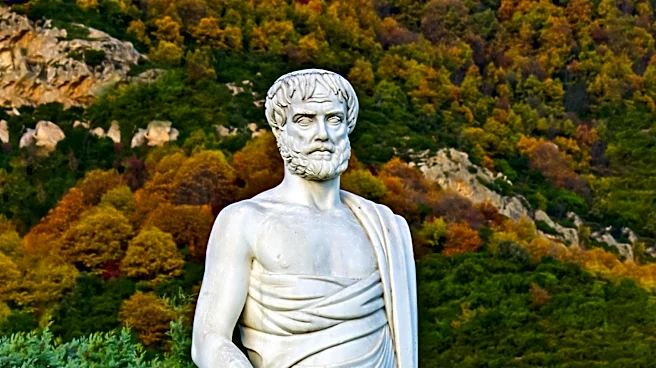
The origins of genre theory are deeply rooted in the works of the ancient Greek philosopher Aristotle. He approached the classification of literary genres, which he termed "species" (eidē), using biological concepts. His treatises, particularly *Rhetoric* and *Poetics*, are seminal texts in this field, outlining categories into which literary material could be organized. Aristotle discussed genres such as the epic, tragedy, comedy, dithyrambic poetry, and phallic songs, providing some of the earliest systematic classifications.
In *Rhetoric*, Aristotle proposed three distinct genres of rhetorical oratory: deliberative, forensic, and epideictic. These were differentiated based on the orator's purpose: to argue for future policy, discuss past actions, or offer praise or blame during a ceremony, respectively. Similarly, in *Poetics*, he divided poetry into the epic, tragedy, and comedy, basing these distinctions not on rhetorical purpose but on a combination of structure, content, and narrative form. For each type, he offered a definition and rules for its construction, laying a groundwork that would influence literary criticism for centuries.
Post-Aristotelian Developments and Romantic Scrutiny
Following Aristotle, literary criticism continued to develop, expanding on his foundational ideas. The first-century Greek treatise "On the Sublime," for example, explored the works of over 50 literary writers and their methods for influencing audience emotions. The Roman author Cicero, rather than simply adopting Aristotle's or Plato's approaches, developed a new, rhetorically informed understanding of genres, emphasizing the expressive power of language. These developments show a continuous engagement with the idea of genre, adapting it to new literary and cultural contexts.
The European Romantic movement, spanning the late eighteenth and early nineteenth centuries, marked a significant turning point in genre theory. During this period, the concept of genre was heavily scrutinized, with a growing sentiment that genre constraints could be ignored. The idea that each literary work could be a "genre unto itself" gained popularity, and traditional genre definitions were sometimes dismissed as "primitive and childish." Paradoxically, this era also witnessed the emergence of a new genre, the 'imaginative' genre, often attributed to the social upheavals of the time, such as wars and political instability, which fostered a need for "escapism" in literature.
Modern Genre Systems: Northrop Frye's Influence
In the mid-20th century, Canadian scholar Northrop Frye made a profound contribution to genre theory with his 1957 work, *Anatomy of Criticism*. Frye proposed a comprehensive system of genres and a set of rules to describe their constraints. He defined methodological classifications for genres such as myth, legend, high mimetic, low mimetic, irony, the comic, and the tragic, based on "the relation between the hero of the work and ourselves or the laws of nature."
Frye also used the juxtaposition of the "real" and the "ideal" to categorize genres like romance (the ideal), irony (the real), comedy (transition from real to ideal), and tragedy (transition from ideal to real). Furthermore, he divided genres by their intended audience or mode of presentation: drama for performed works, lyric poetry for sung works, and epic poetry for recited works. Frye's systematic approach provided a new framework for understanding the intricate relationships and structures within literary genres, demonstrating the ongoing intellectual effort to classify and comprehend the vast world of literature.