








The Boston Red Sox, a prominent American League baseball team, boasts a rich history that extends beyond its current well-known moniker. The team's identity, particularly its name, has undergone several transformations and informal designations since its inception in 1901. Initially, the club lacked an official nickname, being simply referred to as "Boston," "Bostonians," or "the Bostons," reflecting its status as a two-team city alongside the National
League club. This early period saw various unofficial names used by sportswriters, highlighting the team's evolving public image before settling on its iconic red hose.
Early Designations and the Search for an Identity
When the American League established a competing club in Boston in 1901, the team wore dark blue stockings for seven seasons without an official nickname. During this time, they were often called the "Americans" or "Boston Americans" to distinguish them from the National League team. Newspaper writers of the era also employed a variety of other nicknames, such as "Somersets" (after owner Charles Somers), "Plymouth Rocks," "Beaneaters," the "Collinsites" (for manager Jimmy Collins), and "Pilgrims." These informal names illustrate the fluid nature of team identity in early baseball.
One notable nickname, "Pilgrims," was commonly used during the 1907 season, possibly due to the team having a new manager and several rookie players. However, researcher Bill Nowlin has shown that this name was barely used, if at all, during the team's early years. The origin of the nickname appears to be a poem titled "The Pilgrims At Home," sung at the 1907 home opener. John I. Taylor, who would later become owner, expressed his dislike for the name in December 1907, stating that "Pilgrims" "sounded too much like homeless wanderers."
The Adoption of "Red Sox"
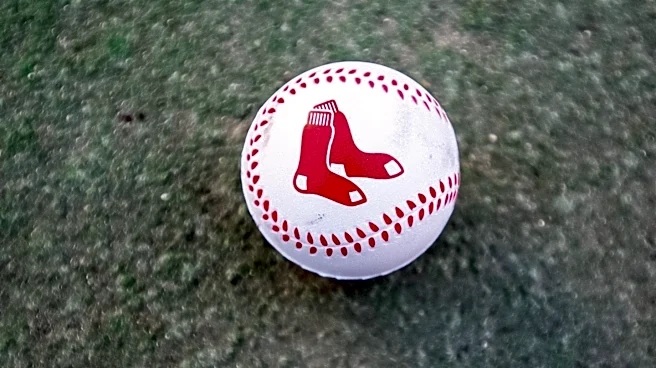
The official adoption of the "Red Sox" name came after the 1907 season, chosen by owner John I. Taylor. This name specifically refers to the red hose that became part of the team's uniform starting in 1908. The term "Sox" itself had been previously adopted by newspapers for the Chicago White Sox, as a headline-friendly abbreviation for "Stockings." This was a practical choice, as "Stockings Win!" in large type did not fit well in newspaper columns.
Before 1908, the National League club in Boston, though seldom called the "Red Stockings" anymore, still wore red trim. In 1907, that National League club adopted an all-white uniform, creating an opportunity for the American League team. On December 18, 1907, Taylor announced that red had been officially adopted as the new team color. The 1908 uniforms featured a large icon of a red stocking angling across the shirt front, solidifying the team's new visual and naming identity. While the National League club returned to wearing red trim later that month, the American League team had finally secured its official nickname and remained the "Red Sox" for good.
Legacy of the Red Stockings
The concept of "Red Stockings" has a deeper historical root in baseball, predating the Boston Red Sox. The Cincinnati Red Stockings, members of the pioneering National Association of Base Ball Players, were famous for their uniform with white knickers and red stockings. When that club folded after the 1870 season, Harry Wright, its manager, was hired by Boston businessman Ivers Whitney Adams to organize a new team in Boston. Wright brought three teammates and the "Red Stockings" nickname with him. This Boston Red Stockings team won four championships in the five seasons of the new National Association, the first professional league. The nickname was often unofficial, allowing for its migration. When a new Cincinnati club formed in 1876, the "Red Stockings" nickname was commonly reserved for them again, and the Boston team was referred to as the "Red Caps" before officially adopting the nickname "Braves" in 1912.