





Inattentional blindness, also known as perceptual blindness, describes a fascinating phenomenon where individuals fail to notice a visible stimulus because their attention is focused elsewhere. This isn't due to vision defects but rather a temporary "blindness" effect that occurs when it becomes impossible to attend to all stimuli in a given situation. The concept gained significant public attention through the "Invisible Gorilla Test," a landmark
study that vividly demonstrated how easily our focused attention can lead us to miss something unexpected, even when it's in plain sight. This phenomenon has profound implications, extending from basic cognitive processes to critical real-world scenarios like road safety and even social interactions.
The Iconic Invisible Gorilla Test
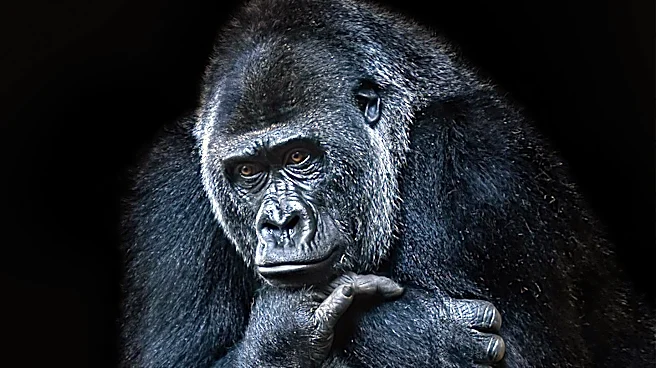
The most well-known study illustrating inattentional blindness is the Invisible Gorilla Test, conducted by Daniel Simons and Christopher Chabris. This experiment, a refined version of earlier studies, involved participants watching a short video. In the video, two groups of people, one wearing white shirts and the other black, passed a basketball among themselves. Participants were instructed to perform a primary task: either count the passes made by one of the teams or keep track of bounce passes versus aerial passes.
During the basketball game, an unexpected event occurred: a person in a full gorilla suit walked through the scene, sometimes even stopping to face the camera before continuing. After watching the video, participants were asked if they noticed anything unusual. Remarkably, in most groups, 50% of the subjects failed to report seeing the gorilla. This failure to perceive the anomaly was attributed to their complete engagement in the demanding task of counting passes, indicating that perception is far more dependent on attention than previously understood. The study's findings were so impactful that a version was later used in a British television public safety advertisement, replacing the gorilla with a moonwalking bear, to highlight the dangers of inattentional blindness for motorists regarding cyclists.
Expanding the Scope: Other Experimental Demonstrations
The principles of inattentional blindness have been explored through various other experiments, each shedding light on different facets of the phenomenon. One such study, conducted by Steven Most, Daniel Simons, Christopher Chabris, and Brian Scholl, utilized computer displays. Participants were shown objects moving randomly on a screen and instructed to attend to either black or white objects, ignoring the other color. After several trials, a red cross unexpectedly appeared and traversed the display for five seconds. Despite the cross being distinct in both color and shape from the other objects, approximately one-third of participants missed it. This suggested that people might be attentionally tuned to specific perceptual dimensions, like brightness or shape, and are more likely to experience inattentional blindness if the unexpected stimuli do not resemble the attended environment.
Another compelling experiment, led by Ira Hyman, demonstrated how everyday distractions, such as using a cell phone, can induce inattentional blindness. Participants were divided into groups and walked a specific route. Along the way, a brightly colored clown on a unicycle appeared. The groups varied in their activity: talking on a phone, listening to an MP3 player, conversing with a companion, or walking alone. The study revealed that individuals engaged in cell phone conversations were significantly less likely to notice the clown, highlighting the impact of mental workload on our ability to perceive unexpected stimuli in our environment.
Real-World Implications and Social Context
The implications of inattentional blindness extend beyond laboratory settings and into critical real-world situations. A notable example involves a 1995 incident where Officer Kenny Conley, while chasing a shooting suspect, failed to notice an undercover officer being mistakenly taken down by other officers nearby. Conley maintained he hadn't seen the fight, a claim initially met with skepticism, leading to his conviction for perjury and obstruction of justice. Christopher Chabris, Adam Weinberger, Matthew Fontaine, and Daniel J. Simons later designed an experiment to test the plausibility of Conley's claim.
In their experiment, participants ran behind an experimenter, counting how many times he touched his head. A staged fight, visible for about 15 seconds, occurred off the path. Participants were then asked if they noticed the fight. The results showed that participants were significantly less likely to notice the fight under higher cognitive load conditions (e.g., counting touches with both hands) compared to low load conditions. This study provided evidence that Officer Conley could indeed have missed the fight due to his attention being focused elsewhere, underscoring how increased perceptual load can lead to more frequent episodes of inattentional blindness in high-stakes environments. Furthermore, inattentional blindness has been observed in social contexts, with one virtual reality experiment showing that only 30% of participants noticed an instance of "idea stealing" during a group decision-making task, emphasizing its role in organizational behavior and social interactions.
The Role of Expertise and Age
Research has also explored how factors like expertise and age influence inattentional blindness. Daniel Memmert conducted an experiment using the invisible gorilla video with six groups of participants: adult, junior, and child basketball experts, and their novice counterparts. While experts didn't count passes more accurately than novices, a significantly higher percentage of experts noticed the gorilla. For instance, 62% of adult experts and 60% of junior experts saw the gorilla, compared to only 38% of adult novices and 35% of junior novices. No child novices noticed it, and only 18% of children with two years of practice did. This suggests that both age and experience can significantly affect inattentional blindness, with expertise potentially broadening one's attentional scope within a familiar domain.
Conversely, studies have indicated that susceptibility to inattentional blindness may increase with age. Research by Elizabeth Graham and Deborah Burke, and later replicated by Cary Stothart, Walter Boot, and Daniel Simons, found that older adults were more likely to miss unexpected stimuli than younger adults. The latter study, involving a large sample, suggested that every 10 years of age was associated with a 1.3-fold increase in the probability of displaying inattentional blindness. These findings highlight the complex interplay of cognitive factors, experience, and age in shaping our perception and susceptibility to missing the unexpected in our visual world.