







The Pullman Company, a name synonymous with American railroad luxury, began its journey in the 19th century as a pioneering manufacturer and operator of sleeping cars. Founded by George Pullman, the company revolutionized long-distance passenger travel by offering upscale services and comfortable accommodations on wheels. While its direct involvement in rail operations eventually ceased, the legacy of the Pullman name has endured, evolving through
various corporate transformations and ultimately finding a new expression in the hospitality industry. This journey from innovative rail travel to a global hotel brand reflects a remarkable adaptation and continuation of a name once central to American transportation.
Origins in Rail Innovation
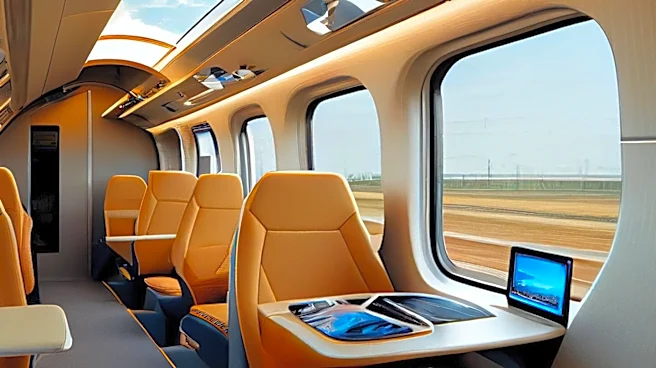
George Pullman, born in 1831 and passing in 1897, was the visionary behind the original Pullman Company, a prosperous Chicago-based railroad manufacturer. This company gained significant fame for introducing the first sleeping trains in the United States. Beyond just manufacturing, Pullman was dedicated to developing and providing upscale services for railroad travelers, effectively creating a "hotel on wheels" experience. The company's common-carrier property primarily consisted of standard and tourist sleeping cars, parlor cars, composite cars, private cars, and dining cars.
These luxurious cars were assigned for use in passenger-train service to most railroads operating across the United States, Canada, and Mexico. The contracts typically stipulated that The Pullman Company would own, operate, and maintain these cars, retaining all or part of the revenues generated. To support these extensive operations, the company maintained repair shops and significant lengths of standard-gauge yard tracks and sidings in key locations such as Buffalo, New York; Calumet (Chicago), Illinois; Richmond, California; St. Louis, Missouri; and Wilmington, Delaware. Additionally, it owned and utilized minor miscellaneous structures and shop machinery situated in important railroad yards and terminals throughout the U.S.
Corporate Evolution and Diversification
The Pullman Company's corporate history began with its incorporation on February 22, 1867, by an act of the General Assembly of the State of Illinois, under the name "Pullman's Palace Car Company." The organization officially commenced on July 15, 1867, and its name was later changed to The Pullman Company on December 30, 1899. Beyond its common-carrier property, the company also owned an extensive manufacturing plant located in Pullman, Illinois. This plant was not only responsible for producing the company's own cars but also manufactured all classes of passenger and freight-train cars under contracts for other railroad companies. The manufacturing capabilities extended even further, as the plant was equipped for the production of other articles, including automobile bodies and phonograph cabinets, showcasing a degree of diversification in its industrial activities.
One notable facility was the Pullman Shops in Richmond, California, which was strategically linked to the mainline tracks of both the Southern Pacific and the Santa Fe railroads. This allowed it to service their passenger equipment from across the Western U.S. The main building of the Richmond Pullman Shops still stands today, as does Pullman Avenue, the thoroughfare where it is located. Another significant site was the Pullman Car & Manufacturing Corp. of Bessemer, Alabama, incorporated on January 15, 1929.
The Modern Pullman Brand: Hotels and Beyond
While the original Pullman Company's direct rail operations ceased, the name found a new life in the hospitality sector. The Pullman Hotels and Resorts brand, a French multinational upscale hotel chain, is owned by Accor. This hotel brand was indirectly inspired by George Pullman and his 19th-century company, which was renowned for its sleeping trains and upscale services for travelers. The concept of luxury travel and hospitality, pioneered by Pullman on rails, was later adopted and adapted for hotels.
The connection to hospitality has historical roots in Europe as well. Belgian Georges Nagelmackers, after traveling to the United States in 1867-1868, was inspired to create a European equivalent of the Pullman Company, leading to the formation of the Compagnie Internationale des Wagons-Lits (CIWL). The growth of railroad networks prompted the rail industry to invest in hotels alongside tracks. In 1894, CIWL established the Compagnie Internationale des Grands Hotels to manage its expanding hotel portfolio, which included prestigious properties like the Hôtel Terminus in Bordeaux and Marseille, and the Pera Palace Hotel in Istanbul. Thirty years later, CIWL introduced Pullman wagons in Europe for upscale leisure travel, and the Pullman brand became so popular that CIWL's top hotels were rebranded as Pullman Hotels.
After a period where AccorHotels, having acquired CIWL, converted all Pullman Hotels into Sofitel Hotels in 1993, the Pullman brand was revived in 2007 as an upscale hotel brand targeting business travelers. This revival involved both reorganizing existing hotels and constructing new ones. By 2013, Pullman had opened 79 properties, with half of them located in the Asia-Pacific region, demonstrating its global reach and renewed prominence in the modern hospitality landscape. The Pullman brand today operates 146 hotels and resorts in 42 countries across various continents, continuing a legacy of comfort and service that began with a vision for luxury rail travel.