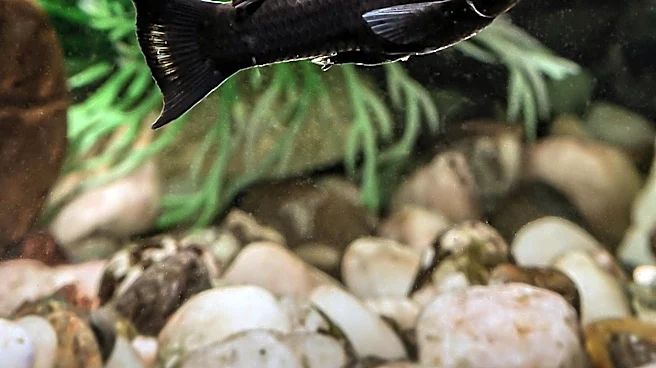









The Mexican molly, scientifically known as *Poecilia sphenops*, is a fascinating species of poeciliid fish originating from Central America. Once considered a widespread species with numerous local variants stretching from Mexico to Venezuela, current understanding places its native range more specifically in Mexico, Guatemala, and Honduras. This fish, often simply called the molly, has gained significant popularity in the aquarium trade, leading
to its introduction outside its natural habitat. Its adaptability and the vibrant "fancy mollies" created through crossbreeding have cemented its place as a favorite among fish enthusiasts.
Taxonomy and Classification
Within the broader genus *Poecilia*, *P. sphenops* is classified under the subgenus Mollienesia, commonly referred to as mollies. More precisely, it belongs to the shortfin molly clade, a designation that distinguishes it from sailfin mollies due to its shorter dorsal fin. Historically, all shortfin mollies were often grouped as local variants of a single, highly diverse *P. sphenops* species. However, the prevailing view today recognizes the shortfin mollies as a complex of approximately 13 distinct species, with *P. sphenops* itself being one of them.
This *P. sphenops* complex is sometimes further divided into two groups: one comprising species from the Pacific slope and another, the *P. mexicana* complex, from the Atlantic slope. The Mexican molly is frequently confused with *P. mexicana*, but a key difference lies in their dental structure. *P. sphenops* possesses tricuspid inner jaw teeth, meaning they have three points, while *P. mexicana* has unicuspid inner jaw teeth, with a single point. This subtle anatomical detail is crucial for distinguishing between these closely related species.
Physical Characteristics and Reproduction
*Poecilia sphenops* can reach a standard length of up to 3.3 inches (8.4 cm) or a total length of 3.9 inches (10 cm), though individuals are typically smaller. The species exhibits sexual dimorphism, with females generally growing about 0.39 inches (1 cm) larger than males. Males, however, are notable for their more intense coloration. Interestingly, males tend to show little to no further growth once their gonopodium, a specialized reproductive organ, is fully developed.
As a livebearer, the Mexican molly reproduces by giving birth to live young rather than laying eggs. After a gestation period of approximately one month, a female can produce up to 150 offspring. Observations of young fish being captured from January to August suggest that the species reproduces for a significant portion of the year. In their natural riverine environments, adult mollies often congregate near the banks, while the fry seek refuge in very shallow waters. Unlike some other fish species, *P. sphenops* males do not engage in elaborate courtship displays. Instead, they employ a "sneak copulation" strategy, approaching females to force mating. Males also have a shorter lifespan after reaching sexual maturity. Consistent with other poeciliids, populations of *P. sphenops* typically have more females than males, as males are more susceptible to stress, metabolic aging, and adverse environmental conditions, and their smaller size and more conspicuous colors make them easier targets for predators.
Distribution and Commercial Value
The native range of *Poecilia sphenops* spans Central America, specifically Mexico, Guatemala, and Honduras. Its popularity as an aquarium fish has led to its introduction into environments outside this native range. However, it's important to note that many records of introduced mollies might actually refer to *P. mexicana* or other species within the *P. sphenops* complex, highlighting the historical confusion in their classification. The commercial value of *P. sphenops* is significant, particularly in the ornamental fish trade. It has been extensively crossbred with other molly species, such as *P. latipinna* (sailfin molly) and *P. velifera* (Yucatan molly), to create a wide array of "fancy mollies." These hybrids, with their diverse colors and fin shapes, are highly sought after by aquarium hobbyists, contributing to the species' global presence and economic importance.
This extensive crossbreeding and the species' adaptability have made the Mexican molly a staple in home aquariums worldwide, showcasing its journey from the rivers of Central America to a prominent position in the international pet trade.