
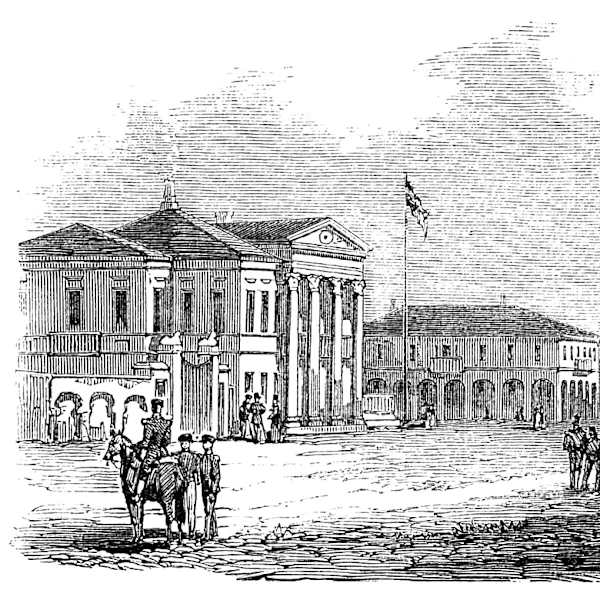






Sylvanus Thayer, often referred to as the "Father of the Military Academy," played a pivotal role in shaping the United States Military Academy at West Point into a premier institution for military education. Appointed as superintendent in 1817, Thayer's reforms and innovations left a lasting legacy that continues to influence the academy today.
Thayer's Reforms
When Sylvanus Thayer took over as superintendent, he embarked on a mission to overhaul the academy's curriculum
and standards. One of his most significant contributions was the introduction of the Thayer Method, a teaching approach that emphasizes self-study, daily homework, and small class sizes. This method encouraged cadets to take responsibility for their learning and fostered a culture of discipline and academic rigor.
Thayer also placed a strong emphasis on civil engineering, making it the foundation of the academy's curriculum. This focus on engineering not only equipped graduates with valuable skills but also contributed to the nation's infrastructure development. West Point graduates were instrumental in constructing the country's early railway lines, bridges, harbors, and roads, a tradition that continues with the U.S. Army Corps of Engineers.
Building a Culture of Honor
Beyond academic reforms, Thayer instilled a sense of military discipline and honorable conduct among the cadets. He believed that character and integrity were essential qualities for military leaders, and he worked tirelessly to embed these values into the academy's culture. Thayer's emphasis on honor and discipline helped shape the ethos of West Point, creating a strong esprit de corps among the cadets.
During Thayer's tenure, the Corps of Cadets thrived, and the academy became the predominant source of commissioned officers for the U.S. Army. This period saw an increase in the honoring of tradition and the development of customs that are still cherished at West Point today. One such tradition is the class ring, which began during Thayer's time in 1835, making West Point the first university in the United States to adopt this practice.
Thayer's Enduring Legacy
Sylvanus Thayer's impact on the United States Military Academy is undeniable. His reforms laid the foundation for an institution that would produce some of the most notable military leaders in American history. The values of discipline, honor, and academic excellence that he championed continue to define West Point's identity.
Thayer's legacy extends beyond the academy's walls. His contributions to military education and engineering have had a lasting influence on the nation. The traditions and culture he forged at West Point remain integral to the academy's mission of developing leaders of character for the United States Army.
In recognition of his contributions, Thayer's name is synonymous with excellence at West Point, and his vision continues to guide the academy as it prepares future generations of military leaders.