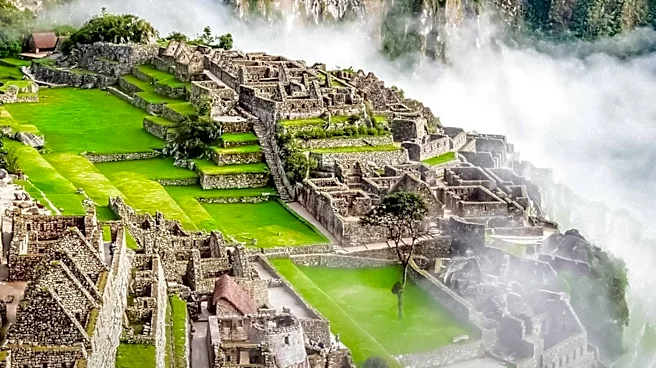




Hiram Bingham III is best known for his role in bringing the ancient Inca city of Machu Picchu to the world's attention. In 1911, Bingham, an American academic and explorer, rediscovered this lost city with the help of local indigenous farmers. His journey to Machu Picchu marked a significant moment in the history of archaeology and exploration, as it unveiled a forgotten piece of the Inca civilization to the modern world.
The Journey to Machu Picchu
Bingham's journey to Machu
Picchu was not a straightforward one. Although he was not a trained archaeologist, his academic background in South American history at Yale University fueled his interest in exploring the region. In 1908, while returning from the First Pan American Scientific Congress in Chile, Bingham was persuaded by a local prefect to visit the pre-Columbian city of Choquequirao in Peru. This visit sparked his interest in the Inca civilization and set the stage for his future expeditions.
In 1911, Bingham organized the Yale Peruvian Expedition with the goal of finding the last capital of the Incas. Guided by locals, he rediscovered and identified several significant sites, including Vitcos and Vilcabamba. However, it was his encounter with Machu Picchu on July 24, 1911, that would become his most famous achievement. Led by Melchor Arteaga, Bingham was introduced to the site, which had been largely forgotten by the outside world.
Misidentifications and Discoveries
Despite his groundbreaking rediscovery, Bingham made some notable misidentifications during his explorations. He initially believed Machu Picchu to be the "Lost City of the Incas," a title that actually belonged to Vilcabamba. This oversight was later corrected by other explorers, but Bingham's role in bringing Machu Picchu to global attention remains undisputed.
Bingham's expeditions were supported by Yale University and the National Geographic Society, allowing him to return to Peru multiple times between 1912 and 1915. His work introduced the world to the architectural and cultural significance of Machu Picchu, which he initially thought to be a major religious shrine. Modern research, however, has shown that Machu Picchu was more likely a royal estate.
Legacy and Impact
Hiram Bingham III's rediscovery of Machu Picchu has left a lasting legacy. The site has become one of South America's most popular tourist attractions, drawing visitors from around the globe. Bingham's work also sparked interest in the Inca civilization and contributed to the field of archaeology.
The road leading to Machu Picchu is named Carretera Hiram Bingham in his honor, and his book, "Lost City of the Incas," became a bestseller. Despite controversies over the artifacts he removed from the site, Bingham's contributions to the rediscovery and study of Machu Picchu remain significant. His story continues to inspire explorers and historians alike, highlighting the enduring allure of uncovering the mysteries of the past.