

Willie Lee McCovey, known by his nicknames "Stretch" and "Willie Mac," carved out a remarkable career in Major League Baseball (MLB) as a first baseman from 1959 to 1980. Primarily associated with the San Francisco Giants, where he spent 19 seasons, McCovey also played for the San Diego Padres and Oakland Athletics. His journey through professional baseball was marked by immense power at the plate, significant accolades, and moments of both triumph
and challenge, ultimately leading to his induction into the Baseball Hall of Fame in 1986.
Early Career and Rookie Sensation
McCovey's professional baseball journey began in 1955 when he signed a contract for $175.00 per month with a $500 signing bonus. At just 17 years old, standing 6'2" and weighing 165 pounds, he made an immediate impact with the Sandersville Giants of the Georgia State League, hitting .305 with 19 home runs and scoring 113 runs in 107 games. This strong start foreshadowed his future success in the major leagues.His MLB debut on July 30, 1959, was nothing short of spectacular. Facing Hall-of-Famer Robin Roberts of the Philadelphia Phillies, McCovey went four-for-four, recording two singles and two triples. He later noted that he found major league pitchers easier to hit than minor leaguers due to their superior control. In his initial 52 major league games, McCovey posted an impressive .354 batting average and hit 13 home runs, earning him the National League's (NL) Rookie of the Year award. He also secured the NL Player of the Month Award in August, his first full month in the majors, with a .373 average, 8 home runs, and 22 RBIs. He set a San Francisco Giants rookie record with a 22-game hitting streak, just four games shy of the team's all-time record.
Navigating Challenges and Position Changes
The 1960 season presented a significant challenge for McCovey. He experienced season-long struggles that led to a temporary demotion to the minor leagues, and he faced relentless booing from San Francisco fans. Despite playing nearly twice as many games (101) as his rookie year, he hit the same number of home runs (13) and saw his batting average drop to .238. This period highlighted the pressures and adjustments young players often face in the major leagues.Adding to the complexity, the Giants already had another talented first baseman, Orlando Cepeda, who had won the NL Rookie of the Year award the year before McCovey. In 1959, while McCovey was in the minor leagues, Cepeda played about 60 games at first base. However, new manager Alvin Dark designated McCovey as his primary first baseman for 1961, moving Cepeda to right field. Dark also assigned Willie Mays as McCovey's roommate, a move that likely provided valuable mentorship. By 1962, Dark decided to move Cepeda back to first base full-time and shifted McCovey to the outfield. McCovey's defensive skills in the outfield were famously joked about, with James S. Hirsch, Mays' biographer, reporting a recurring joke that McCovey "didn't need a glove to play the outfield, just a blindfold and a cigarette." Due to his struggles against left-handed pitching, Dark often played McCovey only when a right-hander was starting and frequently pinch-hit for him if a left-hander entered the game. Despite playing only 91 games that year, McCovey still managed to hit 20 home runs.
World Series Heartbreak and MVP Season
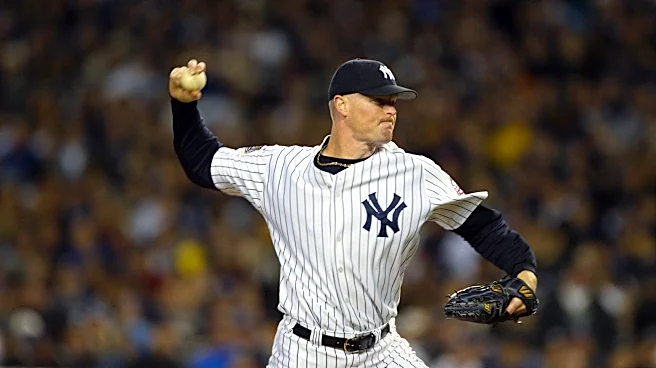
McCovey played a crucial role in the Giants' run to the 1962 World Series against the New York Yankees, which was the only World Series appearance of his career. He hit a home run against Ralph Terry in Game 2, contributing to the Giants' 2-0 victory. However, the series ended in heartbreak for McCovey and the Giants in Game 7. In the bottom of the ninth inning, with two outs and the Giants trailing 1-0, Willie Mays was on second base and Matty Alou on third. A base hit would likely have secured the championship for the Giants. McCovey hit a hard line drive that was caught by Yankees' second baseman Bobby Richardson, ending the series with a Yankees win. This moment was immortalized in two Peanuts comic strips by Charles M. Schulz, with Charlie Brown lamenting, "Why couldn't McCovey have hit the ball just three feet higher?" Years later, upon his Hall of Fame election, McCovey famously stated he wished to be remembered "As the guy who hit the ball over Bobby Richardson’s head in the seventh game."McCovey spent many years as a central figure in the Giants' batting order alongside fellow Hall-of-Famer Willie Mays. His statistically best year came in 1969, when he achieved 45 home runs, 126 RBIs, and a .320 batting average, earning him the National League MVP award. He was also named the Most Valuable Player of the 1969 All-Star Game after hitting two home runs to lead the National League to a 9-3 victory. He won NL Player of the Month awards in July 1963 (.310, 13 HR, 27 RBI) and August 1969 (.315, 8 HR, 22 RBI). In 1963, he tied with Hank Aaron for the NL lead with 44 home runs. His powerful hitting was so anticipated that in the early years of Candlestick Park, the Giants' home stadium, fans would often gather in the open area behind right field when McCovey came to bat, hoping to catch one of his home run balls. Injuries limited his play in 1971 and 1972, including a broken arm in 1972, but he still reached the playoffs in 1971 as the Giants won the NL West.