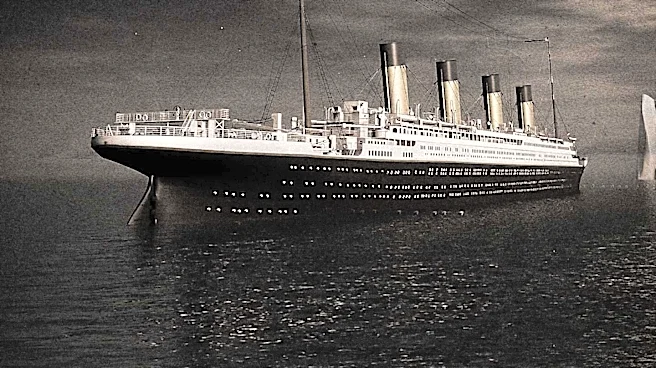






The sinking of the RMS Lusitania on May 7, 1915, was a catastrophic event that shocked the world, claiming the lives of 1,198 people, including 128 Americans. This tragedy, which intensified anti-German sentiment and contributed to the United States' eventual entry into World War I, became the subject of Winsor McCay's 1918 animated short film, "The Sinking of the Lusitania." McCay's film aimed to provide a vivid and emotional re-creation of the disaster,
serving as a powerful "historical record" that brought the horror of the event to audiences with unprecedented realism for an animated work of its time.
The Historical Event and Its Immediate Aftermath
The RMS Lusitania, a British liner, departed New York City in May 1915 on a transatlantic voyage to Liverpool amidst the backdrop of World War I. Warnings circulated about German submarine activity off the Irish coast, but the ship proceeded. On May 7, near County Cork, the German U-boat SM U-20, commanded by Kapitänleutnant Walther Schwieger, sighted the Lusitania. The U-20 fired a torpedo, which struck the ship's starboard side. This initial impact was followed by a second, more powerful explosion, leading to rapid flooding.
Panic quickly spread among the passengers as the ship began to founder. Attempts to launch lifeboats were chaotic, with many being improperly launched or capsizing, adding to the death toll. Within a mere 18 minutes, the Lusitania sank, resulting in the deaths of nearly 1,200 people. The aftermath of this disaster sparked international outrage, particularly in the United States, where the loss of American lives became a significant factor in the country's eventual decision to enter the war. The event was a stark reminder of the brutal realities of modern naval warfare and its impact on civilians.
McCay's Vision for a "Historical Record"
Winsor McCay, deeply affected by the Lusitania sinking, embarked on creating his animated film with the explicit intention of producing a "historical record" of the event. The film opens with a live-action prologue showing McCay studying a picture of the Lusitania, positioning himself as a meticulous chronicler. Intertitles within the film further emphasized this documentary ambition. McCay's animation combined editorial cartooning techniques with sequences designed to appear live-action-like, making it his most realistic effort to date.
The film meticulously re-created the sequence of events: the liner passing the Statue of Liberty and leaving New York Harbor, the SM U-20 (though erroneously named "U-39" in an intertitle) slicing through the waters, and the firing of the torpedo. The visual narrative then depicted the ship billowing smoke, lifeboats capsizing, the liner tilting, and passengers being tossed into the ocean. A second blast rocks the ship, which slowly submerges amid scenes of drowning bodies, culminating with a mother struggling to keep her baby above the waves. This detailed and sequential portrayal aimed to provide viewers with a vivid, almost journalistic account of the tragedy.
Emotional Realism and Public Impact
McCay made deliberate stylistic choices to infuse his "historical record" with profound emotion, ensuring the film resonated deeply with its audience. The animation historian Donald Crafton noted McCay's "realistic graphic style," which was evident in the highly detailed artwork and fluid, naturalistic animation. To heighten the sense of dread and anxiety, McCay included shots of the submarines lurking beneath the surface, creating a palpable tension. He also used abstract styling for the white sheets of sky and sea, portraying them as "vast voids which engorge themselves on the drowning bodies," a powerful visual metaphor for the overwhelming nature of the disaster.
The film's dark mood and strong propagandist feel were intrinsically linked to its emotional realism. It depicted the terrifying fates of passengers, including the drowning of children and human chains of passengers jumping to their deaths, designed to evoke outrage and sympathy. A review in "The Cinema" praised the film, particularly the scene of the first torpedo explosion, calling it "more than reality," highlighting its powerful and immersive effect on viewers. This cinematic re-creation, recognized for its significance by its selection for preservation in the National Film Registry in 2017, stands as a testament to McCay's ability to transform a historical tragedy into a compelling and emotionally charged animated narrative, shaping public perception and memory of the Lusitania disaster.