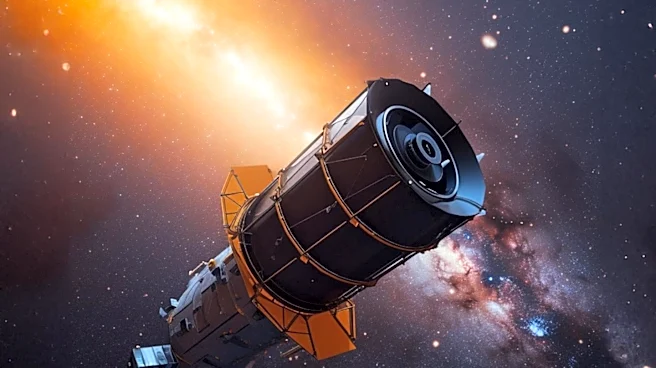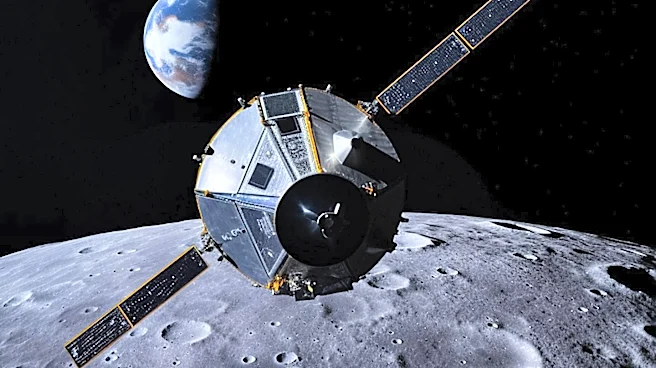









The journey of Lunar Orbiter 1, the first American spacecraft to orbit the Moon, was not without its complexities. Launched in 1966 as part of NASA's Lunar Orbiter program, the mission aimed to photograph the lunar surface for future landing site selection. However, the path to achieving these critical objectives involved overcoming several significant operational challenges. The ingenuity of mission controllers in addressing these issues highlights
the pioneering spirit and problem-solving capabilities inherent in early space exploration, ensuring the mission's ultimate success despite unexpected hurdles.
Overcoming Early Mission Hurdles
Shortly after its launch on August 10, 1966, and subsequent injection into a trans-lunar trajectory, Lunar Orbiter 1 encountered its first major technical difficulty: a temporary failure of the Canopus star tracker. This crucial navigation instrument, designed to orient the spacecraft by locking onto the star Canopus, likely malfunctioned due to stray sunlight interfering with its sensors. Without a reliable star tracker, the spacecraft's ability to maintain its orientation and navigate accurately was compromised. Mission controllers swiftly devised an alternative solution, demonstrating remarkable adaptability. They navigated the spacecraft by using the Moon itself as a reference point, a testament to their resourcefulness in a challenging situation.
Another critical issue that arose during the cruise phase to the Moon was overheating. The spacecraft's internal temperatures began to rise to concerning levels, posing a threat to its sensitive electronic components and overall operational integrity. To combat this, mission controllers implemented a clever thermal management strategy. They commanded Lunar Orbiter 1 to reorient itself by 36 degrees off-Sun. This adjustment changed the angle at which sunlight struck the spacecraft, effectively reducing the heat absorption and bringing the internal temperatures back down to acceptable levels. These early, successful interventions were vital in preserving the spacecraft's health and ensuring it could continue its journey to lunar orbit.
Orbital Adjustments and Mission Termination
Upon reaching the Moon, Lunar Orbiter 1 was injected into an elliptical near-equatorial lunar orbit. This initial orbit, measuring 189.1 kilometers by 1,866.8 kilometers, with a period of 3 hours and 37 minutes, was then precisely adjusted to optimize photographic coverage. On August 21, the perilune, the closest point to the Moon, was lowered to 58 kilometers, and further reduced to 40.5 kilometers on August 25. These precise orbital maneuvers were essential for capturing the high-resolution images required for selecting safe landing sites for the Surveyor and Apollo missions.
The mission concluded on October 29, 1966, after 577 orbits. The decision to end the mission was a controlled one, driven by practical considerations. A shortage of remaining attitude control gas and other deteriorating conditions necessitated the termination. Furthermore, the early conclusion of the nominal one-year mission was strategically planned to avoid any potential transmission interference with the upcoming Lunar Orbiter 2 mission. By commanding Lunar Orbiter 1 to impact the lunar surface at 7 degrees north latitude, 161 degrees east longitude, on the Moon's far side, NASA ensured a clear operational environment for its successor, highlighting a forward-thinking approach to managing its growing fleet of lunar probes.