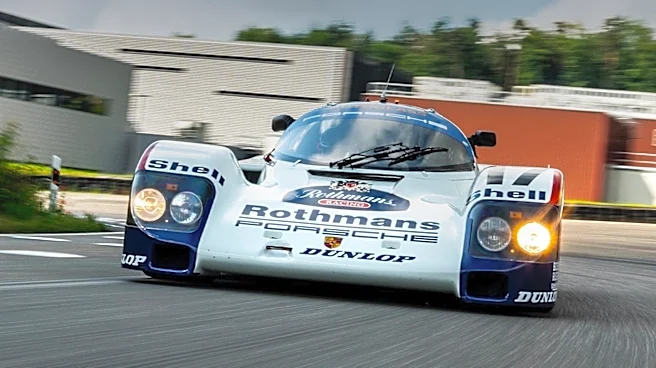





The FIA World Endurance Championship (WEC) stands today as a premier global auto racing series, but its current form is the result of a significant evolution in endurance motorsport. Established in 2012, the WEC was conceived as a direct successor to the Automobile Club de l'Ouest's (ACO) Intercontinental Le Mans Cup, which had a brief run starting in 2010. This lineage also connects it to the historic World Sportscar Championship, a series that concluded
in 1992 and even used the "World Endurance Championship" name from 1981 to 1985. The WEC's journey reflects a continuous adaptation to manufacturer interest, technological advancements, and the desire to maintain competitive, thrilling racing.
The Genesis: Replacing the Intercontinental Le Mans Cup
The World Endurance Championship first took to the track in 2012, inheriting much of its format from the Intercontinental Le Mans Cup. This inaugural season featured eight endurance races held across the globe, prominently including the iconic 24 Hours of Le Mans. The championship initially comprised four distinct categories, designed to accommodate a variety of racing machinery and driver skill levels. These included the top-tier LMP1 and LMP2 prototypes, alongside GTE grand tourers. The GTE class was further divided into GTE Pro, for teams fielding professional drivers, and GTE Am, which allowed for a mix of amateur and professional drivers, fostering broader participation in the series.
This initial structure aimed to provide a comprehensive platform for endurance racing, attracting both factory-backed efforts and privateer teams. The inclusion of the 24 Hours of Le Mans as a cornerstone event immediately lent significant prestige to the new championship, linking it to one of motorsport's most revered races. The multi-class format, where different types of cars compete simultaneously, has always been a hallmark of endurance racing, creating dynamic on-track action and strategic complexity.
Adapting to Change: The Rise of Hypercar and GT3
Following the 2017 season, the LMP1 class, once the pinnacle of the WEC, faced declining manufacturer interest. This prompted the FIA to commission a study to determine the future direction of the championship's premier category. The outcome was the proposal for the Le Mans Hypercar (LMH) class. This new regulation aimed to shift away from the traditional Le Mans Prototype entries and reduce the reliance on complex hybrid technologies, which had become a significant cost factor. The goal was to make the championship more attractive to car manufacturers by allowing them to race cars that bore a closer resemblance to their flagship road models, citing examples like the Aston Martin Vulcan and McLaren Senna GTR.
The Hypercar class made its debut in the 2021 season, featuring LMH entries from manufacturers such as Alpine, Glickenhaus, and Toyota. The class further expanded in 2023 with the full-time inclusion of LMDh entries, which can compete alongside LMH cars, creating a diverse and highly competitive top category. Simultaneously, the ACO announced significant changes for the LMGTE categories in 2021, also due to a rapid decline in manufacturer involvement. The 2022 season marked the end for the LMGTE Pro class. From 2024, the LMGTE Am class will be replaced by a GT3-based category, described as a "GT3 Premium." This new class will feature a cost-capped body kit conversion from standard GT3 machinery, with the FIA aiming for a customer-focused category where official manufacturer entries are not permitted, ensuring a level playing field for private teams.
The Evolving Grid: LMP2's Shifting Role
The continuous evolution of the WEC also impacted other classes. The 2024 season marked a significant change as the LMP2 class, a long-standing component of the championship, would not feature on the full-season grid. This decision was driven by increased demand for full-season entries in both the Hypercar class and the newly introduced LMGT3 class. Despite its absence from the full WEC season, the LMP2 category maintained its importance within the 24 Hours of Le Mans, with a minimum of 15 slots reserved on the grid for these prototypes. This demonstrates the championship's ongoing efforts to balance manufacturer interest, cost control, and the desire to maintain a diverse and exciting field of competitors across its various classes.