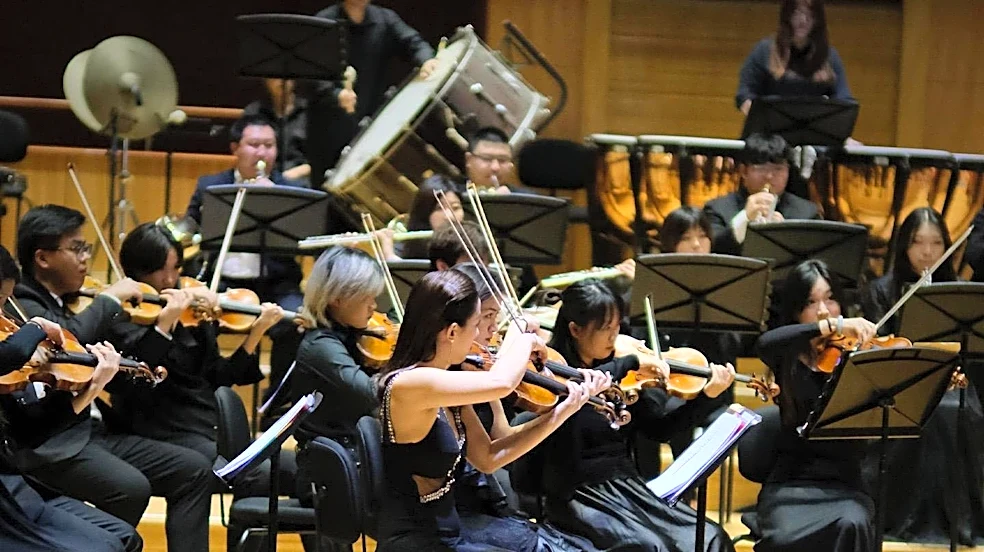







Tanglewood, nestled in the Berkshire Hills of western Massachusetts, has become synonymous with summer classical music, serving as the beloved summer home of the Boston Symphony Orchestra (BSO) since 1937. This picturesque venue, located in the towns of Lenox and Stockbridge, is not just a performance space but a vibrant festival site that hosts a diverse array of musical events. Its establishment as the BSO's summer residence was a pivotal moment,
transforming a series of local concerts into a world-renowned musical institution and a significant cultural landmark in the United States.
The Genesis of a Summer Festival
The history of Tanglewood as a music venue began with a series of concerts in August 1934 at the Interlaken estate of Daniel Hanna. Composer and conductor Henry Kimball Hadley had scouted the Berkshires, seeking a location and support for his dream of a seasonal classical music festival. He found an enthusiastic patron in Gertrude Robinson Smith, and together they organized concerts featuring the New York Philharmonic Orchestra, where Hadley had previously served as associate conductor. These initial performances, held in an amphitheater built on the estate's show horse ring, were well-received, even attracting notable attendees like Sara Delano Roosevelt, the President's mother. The success of these early efforts paved the way for a second series of concerts at Interlaken the following summer.
Following two seasons with the New York Philharmonic, the Boston Symphony Orchestra, under the direction of Conductor Serge Koussevitzky, was invited to perform at the 1936 festival. This event took place at Holmwood, the home of Margaret Vanderbilt in nearby Lenox. The BSO gave its first concert in the Berkshires on August 13, 1936, marking the beginning of its enduring relationship with the region. From that point forward, the BSO became the central focus of the music festival, solidifying its presence in the summer cultural landscape.
Moving to Tanglewood and Building a Permanent Home
In 1937, the festival found its permanent home when the site was moved to the estate known as "Tanglewood." This estate was generously donated by Rosamond "Dixey" Sturgis Brooks (Mrs. Gorham Brooks) and Miss Mary Aspinwall Tappan, daughter of William Tappan and Caroline Sturgis. The name "Tanglewood" itself has literary roots, derived from Nathaniel Hawthorne's "Tanglewood Tales," which he wrote while residing in a cottage on the estate. The 1937 season consisted of six concerts over two weeks, performed inside a temporary tent erected around a plywood shell. These concerts quickly gained recognition as significant high-society events.
A dramatic moment during a performance of Richard Wagner's "Ride of the Valkyries" on August 12, 1937, underscored the need for a more robust venue. A thunderstorm interrupted the concert, prompting Gertrude Robinson Smith to address the record crowd of 5,000. She passionately argued for a permanent building, and within minutes, over $30,000 was raised for its construction. This spontaneous outpouring of support led to the creation of the iconic Music Shed, which opened in 1938, providing a dedicated and weather-protected space for performances. Tanglewood has since grown to include three music schools—the Tanglewood Music Center, Tanglewood Learning Center, and the Boston University Tanglewood Institute—and hosts a wide range of events beyond classical music, including the Festival of Contemporary Music, jazz and popular artists, and frequent appearances by figures like James Taylor and John Williams.