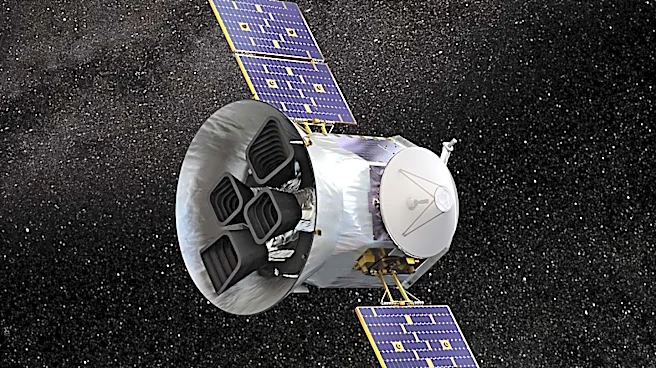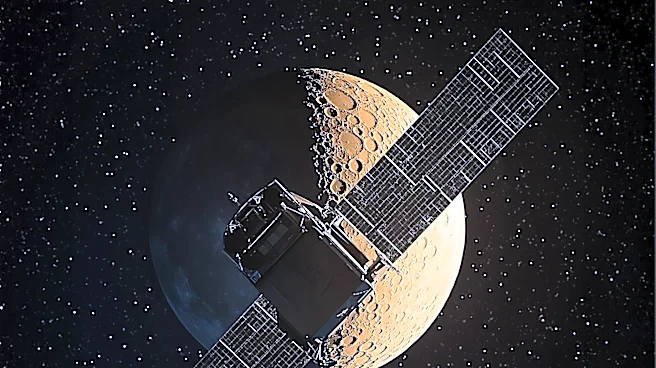





The MESSENGER spacecraft, a NASA mission, made history by becoming the first probe to orbit Mercury. From 2011 to 2015, MESSENGER provided unprecedented insights into the planet's characteristics and environment. Its scientific achievements have significantly advanced our understanding of Mercury, revealing details about its composition, geology, and magnetic field.
Mapping Mercury's Surface
One of MESSENGER's primary objectives was to map Mercury's surface in detail. The spacecraft
was equipped with a suite of instruments designed to capture high-resolution images and data. During its mission, MESSENGER successfully mapped 100% of Mercury's surface, providing scientists with a comprehensive view of the planet's topography and geological features.
The images captured by MESSENGER revealed a landscape marked by craters, smooth plains, and volcanic activity. These findings challenged previous assumptions about Mercury's geological history, suggesting that the planet had experienced significant volcanic activity in the past. The detailed mapping also allowed scientists to identify previously unknown features, such as the Rachmaninoff crater and the smooth plains of Borealis Planitia.
Discovering Water Ice and Magnetic Fields
MESSENGER's mission yielded groundbreaking discoveries about Mercury's composition. One of the most significant findings was the presence of water ice at the planet's north pole. This discovery was made possible by MESSENGER's instruments, which detected hydrogen and other elements indicative of water ice. The presence of water ice on Mercury, a planet so close to the Sun, was a surprising revelation that has implications for our understanding of planetary formation and evolution.
In addition to water ice, MESSENGER provided detailed measurements of Mercury's magnetic field. The spacecraft's instruments revealed that Mercury's magnetic field is similar to Earth's, albeit much weaker. This finding was unexpected, as Mercury's slow rotation was thought to preclude the existence of a magnetic field. The data collected by MESSENGER has prompted scientists to reevaluate their models of planetary magnetism, offering new insights into the dynamics of Mercury's core.
A Lasting Impact on Planetary Science
MESSENGER's mission has left a lasting impact on the field of planetary science. The data collected by the spacecraft has been invaluable for researchers studying Mercury and other rocky planets. By providing a detailed view of Mercury's surface and environment, MESSENGER has expanded our knowledge of the planet's history and evolution.
The mission's success has also demonstrated the effectiveness of gravity assist maneuvers and innovative trajectory planning in space exploration. MESSENGER's journey to Mercury, which included multiple flybys of Earth, Venus, and Mercury itself, showcased the ingenuity and precision required for interplanetary missions. As scientists continue to analyze the data collected by MESSENGER, its legacy will undoubtedly shape future explorations of Mercury and beyond.