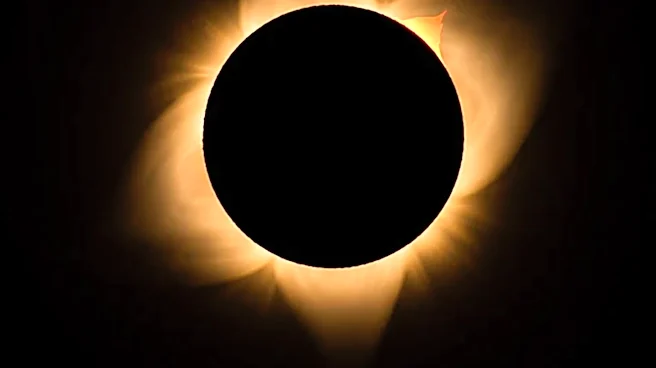







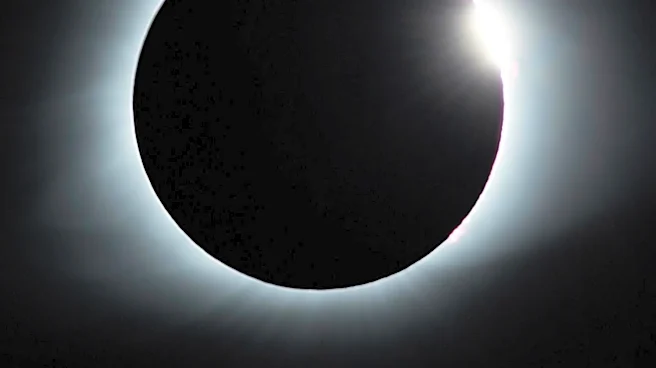
The solar eclipse of May 29, 1919, was not just a celestial event; it was a pivotal moment in the history of science. This eclipse provided the first empirical evidence supporting Albert Einstein's theory of relativity, fundamentally altering our understanding of physics. The event was marked by expeditions to observe the eclipse and capture the bending of starlight around the Sun, a phenomenon predicted by Einstein.
The Eddington Experiment
The 1919 solar eclipse was the
subject of the Eddington experiment, named after Sir Arthur Eddington, a British astronomer who played a crucial role in testing Einstein's theory. Two groups of astronomers set out to capture the eclipse: one traveled to Brazil, and the other to the west coast of Africa. Their mission was to photograph stars near the Sun during the eclipse, when the Moon would block the Sun's light, allowing the stars to be visible.
The photographs taken during the eclipse were intended to show whether the Sun's gravity could bend the light from these stars, as predicted by Einstein's theory. Despite challenges posed by weather conditions, including thunderstorms and overcast skies, the astronomers managed to capture the necessary images. These images showed that the Sun's mass did indeed cause a shift in the apparent position of the stars, confirming Einstein's predictions.
Overcoming Adversity
The success of the 1919 eclipse observations was not guaranteed. The astronomers faced significant obstacles, primarily due to unexpected storms and cloud cover. On the morning of the eclipse, a thunderstorm threatened to obscure the event entirely. Fortunately, the clouds began to dissipate just thirty minutes before the eclipse, allowing the astronomers to take photographs through gaps in the clouds.
This narrow window of opportunity was crucial. The photographs taken during this brief period provided the evidence needed to support Einstein's theory. The ability to overcome these challenges and capture the necessary data was a testament to the determination and skill of the astronomers involved.
Impact on Physics
The confirmation of Einstein's theory of relativity through the 1919 solar eclipse had profound implications for physics. It marked a shift from Newtonian physics, which was based on the concept of absolute time and space, to a new understanding of the universe where space and time are interconnected.
The success of the eclipse observations helped establish Einstein's theory as a cornerstone of modern physics. It demonstrated that light could be bent by gravity, a concept that has since been integral to our understanding of the universe. The 1919 solar eclipse was a turning point that paved the way for future discoveries and advancements in the field of physics.