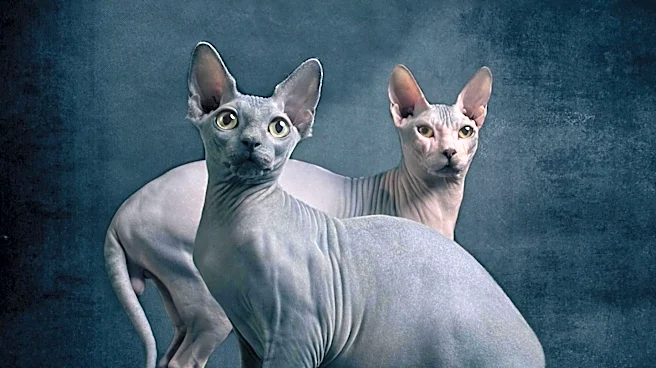






The Peterbald cat is a breed renowned for its striking appearance, which combines the elegant build of Oriental Shorthairs with a unique range of coat types, often leading to a hairless or near-hairless presentation. Originating from Russia, this breed is a fascinating example of how specific genetic traits can be selectively bred to create a distinct feline aesthetic. From its slender, muscular physique to its expressive almond-shaped eyes and webbed
feet, every aspect of the Peterbald's appearance contributes to its unique identity, making it a captivating subject for cat enthusiasts and geneticists alike.
A Spectrum of Coat Types
One of the most defining characteristics of the Peterbald is its varied coat. Unlike many breeds with a single, consistent coat type, Peterbalds can be born with several different coverings, all stemming from a dominant hair-losing gene inherited from the Don Sphynx. This gene allows for a spectrum of textures, including completely bald, flocked, velour, brush, or even a straight coat. The term "flocked" refers to a very fine, downy covering, while "velour" describes a slightly denser, soft, and velvety texture. The "brush" coat is coarser and may be more sparse.Interestingly, many Peterbalds born with hair, with the exception of those with a straight coat, may gradually lose their hair over time. This means a kitten born with a light covering might become completely bald as it matures, adding an element of transformation to their development. This genetic trait ensures that even within a single litter, there can be a remarkable diversity in coat presentation, making each Peterbald a unique individual. Furthermore, Peterbalds come in all colors and markings, adding another layer of visual variety to the breed.
The Elegant Oriental Build
Beyond its unique coat, the Peterbald possesses a body type that strongly resembles its Oriental Shorthair ancestors. This means they have a slim and muscular build, conveying an impression of grace and athleticism. Their head is typically narrow and long, featuring a straight profile that flows smoothly from the forehead to the nose. Their eyes are almond-shaped, often conveying an intelligent and alert expression, and are usually set in harmony with the overall wedge shape of their muzzle.Complementing their refined head are large, set-apart ears, which contribute to their distinctive silhouette. These ears are often broad at the base and taper to a rounded tip, further enhancing their elegant appearance. The overall impression is one of sleekness and refinement, a hallmark of the Oriental cat family. This body type is actively encouraged in breed standards, which promote mating with Oriental and Siamese cats to maintain and enhance these desirable physical traits.
Unique Physical Adaptations
Peterbalds possess several other distinctive physical features that set them apart. They have a long, whip-like tail that tapers to a fine point, adding to their overall elegant and elongated appearance. Their paws are oval-shaped, and a particularly interesting adaptation is their webbed feet. This webbing between their toes is not just a curiosity; it contributes to their dexterity.These webbed, oval paws allow Peterbalds to grasp objects with surprising agility. Owners often report that Peterbalds can use their paws to manipulate items, and some are even capable of opening levered doorknobs. This level of manual dexterity is quite unusual among cat breeds and speaks to their intelligence and adaptability. These unique physical traits, from their varied coats to their specialized paws, combine to make the Peterbald a truly remarkable and engaging feline companion.