





Robert Woodrow Wilson, an American astronomer born on January 10, 1936, in Houston, Texas, has left an indelible mark on the field of physics through his groundbreaking discoveries and continued advocacy for scientific research. His career is highlighted by the co-discovery of cosmic microwave background radiation, an achievement that earned him the Nobel Prize in Physics. Beyond this pivotal moment, Wilson's work has contributed significantly to our
understanding of the universe and the methods used to study it.
Early Life and Education in Texas and California
Wilson's academic journey began in his home state of Texas. He graduated from Lamar High School in River Oaks, Houston, before pursuing his undergraduate studies at Rice University, also located in Houston. During his time at Rice, he was inducted into the prestigious Phi Beta Kappa society, signaling his early academic excellence. His pursuit of knowledge then led him to the California Institute of Technology, where he earned his PhD in physics. At Caltech, he benefited from the guidance of notable thesis advisors, including John Bolton and Maarten Schmidt, who helped shape his scientific foundation.
The Discovery of Cosmic Microwave Background Radiation
One of the most significant achievements in Wilson's career came during his time at Bell Laboratories in Holmdel Township, New Jersey. While conducting tests and experiments with the Holmdel Horn Antenna alongside Arno Penzias, they encountered an inexplicable source of noise in the atmosphere. Despite their diligent efforts to eliminate all potential sources, including the rather unconventional step of removing pigeon droppings from the antenna, the noise persisted. This persistent signal was eventually identified as cosmic microwave background (CMB) radiation. This discovery was not merely an interesting anomaly; it provided crucial corroboration for the Big Bang theory, fundamentally changing cosmological understanding. For this monumental discovery, Wilson and Penzias were jointly awarded the 1978 Nobel Prize in Physics.
Contributions to Millimeter and Submillimeter Astronomy
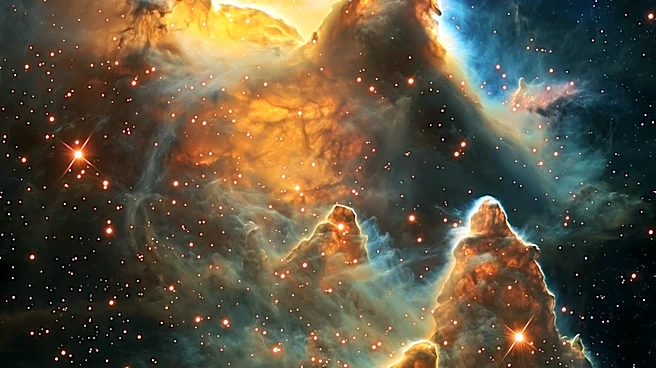
Wilson's scientific contributions extended beyond the CMB. In 1970, he led a team that achieved the first detection of a rotational spectral line of carbon monoxide (CO) in an astronomical object. This initial detection was made in the Orion Nebula and subsequently in eight other galactic sources. This pioneering work had a profound impact on astronomical research. CO observations quickly became the standard method for tracing cool molecular interstellar gas, effectively laying the groundwork for the development of the fields of millimeter and submillimeter astronomy. His work opened new avenues for studying the cold, dense regions of space where stars are born.
Continued Career and Advocacy
After his impactful tenure at Bell Laboratories, which lasted until 1994, Wilson transitioned to the Harvard-Smithsonian Center for Astrophysics in Cambridge, Massachusetts, where he was named a senior scientist. Throughout his career, Wilson has received numerous accolades, including the Henry Draper Medal of the National Academy of Sciences in 1977, which he shared with Penzias, and the Golden Plate Award of the American Academy of Achievement in 1987. His commitment to science also extends to advocacy; in May 2008, he was one of 20 American Nobel laureates in Physics to sign a letter to President George W. Bush. This letter urged the president to address what they perceived as damage to basic science research caused by the Fiscal Year 2008 Omnibus Appropriations Bill, requesting additional emergency funding for key scientific institutions like the Department of Energy's Office of Science, the National Science Foundation, and the National Institute of Standards and Technology. In 2009, Wilson was further recognized for his intellectual contributions by being elected to the American Philosophical Society.