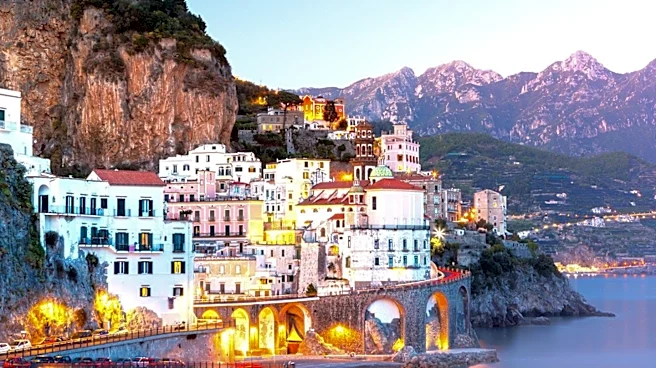




Amalfi, a picturesque town on Italy's Campania coast, has long captivated visitors with its dramatic cliffs, coastal scenery, and rich history. Once a powerful maritime republic, Amalfi has transitioned over centuries into a renowned destination, celebrated not only for its natural beauty but also for its unique cultural contributions, such as its distinctive lemon production and traditional paper-making. This blend of historical significance and scenic
charm continues to draw people to its shores, making it a timeless retreat.
A Legacy of Unique Local Products
The Amalfi Coast is particularly famous for its cultivation of lemons, specifically the "sfusato amalfitano" variety. These lemons are notably large, often double the size of other types, characterized by their thick, wrinkled skin and a sweet, juicy flesh with few seeds. They are a key ingredient in the region's renowned Limoncello liqueur. Visitors to the Amalfi Coast between February and October can frequently observe these distinctive lemons growing in terraced gardens, a testament to their integral role in the local economy and culture.
Beyond its citrus fame, Amalfi is also known for its hand-made paper, traditionally called "bambagina." This thick, high-quality paper has a long history of production and export, reaching many European countries and America. It has been widely used throughout Italy for elegant writing paper, wedding invitations, and visiting cards. Artists, such as Giuseppe Leone, have praised its unique qualities, highlighting its significant cultural and artistic value. The continued production of bambagina reflects Amalfi's dedication to preserving its artisanal heritage.
From Ancient History to Modern Hospitality
Amalfi's history as a significant center dates back to its time as the capital of the Duchy of Amalfi, an important trading power in the Mediterranean from 839 to around 1200. This rich past is still visible in its architecture and cultural sites, such as the Amalfi Cathedral. The town's dramatic setting, nestled at the foot of Monte Cerreto and surrounded by cliffs, has always contributed to its appeal, making it a place of both strategic importance and natural splendor.
Recognizing its inherent charm, Amalfi has a long tradition of catering to visitors. This hospitality began relatively early, with two former monasteries being converted into hotels: the Luna Convento in the second decade of the 19th century and the Cappuccini Convento in the 1880s. These establishments paved the way for Amalfi to become a favored retreat for notable figures. Celebrated guests, including the composer Richard Wagner and the playwright Henrik Ibsen, found inspiration and completed works during their stays in Amalfi. This history of welcoming artists and travelers underscores Amalfi's enduring appeal as a place of beauty, tranquility, and cultural richness, continuing to attract those seeking both relaxation and inspiration.