
The year 1946 marked a significant moment in women's golf with the establishment of the U.S. Women's Open. This inaugural tournament, held from August 26 to September 1 at the Spokane Country Club in Washington, was not only the first edition of what would become a major championship but also the only one in its history to be played under a match play format. This unique approach set it apart from all subsequent U.S. Women's Opens, which adopted stroke
play. The event brought together a field of 39 women, both professionals and amateurs, to compete for the prestigious title and a substantial prize fund, signaling a new era for women's professional golf.
Setting the Stage: Spokane Country Club and the Match Play Format
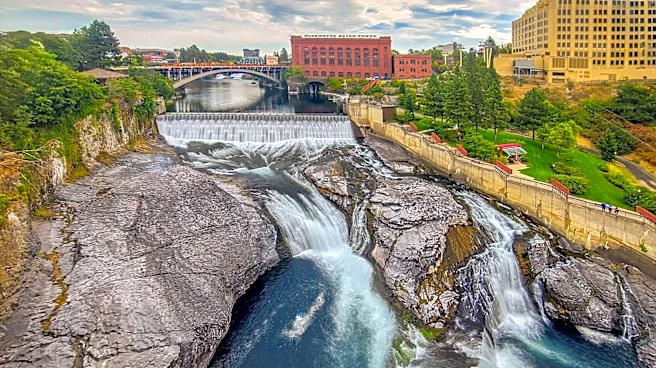
The Spokane Country Club, located north of Spokane, Washington, served as the historic venue for this groundbreaking event. The tournament was organized by the WPGA and the Spokane Athletic Round Table, highlighting a collaborative effort to launch this new championship. The course itself was a par 74, stretching 6,387 yards. The initial field of 39 women underwent a rigorous 36-hole qualifier on Monday and Tuesday to narrow down the competitors to a 32-player match play bracket. This qualifying round was crucial, as only six professionals and 26 amateurs successfully advanced to the match play portion of the tournament.
The match play format itself was structured to intensify the competition as the tournament progressed. Early rounds, specifically through the quarterfinals, consisted of 18-hole matches. However, for the crucial semifinal and final rounds, the stakes were raised, with competitors facing off in extended 36-hole matches. This longer format in the later stages was designed to thoroughly test the endurance and skill of the top players, ensuring that the eventual champion truly earned her title through sustained performance under pressure.
The Road to the Final: Professionals Dominate
As the tournament unfolded, the field of 32 players battled through the match play bracket. Ultimately, two prominent professionals, Patty Berg and Betty Jameson, emerged victorious from their respective sides of the bracket to meet in the Sunday final. Their journey to the final showcased their exceptional talent and competitive spirit, as they navigated the challenges of the match play format against a strong field of both professional and amateur golfers. The fact that two professionals reached the final underscored the growing prominence of professional women's golf at the time.
A Historic Final and Its Legacy
The final match between Patty Berg and Betty Jameson was a closely contested affair. Jameson initially took a three-hole lead after seven holes, demonstrating her early dominance. However, Berg mounted a comeback, evening the match by the end of the first 18 holes. After a lunch break, Berg continued her strong play in the afternoon session, needing only fourteen holes to close out the match with a decisive 5 & 4 victory. This meant Berg was five holes up with four holes left to play, securing her place in history as the first U.S. Women's Open champion.
Patty Berg's win was later recognized as her sixth major championship, solidifying her status as a golf legend. The prize money for the tournament was substantial for its time, with Berg winning $5,600 and Jameson $3,100, all awarded in war bonds. Notably, the winner's share from this inaugural event was not exceeded in subsequent U.S. Women's Opens until 1972, a full 26 years later, highlighting the significant financial recognition given to the first champion. The tournament's success established the U.S. Women's Open as a major championship, paving the way for its enduring legacy in women's golf, even as it transitioned to a stroke play format in subsequent years, starting with Betty Jameson's win the following year.