
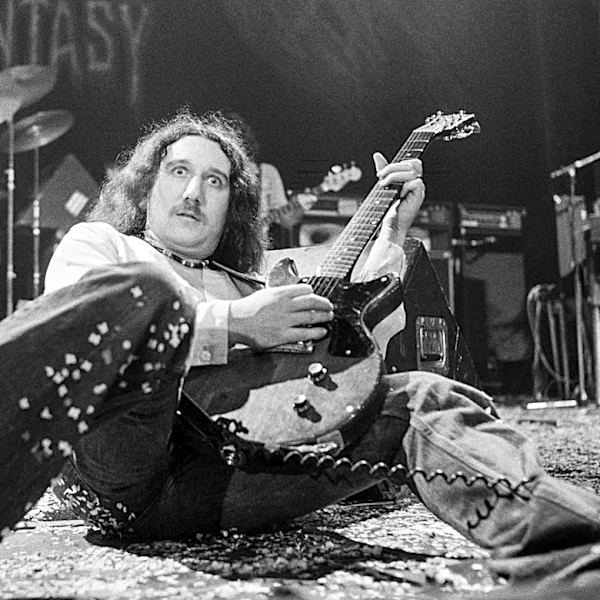




Mickey Hart, born Michael Steven Hartman in 1943, is an American percussionist renowned for his role as one of the two drummers in the iconic rock band Grateful Dead. His musical journey began long before his Grateful Dead days, shaped by early influences and a unique path through military service. Hart's career is marked by significant periods with the Grateful Dead, solo endeavors, and a deep commitment to ethnomusicology and the preservation of global
musical traditions, ultimately cementing his status as a celebrated figure in music.
Early Influences and Military Service
Hart's interest in percussion was ignited at a young age, influenced by his mother, Leah, a drummer, and his father, Lenny Hart, a champion rudimental drummer who had abandoned the family. Discovering his father's practice pad and snakewood sticks at age ten, Hart recalled, "From the age of ten, all I did was drum." He attended Lawrence High School in Cedarhurst, New York, where the presence of many champion rudimental drummers inspired him to achieve the first chair in the All State Band under the tutelage of Arthur Jones, who served as a father figure.
Dropping out of high school as a senior, Hart enlisted in the United States Air Force in 1961, drawn by its musical pedigree. He served as a drummer in The Airmen of Note, an elite big band unit within the United States Air Force Band, modeled after Glenn Miller's celebrated Army Air Forces Band. During his three-and-a-half years stationed across Europe, Hart also claimed to have taught "combative measures," particularly judo, in which he held a black belt, to units of the Strategic Air Command and other forces in Europe and Africa. He reportedly sat in with notable jazz musicians like Gerry Mulligan and Count Basie during a tour in Spain, performed in various ensembles from small jazz combos to marching bands, and participated in recording sessions for local pop stars. Hart later suggested in a 1972 interview that his Airmen of Note assignment served as a "cover" for his instructional duties. While in the Air Force, he co-founded Joe and the Jaguars with fellow serviceman Joe Bennett.
Joining and Departing the Grateful Dead
Following his 1965 discharge, Hart briefly returned to the New York metropolitan area, filling in for a regular drummer in a "staid fox-trot band" as a member of the local musician's union. He was also influenced by Tito Puente's regular appearances while working as a soda jerk at El Patio, a beach club in Atlantic Beach, New York. A few months after high school, he discovered the work of Nigerian drummer Babatunde Olatunji, another formative influence, who later taught and collaborated with Hart.
Hart's introduction to the Grateful Dead came in mid-1967. After attending a Count Basie Orchestra performance at The Fillmore, he helped fulfill Grateful Dead drummer Bill Kreutzmann's request to meet Basie Orchestra drummer Sonny Payne, leading to an informal tutorial between Hart and Kreutzmann and his eventual introduction to the band. Hart joined the Grateful Dead in September 1967, and his interests in polyrhythmic rudiments and exotic percussion became integral to the band's sound during what archivist Dick Latvala called the "primal Dead era" of 1968–1969. He and Kreutzmann earned the nickname "the rhythm devils."
However, Hart left the band by mutual agreement in February 1971 after his father, who briefly managed the group, embezzled $70,000 from them. Kreutzmann's 2015 memoir revealed that Hart's use of "dark drugs" had accelerated after the embezzlement, affecting his musical contributions and leading to his departure. He returned to the Dead for their final pre-hiatus concert in October 1974 and was formally reinstated by the beginning of their 1976 tour, remaining with the group until its official dissolution in 1995.
Post-Dead Collaborations and Ethnomusicology
After Jerry Garcia's death and the Grateful Dead's dissolution in 1995, Hart continued to play music with various groups, including former Grateful Dead members. He performed with Mickey Hart's Mystery Box at the 1996 Furthur Festival. In 2005, he collaborated with the band Particle to create the Hydra Project. During 2006, Hart teamed up with Bill Kreutzmann, Phish bassist Mike Gordon, and former Other Ones lead guitarist Steve Kimock to form the Rhythm Devils, a band that toured in 2006 and again in 2010 and 2011 with different lineups.
Beyond his band work, Hart has pursued a lifelong interest in ethnomusicology and world music. He has performed as a solo artist, percussionist, and authored several books. Hart has been influential in recording global musical traditions on the verge of possible extinction, working with archivists and ethnomusicologists at the American Folklife Center at the Library of Congress and the Center for Folklife and Cultural Heritage at the Smithsonian Institution. He serves on the Board of Trustees of the American Folklife Center and the Library of Congress National Recorded Sound Preservation Board, advocating for audio preservation through the "Save Our Sounds" initiative. In 1991, Hart produced the album *Planet Drum*, which topped the Billboard World Music chart for 26 weeks and won the first-ever Grammy Award for Best World Music Album. His solo recordings, often featuring guest musicians, are percussive and lean towards New Age. Hart was inducted into The Percussive Arts Society Hall Of Fame in 2009 and the Rock and Roll Hall of Fame as a member of the Grateful Dead in 1994. In 2000, he joined the board of directors of the Institute for Music and Neurologic Function, continuing his investigation into the connection between healing and rhythm, and the neural basis of rhythm, receiving the Music Has Power Award in 2003 for his advocacy.
Recent Projects and Legacy
In June and July 2008, Hart led the Mickey Hart Band on a US concert tour. In 2010, he debuted "Rhythms of the Universe," a composition based on astrophysical data, a collaboration with Nobel Laureate George Smoot and computer scientist Keith Jackson. This "musical history of the universe" premiered at the "Cosmology on the Beach" conference in January 2010, and a completed film version premiered at the Smithsonian Air and Space Museum in 2013. In 2011, Smithsonian Folkways released The Mickey Hart Collection, comprising 25 albums of music from various global regions. In 2015, Hart participated in the Grateful Dead's 50th-anniversary concerts, performing with Bob Weir, Phil Lesh, and Bill Kreutzmann, alongside Trey Anastasio, Bruce Hornsby, and Jeff Chimenti. He also began touring with Dead & Company, a band featuring Weir, Hart, Kreutzmann, John Mayer, Oteil Burbridge, and Jeff Chimenti. His 2017 album, *RAMU*, included contributions from long-time collaborators Steve Kimock and Sikiru Adepoju, as well as Avey Tare and Tank Ball.