







The year 2017 was marked by a significant escalation in tensions surrounding North Korea's nuclear and missile programs, drawing global attention and prompting strong reactions from the United States and its allies. This period saw a series of provocative actions by North Korea, met with increased international pressure and military posturing, creating a volatile geopolitical landscape. The crisis unfolded through a series of key events, from missile tests
to diplomatic exchanges and sanctions.
Early 2017: ICBM Ambitions and Initial Sanctions
The year began with North Korean leader Kim Jong Un's New Year's Day speech on January 2, 2017, where he declared that the country was in the "last stage" of preparations to test-fire an intercontinental ballistic missile (ICBM). This announcement set the stage for future provocations. In late February, following North Korea's test of the Pukkuksong-2 medium-range ballistic missile, China announced it would comply with UN Resolution 2321 and halt all coal imports from North Korea, a crucial export for the DPRK. Despite this, China's trade with North Korea reportedly expanded in April 2017, and by July, year-to-date trade was up 10.2 percent at $3.01 billion.
In early August 2017, a U.S. Defense Intelligence Agency assessment, reported by The Washington Post, indicated that North Korea had successfully developed miniaturized nuclear warheads capable of fitting inside its missiles and reaching the U.S. mainland. This assessment heightened concerns and contributed to the escalating rhetoric that would soon follow.
Rhetorical Escalation and Missile Tests in August and September
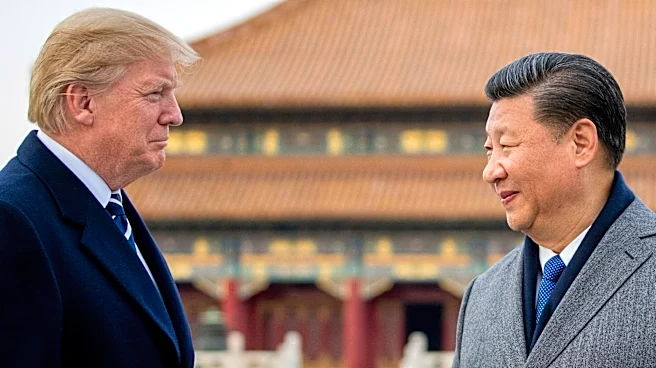
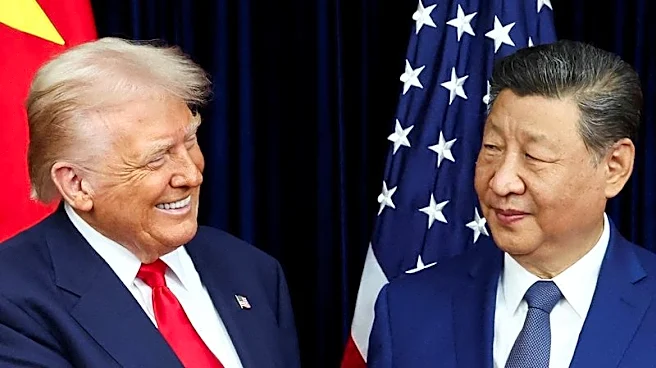
August 2017 saw a sharp increase in verbal exchanges. On August 8, President Donald Trump warned North Korea of "fire, fury and frankly power, the likes of which the world has never seen before" if it continued its nuclear threats. North Korea quickly responded by stating it was considering attacking U.S. military bases. This rhetorical escalation was accompanied by concrete actions. On August 29, North Korea conducted a missile test that flew over Japan, further demonstrating its capabilities and defiance.
September brought more significant developments. North Korea carried out its sixth nuclear test, followed by another missile test over Japan on September 15. In response, the U.S. and China agreed on the need for "pressure" on North Korea. President Trump's speech at the UN General Assembly in September, where he threatened to "totally destroy" North Korea and referred to Kim Jong Un as "Rocket Man," was met with Kim Jong Un's response calling the speech "unprecedented rude nonsense" and "mentally deranged behavior." This period also saw arguments about the nuclear armament of South Korea and Japan, reflecting growing regional anxieties.
Late 2017: Continued Tests, Sanctions, and Violations
The latter part of 2017 continued the pattern of tests and international reactions. In early November, an armistice violation occurred, adding to regional instability. On November 28, North Korea conducted its third intercontinental ballistic missile test, marking the end of a two-month pause in missile tests. This Hwasong-15 missile was reported to have flown to a record altitude of 4,500 kilometers (2,800 mi) and landed in the Sea of Japan. Initial assessments by the Pentagon and subsequent analysis suggested it was an ICBM capable of reaching anywhere in the continental United States if fired on a normal trajectory. Japanese defense minister Itsunori Onodera noted the missile broke into at least three pieces, indicating a potential re-entry vehicle failure.
In December 2017, reports emerged of sanction violations, with Chinese and Russian-flagged tanker ships observed conducting at-sea transfers of oil and petroleum products to North Korean vessels. One such vessel, the Lighthouse Winmore, registered out of Hong Kong with 23 Chinese crew members, was seized by South Korean officials after reportedly delivering 600 tons of oil illegally to a North Korean vessel. These incidents highlighted the challenges in enforcing international sanctions and the ongoing efforts by North Korea to circumvent them.