




The FIA World Endurance Championship (WEC) is a premier global auto racing series that brings together cutting-edge automotive technology and intense on-track competition. Organized by the Automobile Club de l'Ouest (ACO) and sanctioned by the Fédération Internationale de l'Automobile (FIA), the WEC showcases endurance racing at its highest level. Contemporary drivers frequently describe WEC races as highly competitive events, characterized by closely
contested on-track battles, sustained overtaking maneuvers, and aggressive racing throughout the entire duration of each event. This commitment to fierce competition, combined with a diverse range of car classes, makes the WEC a captivating spectacle for motorsport enthusiasts worldwide.
Diverse Classes and World Titles
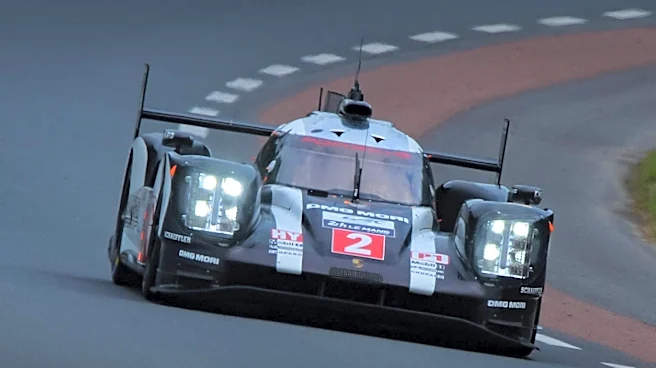
The WEC features multiple classes of cars, each designed to offer a unique blend of performance and engineering. Sports prototypes compete in the top-tier Hypercar class, which includes both Le Mans Hypercar (LMH) and Le Mans Daytona h (LMDh) entries. These cars represent the pinnacle of endurance racing technology, often incorporating advanced hybrid systems and aerodynamic designs. Alongside the prototypes, production-based grand tourers (GT cars) compete in the LM GT3 category. This multi-class structure ensures a dynamic racing environment, with different types of vehicles navigating the same track simultaneously, leading to strategic overtakes and varied racing lines.
Throughout the season, world champion titles are awarded to the top-scoring drivers and manufacturers, recognizing excellence in both individual performance and team effort. Beyond these prestigious world titles, various other cups and trophies are presented to drivers and private teams, acknowledging their contributions and achievements within the championship. This comprehensive awards system highlights the competitive spirit across all levels of the WEC, from factory-backed giants to independent privateer entries.
The Evolution of Car Categories
Since its inception in 2012, the WEC has continuously adapted its car categories to maintain relevance and attract manufacturers. Initially, the championship featured LMP1 and LMP2 prototypes, alongside GTE grand tourers, which were split into GTE Pro for professional driver lineups and GTE Am for mixed amateur and professional teams. However, declining manufacturer interest in the LMP1 class after the 2017 season prompted a significant shift.
The FIA introduced the Le Mans Hypercar (LMH) class, aiming to move away from traditional Le Mans Prototypes and reduce reliance on hybrid technologies, making the series more appealing to car manufacturers. The Hypercar class debuted in 2021 with entries from Alpine, Glickenhaus, and Toyota, and expanded in 2023 to include LMDh entries. Similarly, the LMGTE categories underwent changes, with LMGTE Pro concluding after the 2022 season. From 2024, LMGTE Am will be replaced by a GT3-based category, known as "GT3 Premium," which will feature cost-capped body kit conversions from standard GT3 machinery. This move is intended to create a customer-focused category where official manufacturer entries are not allowed, fostering a more accessible and competitive environment for private teams. The LMP2 class, while no longer a full-season WEC category from 2024 due to increased demand in Hypercar and LMGT3, remains a stronghold of the 24 Hours of Le Mans, with a minimum of 15 grid slots reserved for it.