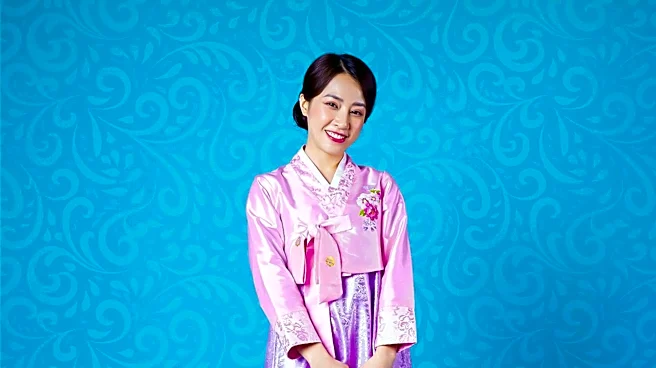


Hanbok, the traditional clothing of the Korean people, is characterized by a consistent set of core components that have defined its appearance for centuries. Despite numerous changes in length, width, and shape over time, the fundamental elements of the *jeogori* (top), *baji* (trousers), *chima* (skirt), and *po* (coat) have remained central to its design. This enduring structure reflects both the practical needs of its wearers and the aesthetic
sensibilities that have evolved throughout Korean history.
The Jeogori: A Versatile Upper Garment
The *jeogori* serves as the basic upper garment for both men and women in hanbok. Its primary function is to cover the arms and the upper part of the wearer's body. Historically, the *jeogori* has undergone significant transformations. In early Goguryeo, it was a hip-length jacket, resembling Persian-styled Kaftan tunics, and was typically belted at the waist. These early versions featured narrow sleeves and a straight, crossed collar, often adorned with a different colored trim on the collar and cuffs.
Over the centuries, the way the *jeogori* was closed also changed. Initially, it might have been closed at the center front, similar to a kaftan, or to the left. However, by the sixth century CE, closing the *jeogori* to the right side became the standard practice. The length of the female *jeogori* also varied, with some Goguryeo paintings from the late 5th century CE depicting women's *jeogori* as shorter than those worn by men. These variations highlight the adaptability of the *jeogori* while maintaining its essential role as the upper garment.
Baji and Chima: Trousers and Skirts
*Baji* refers to the trousers that are a fundamental part of hanbok, particularly for men. In ancient Goguryeo, these trousers were roomy, bearing similarities to pants found at the Xiongnu burial site of Noin Ula. Some aristocrats wore roomy pants with tighter bindings at the ankle, which may have been a status symbol. The design of *baji* reflects the nomadic origins of hanbok, emphasizing ease of movement, especially for activities like horse-riding.
The *chima* is the traditional skirt, primarily worn by women. In early forms of hanbok, women sometimes wore *chima* on top of their *baji*, or even wore pants underneath their skirts. During the Goryeo period, the *chima* underwent changes, notably becoming shorter under Mongol influence. The way the *chima* was worn also evolved; while a Tang-influenced style of wearing the skirt over the top existed, the native Goguryeo style of wearing the top over the skirt saw a revival among the aristocracy. This coexistence of styles continued throughout the Goryeo dynasty and into the early Joseon period.
The Po: The Outer Coat
The *po* is a generic term for an outer robe or overcoat in hanbok. Its presence is a consistent feature of the attire. In early Goguryeo, *po* overcoats were full body-length Kaftan robes, also belted at the waist. A notable type of *po* is the *durumagi*, which was introduced during the Goguryeo period as a long coat worn by Northern peoples. Originally, the *durumagi* was worn by the upper class for ceremonies and rituals, but it was later modified and adopted by the general population. Murals from Muyong-chong in Goguryeo depict male dancers in short *jeogori* with long flexible sleeves and female dancers wearing a type of *durumagi* with long flexible sleeves, all performing a dance. This illustrates the early and widespread use of the *po* as an integral part of hanbok.