








Helsinki, the capital of Finland, has a rich history that spans several centuries. Founded in 1550 by Swedish King Gustav I, the city was initially intended to rival other ports on the Gulf of Finland. Over time, Helsinki transformed from a small fishing village into a significant urban center. This article delves into the historical milestones that shaped Helsinki, from its early days under Swedish rule to its modern status as Finland's largest city.
The Swedish Era
Helsinki was established by King Gustav I in 1550 as Helsingfors, with the aim of consolidating trade in southern Finland and competing with Reval (now Tallinn). Despite the king's efforts to relocate citizens from other towns to Helsingfors, the city struggled to thrive. The acquisition of Reval by Sweden in 1561 diminished the crown's interest in developing Helsingfors, leaving it as a forgotten village for decades.
In 1640, Helsingfors was moved south to improve its harbor, but the city still failed to attract traders. The plague of 1710 further devastated the population. However, the construction of the fortress Sveaborg in 1748 marked a turning point, as it was built to protect the city from Russian attacks. Despite these efforts, Helsingfors fell to Russian forces during the Finnish War in 1808.
Russian Influence and Growth
Following the Finnish War, Finland was incorporated into the Russian Empire, and the capital was moved from Turku to Helsinki in 1812. This relocation spurred rapid growth, with the population increasing from 4,070 in 1810 to 93,600 by 1900. The city's development was further bolstered by the establishment of the Finnish university in Helsinki in 1828.
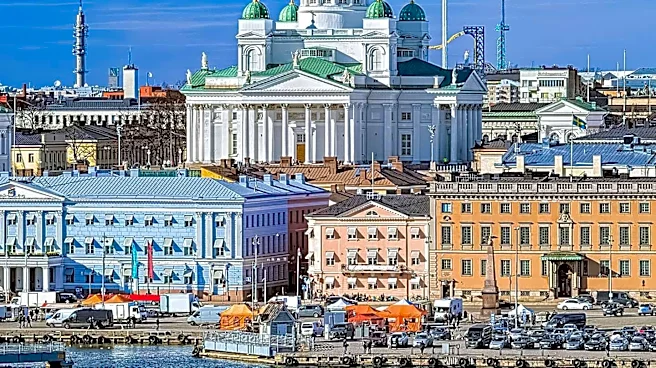
The 19th century saw Helsinki evolve into a bustling urban center, with significant architectural contributions from figures like Carl Ludwig Engel. The city's classicism-influenced architecture, including the Senate Square and the University of Helsinki, became defining features of Helsinki's landscape.
Modern Developments
Helsinki's role as Finland's capital has continued to shape its development. The city hosted the Summer Olympic Games in 1952, highlighting its international significance. In 2000, Helsinki was named a European Capital of Culture, and in 2012, it was recognized as the World Design Capital.
Today, Helsinki is considered a Beta Level city by the Globalization and World Cities Research Network. Its population has grown to approximately 635,000, reflecting its status as a major cultural, economic, and political hub in Finland.