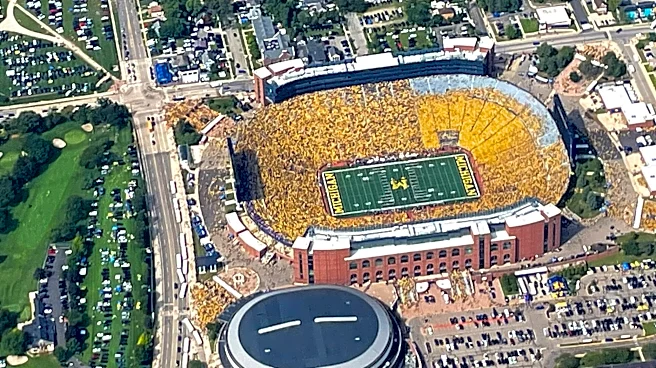








WWJ (950 kHz) stands as a commercial AM radio station in Detroit, Michigan, renowned for its all-news radio format, WWJ Newsradio 950. Owned by Audacy, Inc., it serves the Metro Detroit area and is the flagship station for the Michigan Sports Network. The station's studios are located in the Panasonic Building in Southfield. WWJ has a long and storied history, traditionally recognizing August 20, 1920, as its founding date, marking the day the Detroit News began
daily broadcasts from its headquarters. These initial transmissions, under the name "Detroit News Radiophone," used an amateur station license with the call sign "8MK."
The Pioneering Days of Detroit News Radiophone
WWJ has claimed titles such as "America's Pioneer Broadcasting Station" and the place where "commercial radio broadcasting began." The station's transmitter site is near Newport, broadcasting full-time with 50,000 watts. It employs a five-tower directional antenna system during the day and its entire six-tower array at night. WWJ boasts the highest field strength in a single direction (nighttime pattern) of any U.S. AM station, allowing it to be heard in parts of northern Michigan, including the Upper Peninsula and Mackinac areas, during nighttime hours, and much of southern Lower Michigan during the day.
Historical accounts of WWJ's beginnings are somewhat fragmented. Cynthia Boyes Young noted in 1960 that the actual start of the Detroit News radio station was not well-recorded at the time, and its story could only be partially reconstructed from the memories of early radio pioneers. Robert Preston Rimes, three years later, also found that existing histories were often incomplete and sometimes inaccurate. Despite these challenges, the station's debut is well-documented. 8MK began nightly trial broadcasts on August 20, 1920, to test its equipment. The initial audience was small, consisting mainly of local amateur radio enthusiasts, as the station was not yet publicized. The tests proved successful, leading the Detroit News to announce on its front page on August 31, 1920, that nightly (except Sunday) broadcasts would commence that evening under the "Detroit News Radiophone" service.
Evolution of Call Signs and Frequencies
The inaugural program on August 31, 1920, featured regularly updated returns for a primary election held that day, along with vocal performances by Lois Johnson, with Malcolm Bingay, managing director of the Detroit News, serving as master of ceremonies. The next day's News enthusiastically reported the success of the election night broadcast, which began promptly at 8:10 p.m., declaring it a "gigantic step in man's conquest of the elements." Daily broadcasts continued through September, typically between 7 and 8 p.m. Early programming included phonograph records interspersed with news announcements, fight results from the Jack Dempsey and Billy Miske heavyweight championship bout on September 6, and play-by-play accounts of the 1920 World Series in October. Weekly vocal concerts began on September 23, with Mabel Norton Ayers as the first featured artist. By late October, the paper noted that "hundreds of Detroiters are now the possessors of wireless receiving sets" as the station prepared to broadcast presidential election returns on November 2.
The station's costs were initially borne by the newspaper, with no advertising until the mid-1920s. By 1922, the staff had grown to ten. Performers were not paid, yet the station attracted numerous "illustrious persons" like Lillian Gish, Fanny Brice, Ty Cobb, and Babe Ruth to appear from its "phonitorium" studio. WWJ is believed to be the first to broadcast news reports regularly, and the first to present regularly scheduled religious broadcasts and play-by-play sports reports. In the fall of 1921, the News purchased the DeForest OT-10 transmitter it had been leasing and applied for a "Special Amateur" station license to improve coverage. However, on October 13, 1921, the government issued a "Limited Commercial" license instead, and the newspaper announced in early November that its radio station was operating under this new license with call letters WBL, using a wavelength of 360 meters (833 kHz). This change allowed the station to use a less congested wavelength, but also meant its DeForest equipment technically violated AT&T's commercial radio equipment patent rights. This issue was resolved with the purchase of a 500-watt transmitter from AT&T subsidiary Western Electric, installed on January 28, 1922.
The Birth of WWJ and Format Changes
The WBL call sign was randomly assigned and proved difficult for listeners to hear correctly. The newspaper requested a change to something more phonetically distinct, like WKL or WWW. Neither was available, so WWJ was assigned on March 3, 1922. Effective December 1, 1921, the U.S. government formally defined "broadcasting stations," designating 360 meters for entertainment and 485 meters (619 kHz) for government reports. On March 3, 1922, WWJ received permission to transmit on 485 meters in addition to its 360-meter assignment. The rapid expansion of broadcasting stations in 1922 led to complicated time-sharing schedules. The Detroit News expressed frustration at having to share airtime with its competitor, the Detroit Free Press, which established its own station, WCX (now WJR). In late September 1922, a second entertainment wavelength, 400 meters (750 kHz), became available for "Class B" stations with higher powers and better equipment. Both WWJ and WCX qualified for this new wavelength on a time-sharing basis. Early 1923 saw further expansion of the broadcast band, with stations using a single frequency. WWJ and WCX were assigned to 580 kHz. In January 1925, WWJ was reassigned to an exclusive Class B frequency of 850 kHz. A series of reassignments followed as the government managed increasing congestion. On November 11, 1928, the Federal Radio Commission's General Order 40 reorganized the AM band, dividing stations into "Clear," "Regional," and "Local" classes. WWJ was tentatively assigned to 820 kHz, allowing for 50,000 watts, but management opted for a regional frequency, 920 kHz, with 1,000 watts due to the cost of a major transmitter upgrade.
In 1971, with the rise of FM radio, WWJ (AM) transitioned from its daytime middle-of-the-road music programming to an all-news and talk format. This format has remained since, consistently ranking among Detroit's most popular stations for adult listeners, occasionally reaching first place. In March 2005, WWJ began streaming its programming online, and in August 2005, it started offering podcasts. August 2006 saw the station begin broadcasting in HD Radio. While WWJ was live 24 hours a day until July 2015, when it aired pre-recorded reports overnight to cut costs, it returned to live news around the clock by 2016. WWJ is Michigan's only all-news radio station, featuring "traffic and weather together" every 10 minutes "on the eights" around the clock, with exceptions for live sporting events and infomercials. It also carries sports events normally broadcast by its sister stations during schedule conflicts, with regular news programming still available online.