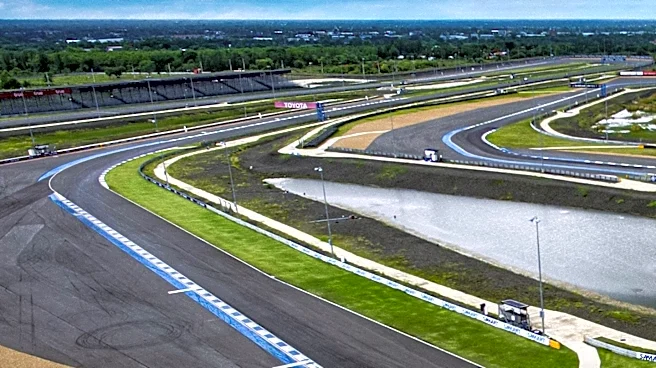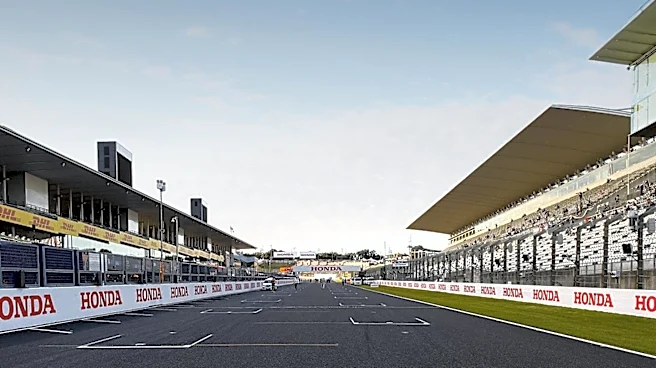




Fuji Speedway, a prominent motorsport race track nestled in the eastern foothills of Mount Fuji in Japan, boasts a rich and complex history marked by ambitious design, significant modifications, and a series of high-profile racing events. Originally envisioned as an American-style superspeedway, its construction began in 1963. However, due to funding issues, the initial oval track concept was not fully realized. Instead, the first section was built,
and the remainder of the track was converted into a road course, leading to its opening in January 1966. This early design included a banked corner, which, while innovative, would later prove to be a dangerous feature, contributing to fatal accidents.
The track's evolution continued as safety concerns prompted significant changes. In 1975, a new section was constructed to address the issues with the banked corner, which was subsequently removed. This modification resulted in a track length of 4.359 kilometers. The following year, Fuji Speedway hosted the inaugural Japanese Grand Prix, a Formula 1 event that became famous for the dramatic championship battle between James Hunt and Niki Lauda, contested under torrential rain. This race marked a pivotal moment in Japanese motorsport history, bringing the pinnacle of racing to the country for the first time.
Early Challenges and Adaptations
The initial design of Fuji Speedway, with its partially completed oval and integrated banked corner, presented unique challenges. While it opened in 1966, the banked corner quickly gained a reputation for being hazardous. The high speeds achieved on this section, combined with its design, led to several fatal accidents, underscoring the need for immediate safety improvements. These early incidents highlighted the inherent risks in motorsport and the continuous need for track designers to balance speed with driver and spectator safety.
Recognizing these dangers, the track underwent its first major redesign in 1975. The decision to remove the banked corner and introduce a new section was a critical step in making Fuji Speedway a safer venue. This adaptation not only improved safety but also altered the character of the track, moving it further away from its original superspeedway concept and solidifying its identity as a challenging road course. The modifications were essential for the track to continue hosting major international events, including the prestigious Formula 1 Grand Prix.
Hosting Formula 1 and Subsequent Modifications
Fuji Speedway's role as a host for Formula 1 was brief but impactful in its early years. After the 1976 Japanese Grand Prix, the circuit again hosted Formula 1 in 1977. However, this event was marred by a tragic accident involving Gilles Villeneuve and Ronnie Peterson, which resulted in the deaths of two spectators. This unfortunate incident led to Formula 1's withdrawal from Japan for a decade, significantly impacting Fuji Speedway's international profile during that period. Despite this setback, the track remained a popular venue for other car races.
Even after the Formula 1 departure, the pursuit of speed on the track continued to necessitate further safety measures. The circuit's long straight, measuring approximately 1.5 kilometers, remained one of the longest in motorsport, contributing to very high speeds. To mitigate these speeds and enhance safety, two chicanes were added to the track. One was placed immediately after the first corner, and another at the entrance to the very long, fast 300R corner. These additions, while altering the flow of the track, were crucial in maintaining its viability as a racing venue and ensuring the safety of competitors in subsequent events, including the FIA World Sportscar Championship, which visited the track between 1982 and 1988 for the 1000 Kilometers of Fuji.