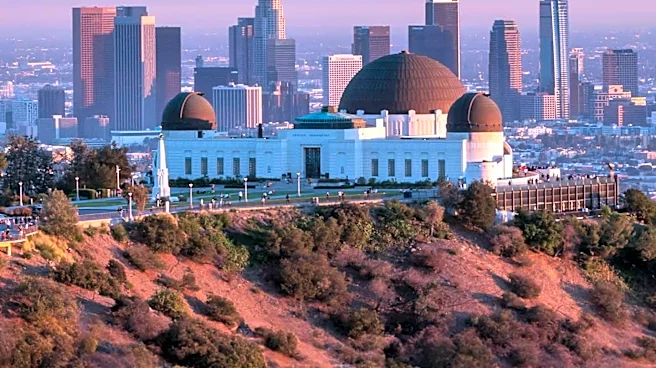







Griffith Observatory is not just a scientific facility; it is a cultural landmark that has played a significant role in the public's understanding of astronomy. Located in Los Angeles, California, the observatory offers stunning views of the city and the Pacific Ocean. Since its opening in 1935, it has been a place where science and culture intersect, providing a unique space for education and inspiration.
A Cultural Landmark
Griffith Observatory has become an integral
part of Los Angeles' cultural identity. Its location on Mount Hollywood offers a panoramic view of the city, making it a popular tourist attraction. Visitors can enjoy a close view of the iconic Hollywood Sign, adding to the observatory's allure as a cultural destination.
The observatory's architecture, with its Art Deco design, is a testament to the era in which it was built. The building's aesthetic appeal, combined with its scientific purpose, has made it a favorite backdrop for films, television shows, and music videos. This cultural significance has helped cement Griffith Observatory's status as a beloved Los Angeles landmark.
Science for the Public
At its core, Griffith Observatory is dedicated to making science accessible to the public. The observatory's exhibits are designed to engage visitors with interactive displays and hands-on experiences. The 12-inch Zeiss refracting telescope, one of the most viewed telescopes in the world, allows visitors to explore the night sky firsthand.
The observatory's planetarium shows, which cover topics such as the Moon, the Solar System, and eclipses, provide an immersive educational experience. These programs are designed to inspire curiosity and foster a deeper understanding of astronomy. By offering free admission, the observatory ensures that science education is accessible to everyone, regardless of background.
A Legacy of Education and Inspiration
Griffith Observatory's impact extends beyond its exhibits and programs. During World War II, the observatory's planetarium was used to train pilots in celestial navigation, highlighting its role in both public education and professional training. In the 1960s, it served as a training ground for Apollo program astronauts, further cementing its legacy as a hub of scientific learning.
Today, the observatory continues to inspire future generations of scientists and astronomers. Its commitment to public engagement and science literacy ensures that it remains a vital part of Los Angeles' educational landscape. By bridging the gap between science and culture, Griffith Observatory has become a place where people can explore the wonders of the universe and gain a deeper appreciation for the world around them.