





Camel Pose, or Ustrasana, is a well-known back-bending posture in yoga that offers numerous benefits. This article explores the various ways in which Camel Pose can be modified and adapted to suit different levels of practice, highlighting the flexibility and inclusivity of yoga.
Understanding Camel Pose
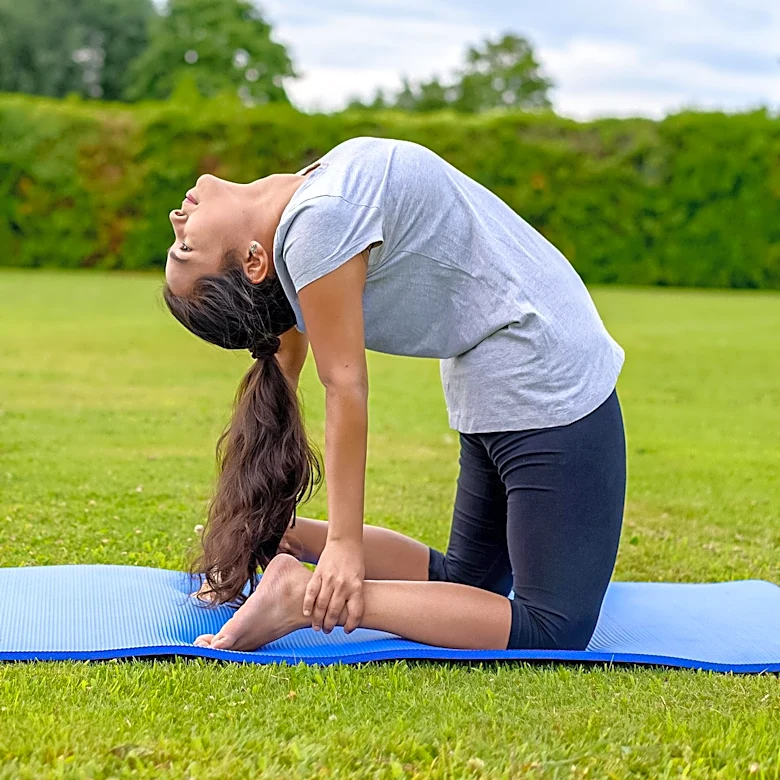
Ustrasana is a deep backward bend performed from a kneeling position. In the full expression of the pose, the hands reach back to grasp the heels, creating a strong arch in the back.
The feet can be flat on the floor or the toes tucked under, offering a slightly less intense backbend.
This pose is part of the Bikram Yoga sequence, showcasing its importance in structured yoga practices. The deep stretch provided by Ustrasana helps to open the chest and shoulders, improve posture, and enhance spinal flexibility. However, the intensity of the pose can be challenging for some, necessitating modifications.
Ardha Ustrasana: The Half Camel Pose
One of the primary variations of Camel Pose is Ardha Ustrasana, or Half Camel Pose. This modification is designed to make the pose more accessible to beginners or those with limited flexibility. In one version of Ardha Ustrasana, practitioners place their hands on their hips instead of reaching for the heels, reducing the depth of the backbend.
Another variation involves placing one hand on the heel while the other arm stretches back over the head. This approach allows for a gradual progression towards the full pose, providing a balance between challenge and comfort. These modifications demonstrate the adaptability of yoga, ensuring that poses like Ustrasana can be practiced safely by individuals at different levels.
Using Supports for Enhanced Practice
To further accommodate varying levels of flexibility, yoga practitioners can use supports such as yoga bricks. Placing bricks beside the calves provides a stable surface for the hands, allowing individuals to experience the benefits of the backbend without straining.
These supports are particularly useful for those new to the pose or recovering from injury, offering a way to engage with Ustrasana while maintaining proper alignment. The use of props in yoga highlights the practice's inclusivity, ensuring that everyone can participate and benefit from poses like Camel Pose.
The variations and modifications of Camel Pose reflect the dynamic nature of yoga, emphasizing its ability to adapt to individual needs. By exploring these options, practitioners can enjoy the benefits of Ustrasana while honoring their body's unique capabilities.