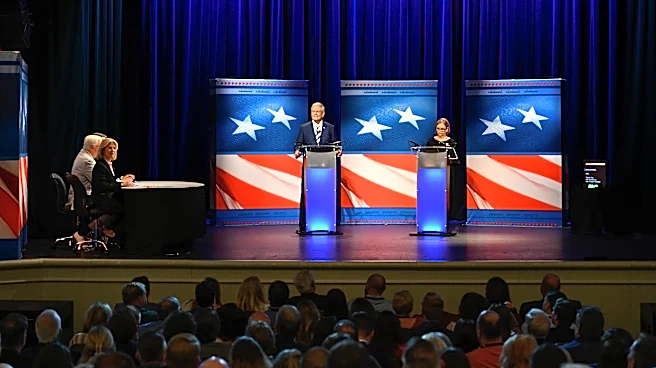





Elizabeth Warren's successful bid for the U.S. Senate in Massachusetts in 2012 was characterized by a clear and consistent focus on economic fairness and the struggles of the middle class. Her campaign, which began with her declaration on September 14, 2011, aimed to unseat incumbent Republican Scott Brown, who had won the seat in a 2010 special election. Warren's message resonated with voters, leading to her decisive victory and her swearing-in on January
3, 2013. Her campaign was not just about winning a seat, but about articulating a distinct vision for the American economy.
Championing the Middle Class and Regulating Wall Street
Warren's platform was built on the foundation of championing the middle class and advocating for stronger regulation of Wall Street. She consistently argued that the economic system was "rigged" against ordinary Americans, a powerful message that became a hallmark of her campaign. She directly criticized Wall Street CEOs, stating that they "wrecked our economy and destroyed millions of jobs" yet continued to "strut around congress, no shame, demanding favors, and acting like we should thank them." This critique positioned her as a strong voice for those who felt economically disenfranchised.Her campaign also frequently targeted Scott Brown's voting record, asserting that he consistently voted with Republican leadership despite presenting himself as a bipartisan moderate. This allowed Warren to draw a clear contrast between her progressive economic vision and what she portrayed as Brown's alignment with conservative policies. Her ability to articulate these points clearly and passionately helped her secure the Democratic nomination with an overwhelming 95.77% of delegate votes at the state convention on June 2, 2012, and gain the endorsement of Governor Deval Patrick.
The "You Didn't Build That" Controversy and Economic Interdependence
A pivotal moment in Warren's campaign, and one that sparked national discussion, was her articulation of economic interdependence. In a September 2011 video that gained significant online traction, Warren rebutted the idea that asking the wealthy to pay more taxes was "class warfare." She famously stated, "There is nobody in this country who got rich on his own. Nobody." She elaborated by pointing out that businesses rely on public infrastructure and services—roads, educated workers, police, and fire departments—all paid for by society as a whole.This argument underscored her belief in a social contract where successful individuals contribute back to the system that enabled their success. Her words were echoed by President Obama in July 2012, when he stated, "If you've got a business—you didn't build that. Somebody else made that happen," which further fueled the debate about individual achievement versus collective societal support. This philosophical stance became a core element of her economic message, emphasizing shared responsibility and the collective investment required for prosperity.
Fundraising Prowess and Opposition from Business Interests
Despite facing significant opposition from powerful business interests, Elizabeth Warren demonstrated remarkable fundraising capabilities. Rob Engstrom, political director for the United States Chamber of Commerce, publicly declared in August 2012 that "no other candidate in 2012 represents a greater threat to free enterprise than Professor Warren." This strong opposition highlighted the perceived challenge her policies posed to established business norms.Nevertheless, Warren managed to raise an impressive $39 million for her campaign, making her the top fundraiser among all Senate candidates in 2012. This financial strength allowed her to effectively disseminate her message and compete against an incumbent senator. Her ability to mobilize financial support, coupled with her clear and consistent economic message, ultimately contributed to her victory with 53.74% of the vote against Scott Brown's 46.19%.