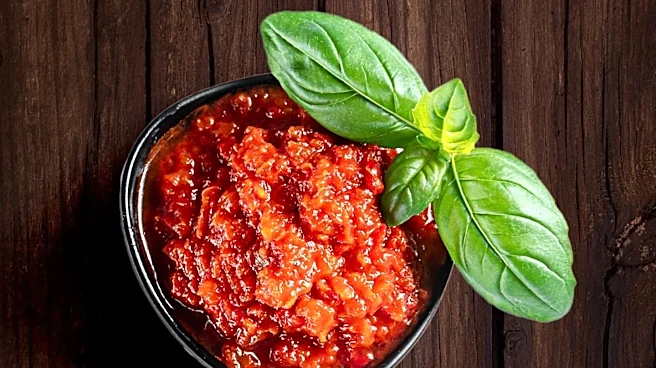








Marinara sauce, a staple in many kitchens, is a tomato-based sauce typically crafted with tomatoes, garlic, herbs, and onions. While widely recognized in Italian-American cuisine, its origins are deeply rooted in Italy, where it is known as *alla marinara*, meaning "sailor's style." This name itself hints at the sauce's historical connection to maritime culture, though the exact story of its inception is subject to various folk theories.
Early Theories and the Introduction of the Tomato
Several popular
theories attempt to explain the origin of marinara sauce. One such theory suggests that cooks aboard Neapolitan ships, returning from the Americas in the mid-16th century, were the first to invent marinara sauce. This would have occurred after the Spanish introduced the tomato to Europe, making the key ingredient available for culinary use. The timing aligns with the tomato's arrival on the continent, suggesting a plausible, albeit unconfirmed, historical link.
Another romanticized theory posits that the sauce was prepared by the wives of Neapolitan sailors, eagerly awaiting their husbands' return from sea voyages. This narrative paints a picture of a comforting, flavorful sauce made to welcome weary travelers. While these folk theories are compelling, historical culinary records offer a more concrete, though perhaps less dramatic, account of tomato sauce's introduction into Italian cooking.
The First Documented Tomato Sauce
Historically, the first Italian cookbook to include a tomato sauce recipe was *Lo Scalco alla Moderna* (The Modern Steward). This significant work was penned by Italian chef Antonio Latini and published in two volumes between 1692 and 1694. Latini held a prominent position, serving as the Steward of the First Minister to the Spanish Viceroy of Naples, indicating a sophisticated culinary environment.
It is important to note that this early tomato sauce, as described by Latini, was likely quite different from the marinara sauce we recognize today. Historical accounts suggest it was more akin to a modern tomato salsa, implying a fresher, perhaps less cooked, preparation. This distinction highlights the evolution of tomato-based sauces over centuries, adapting to changing tastes and culinary techniques.
Marinara's Evolution and Regional Variations
In its native Italy, *alla marinara* is typically prepared with tomatoes, basil, olive oil, garlic, and oregano. However, regional variations exist, sometimes incorporating olives, capers, and even salted anchovies, adding layers of flavor and complexity. These additions reflect the diverse culinary traditions found across Italy.
Interestingly, a sauce similar to the Italian-American marinara sauce is known in certain areas of central Italy as *sugo finto*, which literally translates to "fake sauce." This name might suggest a simpler, perhaps meatless, version compared to other more elaborate sauces. Marinara sauce is versatile, commonly used with spaghetti and vermicelli, but also serving as an accompaniment for meat or fish dishes, showcasing its adaptability in Italian cuisine and its journey to becoming a globally recognized culinary element.