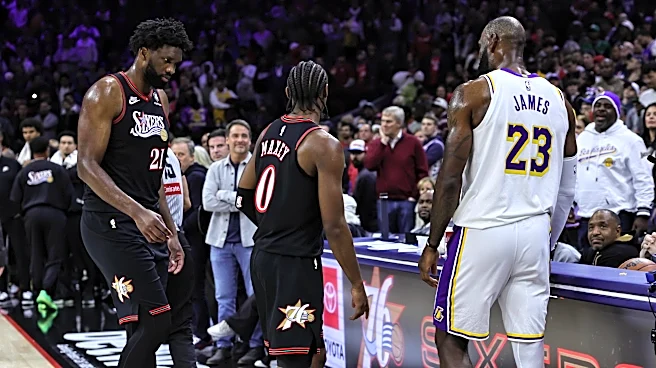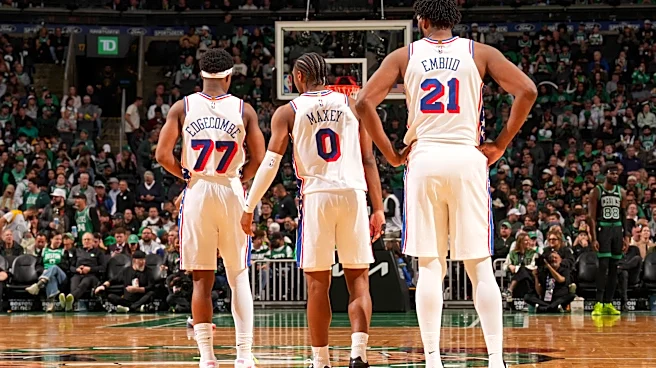




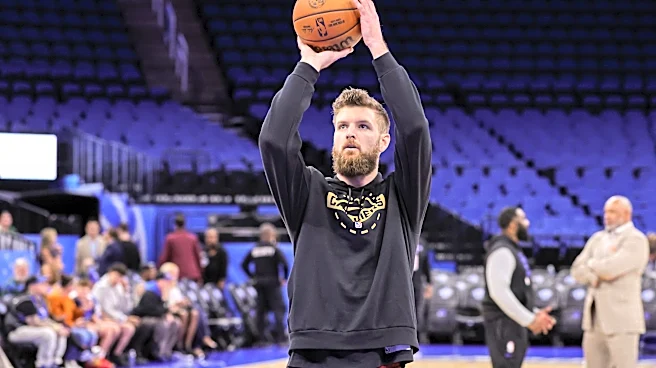
The hot hand fallacy, also known as the hot hand phenomenon, describes the belief that a person experiencing a streak of success in random events is more likely to continue that success. This concept is frequently applied to sports, particularly basketball, where a player is thought to have a "hot hand" if their previous shots were successful, implying a higher probability of scoring on subsequent attempts. For many years, researchers largely dismissed
this belief as fallacious, finding no statistical evidence to support it. However, the discussion around the hot hand is complex, involving deep-seated human tendencies to misinterpret randomness and perceive patterns where none exist.
Origins and Initial Research
The hot hand fallacy was first formally described in a seminal 1985 paper by Thomas Gilovich, Amos Tversky, and Robert Vallone. Their study, titled "The Hot Hand in Basketball: On the Misperception of Random Sequences," directly challenged the popular notion that basketball players could develop a "hot hand." They defined the hot hand as the claim that players are more likely to make a successful shot if their previous shot was successful. The researchers investigated the inability of individuals to correctly understand randomness and random events, suggesting that this cognitive limitation, similar to innumeracy in statistical judgment, could lead people to form incorrect assumptions about random occurrences.
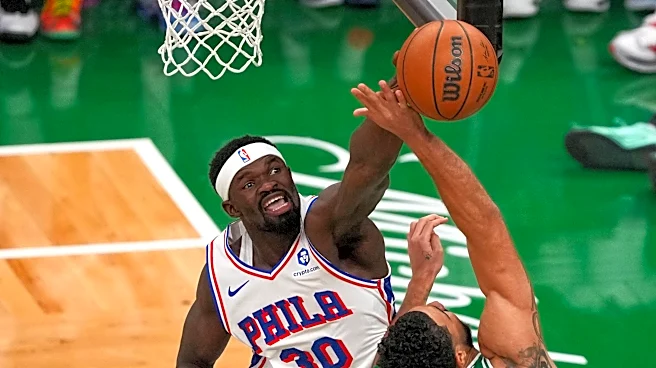
To explore this, Gilovich, Tversky, and Vallone conducted several studies. One involved a questionnaire given to 100 basketball fans from Cornell and Stanford universities. Another analyzed the individual game records of players from the 1980–81 Philadelphia 76ers. A third study examined free-throw data, and a fourth involved a controlled shooting experiment. The purpose of these varied approaches was to progressively eliminate external factors that might influence a shot, such as defensive strategies or shot selection. Across these studies, the primary finding was that the outcomes of both field goal and free throw attempts were independent of each other. Even in the controlled shooting experiment, the results remained consistent, leading the researchers to conclude that the feeling of being "hot" does not predict future hits or misses.
Proposed Explanations for the Fallacy
Gilovich offered two main explanations for why people continue to believe in the hot hand despite statistical evidence. The first is confirmation bias: individuals may be predisposed to look for streaks even before a game begins, and this bias then influences their perception and recollection of events during the game. They might selectively remember successful streaks while overlooking failures, thus reinforcing their belief. The second explanation relates to people's difficulty in recognizing truly random sequences. Humans often expect random sequences to alternate between outcomes more frequently than they actually do. Consequently, genuinely random sequences, which can appear "lumpy" with occasional streaks, are often misinterpreted as non-random or indicative of a pattern, a phenomenon known as the clustering illusion.
Further research has delved into the cognitive roots of this fallacy. One study investigated whether age affects belief in the hot hand. Researchers surveyed 455 participants aged 22 to 90, asking if a player had a better chance of making a shot after several successful attempts and if it was important to pass the ball to such a player. The results indicated that participants over 70 were twice as likely to believe in the fallacy compared to those aged 40–49. This suggests that older individuals might rely more on heuristic-based processes and tend to remember positive information more readily, making them more sensitive to gains and less to losses. Another study concluded that the hot hand fallacy stems from an inability to appropriately judge sequences, noting that people generally lack a statistically correct concept of randomness and are inherently wired to seek patterns in all types of data.
Reanalysis and Ongoing Debate
Despite the initial findings, the debate surrounding the hot hand has continued. In 2018, Miller and Sanjurjo published a reanalysis of Gilovich, Tversky, and Vallone's original research. They argued that the original study contained a sampling bias, specifically due to how GTV started counting after a series of hits or misses. Miller and Sanjurjo contended that GTV's assumption—that evidence of a hot hand only exists if the probability of a hit is higher after a streak of hits than after a streak of misses—was incorrect. They demonstrated that, analytically for a single hit and empirically for larger streaks, the expected hit rate after a streak of hits should actually be lower than the rate after a streak of misses, especially with small sample sizes. Therefore, an equal rate of hits after a streak of hits and misses could, in fact, be a sign of a hot hand. Their reanalysis concluded that there is "significant evidence of streak shooting" in the hit pattern of the Philadelphia 76ers, suggesting a statistical basis for the hot hand phenomenon, contrary to the original findings. This ongoing discussion highlights the complexity of statistical analysis and human perception when evaluating seemingly random events.