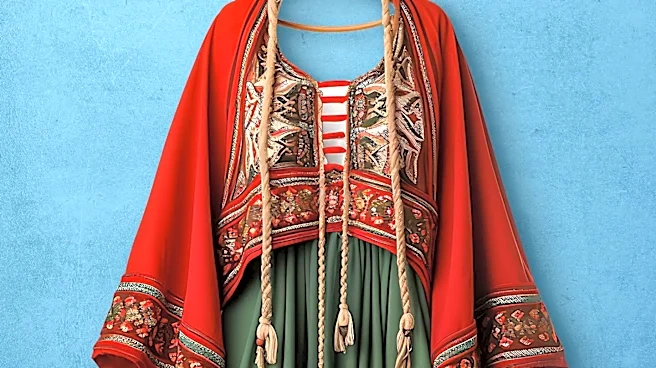


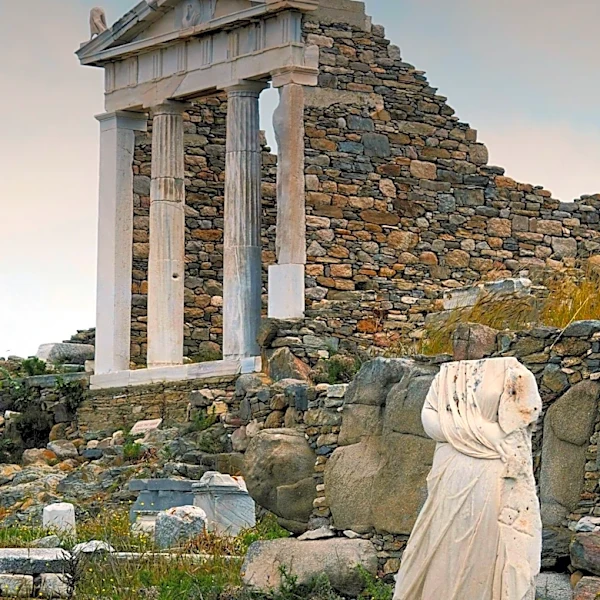




The chiton, a simple tunic-like garment, was a fundamental part of clothing for both men and women in ancient Greece and Rome. Made primarily of lighter linen, this versatile piece of attire was characterized by its fastening at the shoulders and often featured pleats. Its design allowed for various wearing styles and adaptations, reflecting both practical needs and social distinctions across different periods and cultures. The chiton's enduring simplicity
and adaptability contributed to its widespread use and its eventual recognition as a symbol of timeless beauty by later clothing reformers.
Origins and Basic Design
The word "chiton" itself is derived from Ancient Greek, tracing its roots back to a Central Semitic language and ultimately to the Sumerian word for "flax" or "linen," highlighting its primary material. This garment was essentially a rectangular piece of fabric, often linen, draped around the body and secured. In ancient Greece, clothing was generally homemade and cut from rectangular pieces of linen or wool with minimal cutting or sewing, relying instead on ornamental clasps, pins, and belts to hold them in place. The chiton exemplifies this approach, being a wide, rectangular tube of material fastened along the shoulders and lower arms by a series of fasteners.
While the chiton was worn by both genders, its length varied. Men's chitons typically hung to the knees, though in the Archaic period, men also wore long chitons. Women's chitons, however, consistently fell to their ankles. The garment's design often allowed for excess fabric to be pulled up under a belt, creating a bloused effect known as a *kolpos*. This blousing could also help adjust the garment's length to suit the wearer's height. The chiton was frequently worn as an undergarment, often paired with a heavier outer garment like the *himation*.
Wearing Styles and Social Significance
There were two main forms of the chiton: the Doric and the later Ionic. The Doric chiton, often made of heavier wool, was more distinctively Greek and featured shoulder clasps. The upper part of the Doric peplos, a similar garment often worn by women, was folded down to the waist to form an *apoptygma*. The chiton, being of lighter linen, offered a different aesthetic. The garment's length could also indicate status or occupation; for instance, priests and charioteers, as well as the elderly, continued to wear long chitons even when knee-length became common for men.
Belts played a crucial role in styling the chiton. A large belt called a *zoster* could be worn either under the breast, known as "high-girdled," or around the waist, referred to as "low-girdled." A narrower "zone" or girdle could also be used. A double-girdled style was also known. When worn without a *himation*, the chiton was called a *monochiton*. Specific terms also existed for different lengths: a long chiton reaching the heels was a *chiton poderes*, while one that dragged on the ground was an *helkekhiton* or *chiton syrtos*.
Cultural Depictions and Enduring Legacy
The chiton was not merely functional; it carried cultural and symbolic weight. It was considered a very feminine outfit and was often associated with Aphrodite, though men also wore it. Dionysus is frequently depicted wearing a chiton. The Romans adopted the chiton after the 3rd century BC, referring to it as a *tunica*. Artistic representations, such as the caryatids in the porch of the Erechtheion in Athens and the Charioteer of Delphi, provide visual evidence of how the chiton was worn and styled.
Beyond its ancient use, the chiton's design has resonated through history. In the 19th century AD, clothing reformers admired ancient Greek dress, including the chiton, for its perceived timeless beauty. They saw it as a stark contrast to the complicated and rapidly changing fashions of their own era. Furthermore, the Grecian-style dresses required significantly less fabric than the elaborate garments of the Rococo period, appealing to a more practical sensibility. This appreciation highlights the chiton's lasting influence as a symbol of classical elegance and simplicity.