



The push-up is a cornerstone calisthenics exercise, widely integrated into various training regimens due to its effectiveness in developing upper body strength and engaging a broad spectrum of muscles. From civilian athletic training to military physical conditioning, its versatility and lack of equipment make it an accessible yet potent tool for physical development. The exercise primarily targets the pectoral muscles, triceps, and anterior deltoids,
but its benefits extend to numerous ancillary muscles, contributing to overall upper body and core strength. Understanding how push-ups engage these muscle groups and how variations can alter this engagement is key to maximizing their training potential.
Core Muscle Groups and Their Function
At the heart of the push-up's effectiveness are the major muscle groups it activates. The pectoralis major and minor, the large muscles of the chest, are the primary movers, responsible for the pushing action that lifts the body. These muscles become significantly stronger and can develop lean definition with regular push-up practice. The anterior portion of the deltoid muscle, located in the shoulder, is another critical component. It acts as a major shoulder-joint horizontal adductor, moving the upper arms towards the chest during the upward phase, and also plays a role in controlling the speed of movement during the downward phase. This deltoid muscle attaches to parts of the clavicle and scapula, and to the outside of the humerus bone, assisting with flexion and internal rotation of the humerus within the shoulder socket.
The triceps brachii muscles, commonly known as triceps, are equally vital. They are responsible for extending the elbow joints, allowing the arms to fully extend during the upward movement. Furthermore, the triceps control the speed of elbow-joint flexion as the body lowers. The proximity of hand placement directly influences triceps engagement; a narrower grip increases their workload. The triceps are composed of three heads—the lateral, long, and medial—all of which converge to attach to the back of the elbow, originating from the humerus bone and behind the shoulder socket.
Stabilizers and Targeted Variations
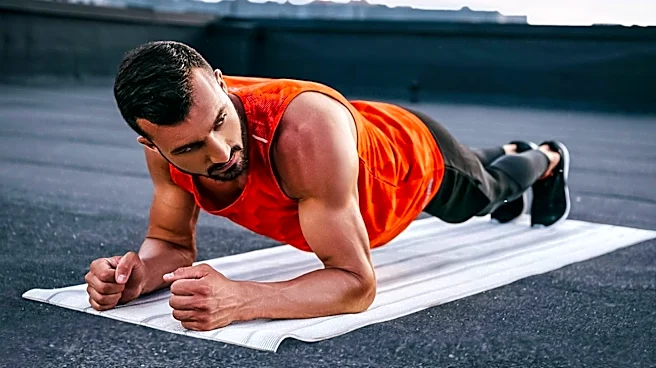
Beyond the primary movers, a host of stabilizer muscles work synergistically to maintain proper form and support the movement. The erector spinae, a group of three muscles (spinal, longissimus, and iliocostalis) in the back, serves as the main stabilizer for the spine. The gluteus medius and minimus stabilize the upper leg, while the rectus abdominis and transversus abdominis continuously contract to keep the body rigid and aligned, preventing sagging. These core muscles are essential for maintaining the plank position throughout the exercise. Inner muscles of the fingers, wrists, forearms, and elbows also work isometrically, and certain modifications can engage the rotator cuff.
Variations of the push-up allow for targeted muscle development. For instance,