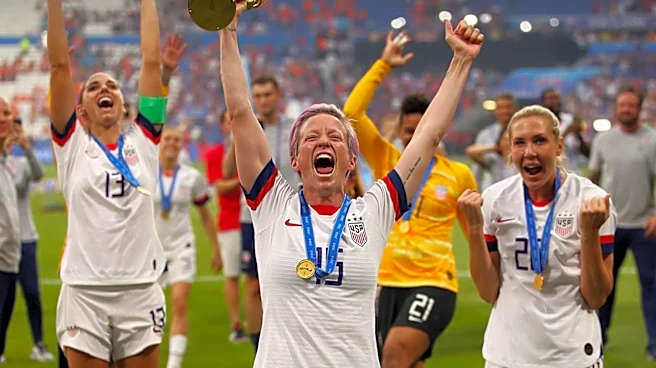








The 2008 Summer Olympics women's football tournament, held in China, saw the United States women's national team achieve a significant milestone by securing their third Olympic gold medal. This victory was the culmination of a challenging tournament that featured twelve national teams competing across Beijing and four other Chinese cities. The American squad demonstrated their prowess throughout the competition, ultimately facing a formidable opponent
in the final match. Their success in 2008 further cemented their reputation as a dominant force in international women's soccer.
Tournament Structure and Early Stages
The women's football tournament at the 2008 Summer Olympics was a full international competition, meaning there were no age restrictions on the participating players. The event kicked off on August 6, two days before the official opening ceremony of the Games, and concluded on August 21. A total of twelve teams qualified for the tournament, including powerhouses like the United States, Brazil, Germany, and Japan, alongside other nations such as China, North Korea, Nigeria, Canada, Argentina, New Zealand, Norway, and Sweden. These teams were divided into groups for the initial stage of the competition.
One of the groups, Group E, included China, Sweden, Canada, and Argentina. China performed strongly, finishing with 7 points from 3 matches, securing 2 wins and 1 draw. Sweden followed with 6 points, achieving 2 wins and 1 loss. Canada earned 4 points with 1 win, 1 draw, and 1 loss, while Argentina finished with 0 points after losing all 3 of their matches. The group stage was crucial for teams to advance to the knockout rounds, where the stakes became even higher.
The Road to the Gold Medal Match
After navigating the group stage, teams entered the knockout phase, which operated on a single-elimination format. In this stage, a loss meant the end of a team's Olympic journey. The United States women's team successfully progressed through these critical matches, showcasing their skill and determination. Their consistent performance led them to the ultimate showdown for the gold medal. The tournament statistics highlight the competitive nature of the event, with 26 matches played and a total of 64 goals scored, averaging 2.46 goals per match.
The final match for the gold medal pitted the United States against Brazil. This highly anticipated contest saw both teams vying for the coveted Olympic championship. The United States emerged victorious with a 1-0 scoreline, thanks to a goal scored by Lloyd in the 96th minute. This hard-fought win not only secured their third Olympic gold medal but also marked a significant achievement in their storied history. The overall attendance for the tournament was impressive, with 740,014 spectators, averaging 28,462 per match, demonstrating the widespread interest in women's Olympic football.
Bronze Medal and Final Standings
While the United States and Brazil competed for gold, the bronze medal match was contested between Germany and Japan. Germany secured the third-place position by defeating Japan with a score of 2-0. Bajramaj was the key player for Germany, scoring goals in the 68th and 87th minutes of the match. The final standings of the tournament placed the United States in first, Brazil in second, Germany in third, and Japan in fourth. This outcome reflected the strong performances of these nations throughout the competition and highlighted the competitive landscape of women's international football at the Olympic level.