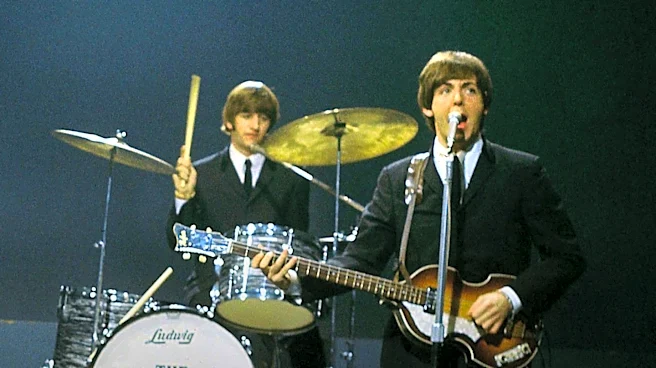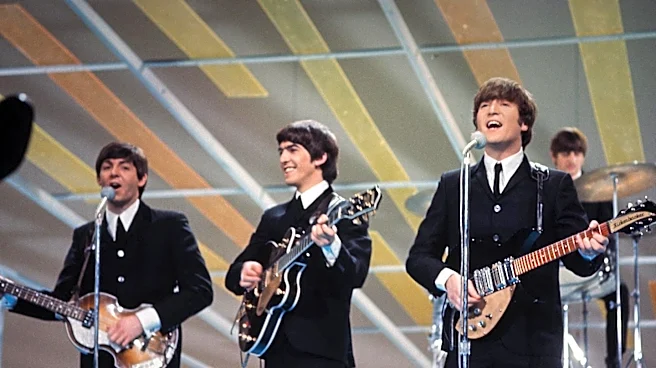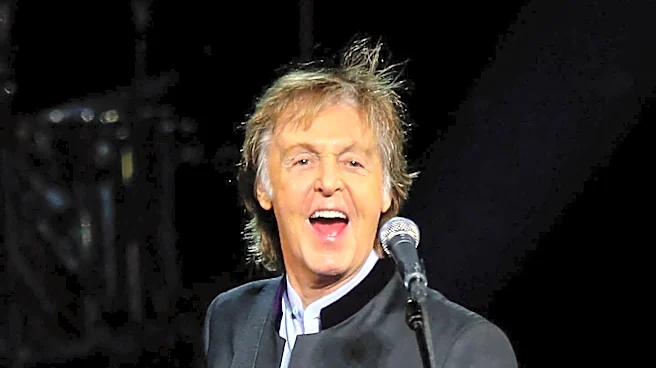



The Beatles' song "Get Back," primarily composed by Paul McCartney, holds a unique place in the band's history, not only for its musical simplicity and chart success but also for its complex lyrical evolution. Conceived during a period when the band sought to return to more fundamental rock structures, the song underwent significant transformations from its initial satirical intent to its final, more ambiguous form. Its journey from a critical social
commentary to a global number-one hit reflects the creative processes and internal dynamics of the iconic group.
Early Concepts and Controversial Lyrics
Paul McCartney developed the basic framework of "Get Back" in January 1969, reportedly within half an hour, with Ringo Starr and George Harrison present. The song's early iterations featured lyrics that were markedly different from the version eventually released. Initially, the text began as "No Pakistanis," intended as a satirical and critical commentary on anti-immigrant sentiments prevalent in Great Britain and the British government's immigration policies. McCartney aimed to parody the negative attitudes expressed by politicians and the press of the time. These early versions, which included lines like "don't need no Puerto Ricans living in the USA" and "don't dig no Pakistanis taking all the people's jobs," were later released on bootlegs.
Despite McCartney's satirical intent, these early lyrics led to accusations of racism against him for years. In 1986, McCartney addressed these claims, stating, "If there was one group that wasn't racist, it was The Beatles." The subject of immigration also surfaced in an improvised jam session known as "Commonwealth," which included the line, "You'd better get back to your Commonwealth homes." This period of lyrical experimentation highlights McCartney's willingness to engage with social issues, even if the method proved controversial in retrospect.
Musical Development and Collaborative Efforts
The melody of "Get Back" emerged from unstructured jamming sessions on January 7, 1969, at Twickenham Studios. McCartney, working on the rhythm and harmony of the primary riff on his Höfner bass, introduced some lyrics, adapting "Get back to the place you should be" from George Harrison's "Sour Milk Sea" into "Get back to where you once belonged." By January 9, McCartney presented a more developed version of the song to the group, with the "Sweet Loretta" verse nearing its final form. McCartney described the creation process for the press release promoting the single, stating, "We were sitting in the studio, and we made it up out of thin air... we started to write words there and then... when we finished it, we recorded it at Apple Studios and made it into a song to roller-coast by."
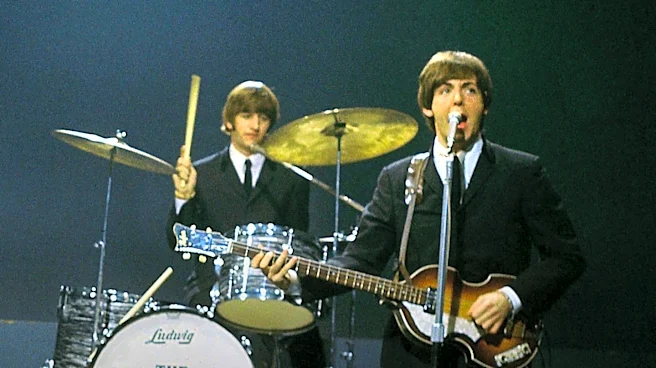
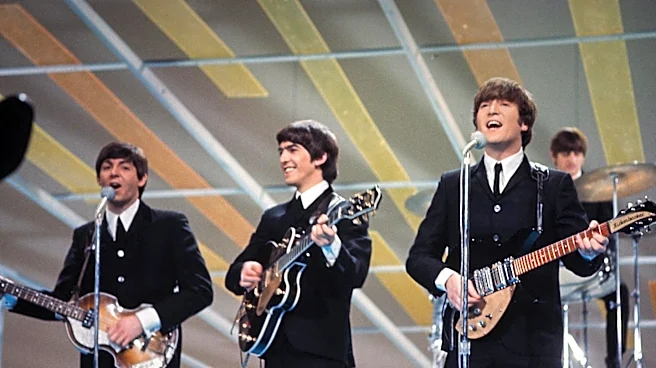
A significant addition to the song's sound was Billy Preston, an old friend of The Beatles, who joined them on keyboards on January 22. Preston played the Fender Rhodes electric piano, contributing to about ten takes recorded on January 23. The band made a concerted effort to perfect "Get Back" on January 27, recording approximately 14 takes, by which point the song included a false ending and a reprise coda. The lineup for the released versions featured Paul McCartney on lead vocal and bass, John Lennon on lead guitar and backing vocal, George Harrison on rhythm guitar, Ringo Starr on drums, and Billy Preston on electric piano. Notably, Lennon played the lead guitar part as Harrison had temporarily left the group on January 10.
Chart Success and Enduring Interpretations
The single "Get Back" / "Don't Let Me Down" was released on April 11, 1969, in Great Britain, reaching number one in the UK, the US, and Germany, among other countries. It marked The Beatles' 16th number-one hit in the UK and 17th in the US. Uniquely, the single credited Billy Preston as a co-artist, making it the only Beatles single to explicitly mention another musician in this way. It was also The Beatles' first single released in true stereo in the US and their only single to debut at number one on the UK singles chart.
The lyrics of "Get Back" have been subject to various interpretations. John Lennon, in 1980, suggested an underlying reference to Yoko Ono, noting that McCartney would look at her in the studio every time he sang "Get back to where you once belonged." McCartney, however, clarified his intent regarding the character of Jo Jo, stating, "Many people have since claimed to be the Jo Jo, and they are not, let me make that clear! I had no particular person in mind, again it was a fictional character, half man, half woman, all very ambiguous. I often left things ambiguous, I like to do that in my songs." This ambiguity has allowed the song to resonate with listeners in diverse ways, contributing to its lasting appeal. The song's evolution, from its controversial beginnings to its polished final form and subsequent chart dominance, is extensively documented in bootleg recordings, books, the 1970 documentary *Let It Be*, and the 2021 Peter Jackson-directed documentary *The Beatles: Get Back*.
Post-Production and Live Performances
On April 4, producer George Martin and engineer Jeff Jarratt created a mono mix, but McCartney was dissatisfied. On April 7, McCartney and Glyn Johns worked at Olympic Studios to produce new remixes for the single. They created an edited version by combining the best take of the main part of the song (Take 11 from January 27) with the best coda ending from January 28. This precise edit made it appear as a continuous take, achieving the desired ending. This minor studio trickery diverged slightly from the concept of a straight live performance but avoided the abrupt ending of other versions.
The Beatles famously performed "Get Back" three times during their rooftop concert on January 30, 1969, at Apple Studios. During the third performance, which marked the end of their final live appearance, the band was interrupted by police responding to complaints. Despite the interruption, George Harrison insisted they finish the song. At the end of this performance, after the audience applauded, McCartney thanked Maureen Starkey, and Lennon quipped, "I'd like to say thank you on behalf of the group and ourselves and I hope we've passed the audition." This iconic line was later edited by Phil Spector into the album version of "Get Back" for the *Let It Be* album, making it a memorable closing statement for the track.