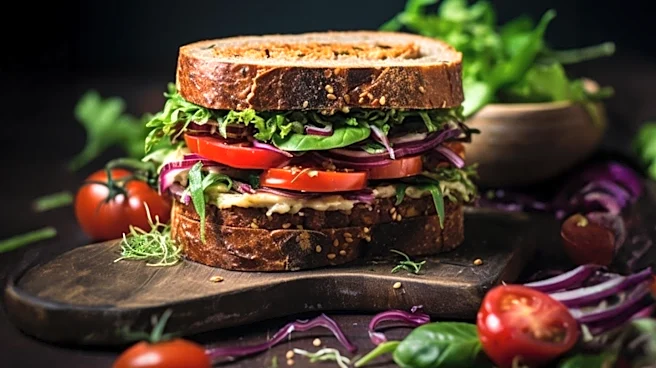

The BLT, an acronym for bacon, lettuce, and tomato, stands as a quintessential American sandwich. Its simple yet satisfying combination of toasted bread, crispy bacon, fresh lettuce, and ripe tomato has
cemented its place in the nation's culinary landscape. While the individual ingredients have existed for centuries, the BLT as we know it gained widespread popularity after World War II, becoming a beloved staple across the United States and even achieving significant cultural recognition abroad. Its journey from a basic food item to a cultural icon reflects shifts in food availability and dining habits.
Origins and Post-War Popularity
The concept of combining multiple ingredients in a sandwich predates the twentieth century, but the BLT's rise to prominence is largely tied to the post-World War II era. This period saw a rapid expansion of supermarkets, which made the sandwich's key ingredients—bacon, lettuce, and tomato—readily available year-round. Before this, the seasonal nature of fresh produce might have limited its consistent preparation. The convenience and accessibility of these components contributed significantly to the BLT's growing appeal among American consumers.Evidence of the BLT's early forms can be traced back to the early 1900s. For instance, the 1903 "Good Housekeeping Everyday Cook Book" featured a recipe for a club sandwich that included bacon, lettuce, tomato, mayonnaise, and turkey between two slices of bread. While not explicitly called a BLT, this recipe demonstrates the early combination of these core ingredients. Similarly, the 1928 book "Seven Hundred Sandwiches" included sections on bacon sandwiches, though these often featured pickles and did not always include tomatoes.
The Emergence of the "BLT" Acronym
The abbreviation "BLT" itself likely originated within the U.S. restaurant industry as a shorthand for the sandwich. While the exact moment this acronym entered the public consciousness is unclear, references to the sandwich, even without its initials, appeared in popular culture by the mid-20th century. A 1951 edition of the "Saturday Evening Post," for example, described a scene featuring "a toasted sandwich of bacon, lettuce and tomato" alongside soup and a chocolate milkshake, indicating its presence in everyday dining.By 1958, Hellmann's Mayonnaise was advertising its product as "traditional on bacon, lettuce, and tomato sandwiches," suggesting that the combination had been well-established for some time. The acronym "B.L.T." became more common in the early 1970s, notably appearing in a review of Bruce Jay Friedman's play "Steambath," titled "A B.L.T. for God – hold the mayo." This title referenced a line in the play where a character demands a "bacon and lettuce and tomato sandwich, hold the mayo."
Cultural Significance and Variations
The BLT's cultural impact is undeniable. Food historian John Mariani has identified it as the second most popular sandwich in the United States, surpassed only by the ham sandwich. Its popularity extends beyond American borders, with a 2008 survey confirming it as the "nation's favorite sandwich" in the United Kingdom. The sandwich is frequently cited and represented in media and popular culture, further solidifying its iconic status.Variations of the BLT are common, reflecting personal preferences and culinary creativity. Simple modifications include using different types of lettuce or tomatoes, choosing to toast the bread or not, and adding mayonnaise. More significant variations might involve substituting turkey bacon or tofu for traditional bacon, omitting lettuce entirely, or incorporating additional ingredients like a fried egg, avocado (creating a "BLAT"), or sprouts. These adaptations demonstrate the BLT's versatility and its enduring appeal as a customizable classic.