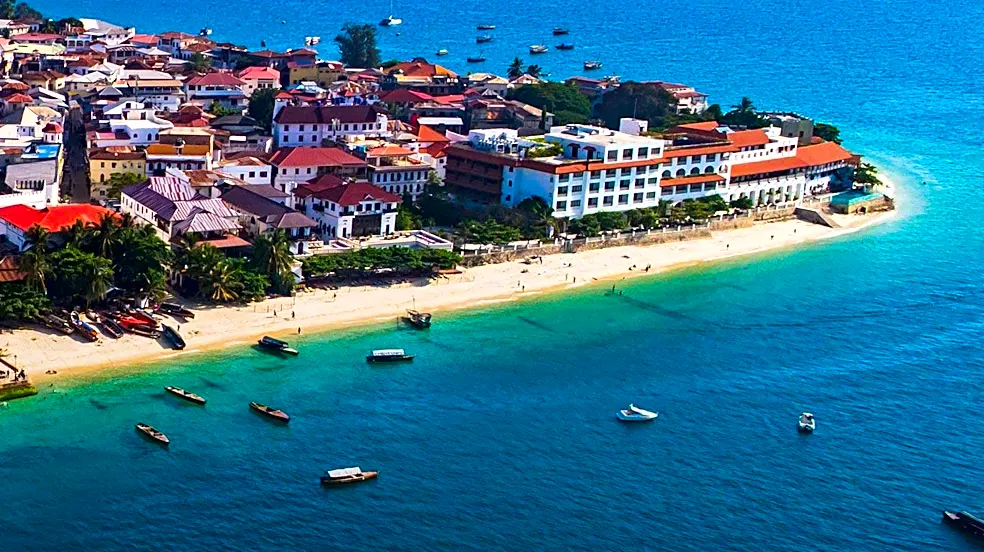






Zanzibar operates as a semi-autonomous region within Tanzania, a status that grants it a distinct governmental structure and a degree of independence in non-union matters. This unique arrangement means that while it is part of the larger Tanzanian nation, Zanzibar maintains its own legislative and executive bodies, reflecting its historical and cultural identity. The capital, Zanzibar City, located on Unguja Island, serves as the center of this regional
governance.
The legislative authority for non-union matters in Zanzibar is vested in its House of Representatives, also referred to as the Legislative Council. This body is composed of two main parts: the President of Zanzibar and the House of Representatives itself. The President of Zanzibar holds the significant role of head of government and also chairs the Revolutionary Council, which is the primary executive authority for the region. This dual role underscores the centralized nature of executive power within Zanzibar's political system.
The Structure of Zanzibar's Government
Zanzibar's government includes a president, two vice-presidents, and a Revolutionary Council. The president and members of the House of Representatives are elected for five-year terms and are eligible for a second term. A notable feature of this system is the allocation of vice-presidential roles: the first vice-president is typically drawn from the main opposition party in the House, while the second vice-president comes from the ruling party and serves as the leader of government business within the House. This structure aims to incorporate opposition voices directly into the executive branch.
Ministers within the Zanzibar government are selected by the president from among the members of the House of Representatives. Their allocation is determined by the number of House seats won by various political parties, ensuring a proportional representation in the ministerial appointments. The Revolutionary Council, a key executive body, comprises the president, both vice-presidents, all ministers, the attorney general of Zanzibar, and other members deemed suitable by the president. This council plays a crucial role in the executive decision-making processes of the semi-autonomous region.
Political Dynamics and Historical Context
The political landscape of Zanzibar has historically been marked by tensions, particularly between the ruling party, Chama Cha Mapinduzi (CCM), and the opposition Civic United Front (CUF). These tensions highlight the competitive nature of politics within the semi-autonomous region. The constitution of Zanzibar even mandates that the party coming in second in elections must join a coalition with the winning party, a mechanism designed to foster political stability and shared governance.
For instance, in December 2020, following disputed elections, the Alliance for Change and Transparency-Wazalendo (ACT-Wazalendo), considered the main opposition party in Zanzibar, joined a coalition government with the islands' ruling party, Chama Cha Mapinduzi. This demonstrates the practical application of Zanzibar's constitutional requirement for coalition governments, aiming to integrate diverse political factions into the governing process. The historical context of Zanzibar, including its past as a sovereign state and its unification with Tanganyika in 1964 to form Tanzania, continues to shape its distinct political identity and governance model.