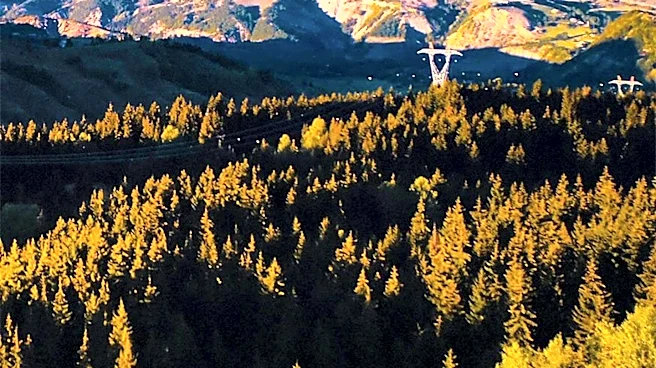








Idaho, admitted to the United States as the 43rd state on July 3, 1890, is a land defined by its rugged natural beauty and rich geological makeup. Known widely as the "Gem State," this nickname reflects the abundance of various gemstones found within its borders. Beyond its precious minerals, Idaho is also recognized for its significant agricultural output, particularly potatoes, earning it the moniker "Potato State." The state's landscape is dominated
by mountainous terrain, including a substantial portion of the Rocky Mountains, and is traversed by the vital Snake River, which plays a crucial role in its geography and history.
The Gem State's Rich Geological Heritage
The nickname "Gem State" is not merely a poetic flourish but a direct reference to Idaho's geological wealth. The state has yielded a wide array of gemstones, making it a significant location for mineral discovery. This rich mineralogy contributes to Idaho's unique identity and has historically attracted interest and settlement. The mountainous regions, which are a prominent feature of Idaho's geography, are often the sites where these valuable resources are unearthed, further intertwining the state's physical characteristics with its economic and cultural identity.This geological richness extends beyond just gemstones. The rugged landscape itself, with its snow-capped mountain ranges, rapids, vast lakes, and steep canyons, speaks to a powerful geological history. The state's average elevation is 1,524 meters, with its highest point being Borah Peak at 3,859 meters, and its lowest point at 216 meters along the Snake River. These dramatic elevation changes and diverse geological formations are a testament to the forces that shaped Idaho over millennia, creating both its scenic beauty and its mineral deposits.
The Snake River: A Lifeline Through the Landscape
The Snake River is an iconic geographical feature of Idaho, flowing through the state and carving out significant natural landmarks. This powerful river is responsible for Hells Canyon, which is recognized as the deepest gorge in the United States. The river's presence has shaped the land, creating fertile plains and dramatic canyons, and has been central to the state's development and settlement patterns. The vast majority of Idaho's population resides in the Snake River Plain, a valley that stretches across southern Idaho from east to west.This plain served as a crucial pathway for westward-bound settlers traveling on the Oregon Trail, offering a relatively easy passage through the formidable Rocky Mountains. Many of these settlers chose to establish themselves in the area rather than face the challenging routes through the Blue Mountains and the Cascade Range further west. The Snake River Plain is home to many of Idaho's major cities, including Boise, Meridian, Nampa, Caldwell, Twin Falls, Idaho Falls, and Pocatello. The western part of this plain is known as the Treasure Valley, nestled between the Owyhee Mountains to the southwest and the Boise Mountains to the northeast, while the central region is referred to as the Magic Valley.
Borders and Boundaries: Idaho's Place in the West
Idaho's geographical position places it strategically within the American West, sharing borders with six other U.S. states and one Canadian province. To its west lie Washington and Oregon, while Montana and Wyoming form its eastern boundary. To the south, Idaho borders Utah and Nevada. To the north, the state shares a short border with the Canadian province of British Columbia. This extensive network of borders highlights Idaho's role as a crossroads in the Pacific Northwest and Rocky Mountain regions.The state's landscape is characterized by some of the largest unspoiled natural areas in the United States. For instance, the Frank Church-River of No Return Wilderness Area spans 2.3 million acres, making it the largest contiguous area of protected wilderness in the lower 48 states. This commitment to preserving its natural environment underscores Idaho's identity as a state rich in natural resources and scenic beauty, offering vast expanses of untouched wilderness alongside its agricultural and mineral wealth.