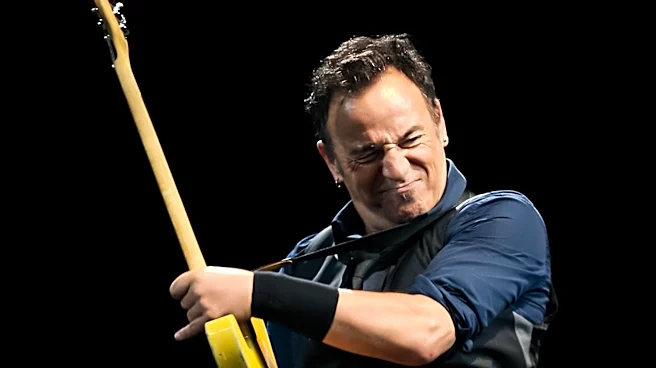




Bruce Springsteen's sixth studio album, "Nebraska," released on September 30, 1982, stands as a testament to artistic daring and unconventional recording methods. Unlike his previous works, this album was largely recorded by Springsteen alone in his bedroom in Colts Neck, New Jersey, using a simple four-track recorder. This intimate, stripped-down approach was a significant departure, especially coming after the success of his 1980 double album, "The
River," and its accompanying world tour. The decision to release these raw, acoustic folk-rock tracks as they were, rather than re-recording them with the E Street Band, marked a pivotal moment in his career, confusing some fans but ultimately earning critical acclaim for its personal and brave style.
From Bedroom Demos to Album Release
The journey of "Nebraska" began in January 1982, when Springsteen retreated to his home to work on new songs. He recorded 15 demo versions in his bedroom, accompanying himself primarily with guitar and harmonica. His intention was for these to be mere demos, a starting point for potential full-band arrangements. He acquired a small Teac four-track cassette recorder, planning to record the songs alone and then teach them to the band if they sounded good. He noted that he could sing and play guitar, leaving two tracks for additional elements like another guitar or a harmony. He also used a small Echoplex to mix everything, considering it just a demo setup.
In April 1982, Springsteen attempted to record these demos with the E Street Band in a New York studio. However, after several unsuccessful attempts to arrange the songs with the band, he realized that the musicians couldn't replicate the intimate atmosphere and character of the original recordings. He also felt that some of the pieces were too personal to be performed within the E Street Band's framework. Ultimately, Springsteen and his manager, Jon Landau, made the bold decision to release the demo recordings in their original form as a solo album, despite the commercial and artistic risks involved.
Technical Challenges and Artistic Integrity
The recordings for "Nebraska" were initially made on a simple audio cassette, presenting significant technical challenges for the sound engineers. They had to work extensively to technically prepare the unstable, low-fidelity source material. After several months of processing, the signal was stabilized and restored sufficiently to be used for manufacturing a record. Despite these technical limitations, the original character of the home recordings was largely preserved, maintaining the raw and immediate feel Springsteen had captured.
This commitment to the original, unpolished sound was central to the album's identity. The album's title itself was not chosen until shortly before its release, with nearly half of the song titles, such as "State Trooper," "Used Cars," and "Reason to Believe," being considered. Ultimately, Springsteen settled on "Nebraska," named after the first song on the album and the first one he recorded. This choice further emphasized the album's grounded and narrative focus, setting the stage for its unique place in his discography.
Commercial Performance and Critical Reception
Upon its release, "Nebraska" stood out dramatically in a year dominated by British synth-pop artists like A Flock of Seagulls, Lionel Richie, Olivia Newton-John, and The Human League. The album's stark, dark themes and acoustic style confused both casual and serious fans. Despite this, it sold well, debuting on the US Billboard Top LPs & Tape chart at number 29 and peaking at number three. By 1989, it had sold one million copies and was certified platinum by the Recording Industry Association of America (RIAA).
Internationally, the album also performed strongly, peaking at number two in Sweden, and number three in Canada, Norway, New Zealand, and the UK. It reached number seven in the Netherlands, eight in Australia, and ten in Japan, while charting at number 18 in France and 37 in West Germany. Critics largely praised the album as brave and artistically daring, considering it Springsteen's most personal record up to that point. However, some negative reviews suggested that the songs stylistically merged and that their dark themes would appeal only to dedicated fans. Springsteen himself did not do promotional work for the record, believing listeners should experience it for themselves, further cementing its unique and introspective legacy.