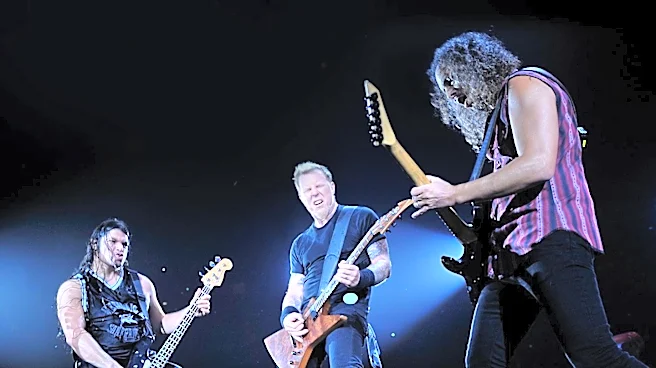




Metallica's 1997 album, "Reload," stands as a significant, yet often debated, entry in the band's extensive discography. Released as a follow-up to "Load," the album continued the band's exploration into new musical territories, moving further from their thrash metal origins. While it achieved commercial success, debuting at number one on the Billboard 200 and selling 436,000 copies in its first week, its critical and fan reception has remained mixed
over the years. "Reload," much like "Load," often occupies lower positions in rankings of Metallica's albums, reflecting a period of significant stylistic change that continues to spark discussion among listeners and critics alike.
Initial Reception and Critical Perspectives
Upon its release, "Reload" received a range of reviews, with some critics labeling it as mediocre. This initial mixed reception set the tone for how the album would be viewed in the long term. The album was seen by some as simply a continuation of "Load," which itself had been a departure for the band. While Lars Ulrich maintained that all the songs developed during the extensive sessions for both albums were good enough to be released, not all critics agreed with the breadth of material presented.
Many critics pointed to the album's excessive length and the inclusion of what they considered to be filler material as primary weaknesses. The sentiment often expressed was that both "Load" and "Reload" could have been condensed into a single, stronger album. This critique suggested that the sheer volume of music recorded during that period diluted the overall impact and immediacy of the material, leaving listeners with too much to process and, in some opinions, too little inspiration behind many of the tracks.
Band Members' Reflections and Evolving Views
Over the years, members of Metallica have offered their own nuanced perspectives on "Reload" and the era it represents. James Hetfield, the band's frontman, noted that during this period, he largely followed the vision of Kirk Hammett and Lars Ulrich. He also expressed a belief that the abundance of material released ultimately diluted the group's sound. Hetfield even speculated that the late bassist Cliff Burton might not have approved of the musical direction taken during this time. Despite these reflections, Hetfield has also stated that he does not regret that period, as it felt like the correct decision at the time.
Lars Ulrich, on the other hand, expressed in 2002 that he valued parts of the material from both "Load" and "Reload." He lamented that some of the negative public reaction might have been influenced more by the band's new image than by the music itself. By 2003, Ulrich conceded that both albums could have been condensed into one, explaining that at the time, the band lacked a stricter editing criterion and preferred to release all available material. These differing, yet evolving, views from within the band highlight the complex legacy of "Reload."
Enduring Impact and Place in Metallica's Catalog
Despite the divided opinions, "Reload" remains a significant part of Metallica's history, representing a period where the band consciously explored new artistic avenues. It was the last studio album to feature bassist Jason Newsted, marking the end of an era for the band's lineup. The album's blend of biker metal, southern rock, and unconventional arrangements showcased a group unafraid to experiment, even if it meant alienating some of their traditional fanbase. While it may not be universally acclaimed, "Reload" stands as a testament to Metallica's willingness to evolve and challenge expectations, contributing to a discography that is as diverse as it is extensive. Its legacy is one of bold experimentation, commercial success, and ongoing debate, solidifying its place as a truly divisive chapter in the story of one of heavy metal's most iconic bands.