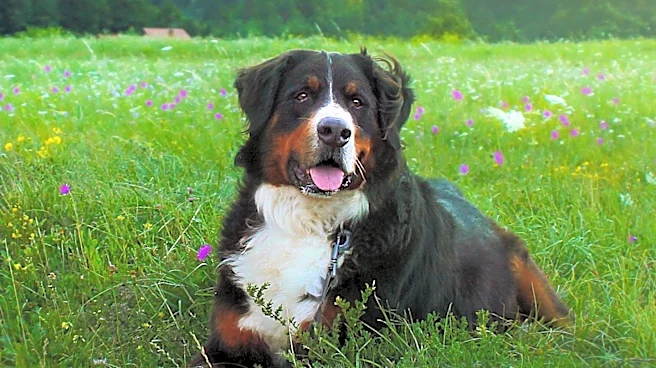







The Bernese Mountain Dog, known for its striking tricolor coat and gentle demeanor, has a rich history that traces back to the Swiss Alps. This breed, originating from the canton of Bern, Switzerland, has evolved from a hardworking farm dog to a beloved family pet. Its journey from the alpine pastures to homes across the world is a testament to its enduring appeal and versatility.
Origins and Early Use
The Bernese Mountain Dog, or Berner Sennenhund, is one of four Sennenhund-type
breeds with ancestral roots in Roman mastiffs. The name Berner refers to the breed's area of origin in the canton of Bern, while Sennenhund is derived from the German words for alpine pasture and hound. Historically, these dogs were used as general farm dogs, assisting alpine herders and dairymen. Their robust build made them ideal for pulling carts, earning them the nickname "Cheese Dogs" due to their role in transporting milk and cheese.
In the early 1900s, the breed began to gain recognition beyond its traditional roles. Fanciers exhibited the dogs at shows in Bern, and in 1907, breeders from the Burgdorf region founded the first breed club, the Schweizerischer Dürrbach-Klub. This marked the beginning of the breed's formal recognition, with the first standard defining the Bernese Mountain Dog as a separate breed.
Formal Recognition and Popularity
By 1910, the Bernese Mountain Dog had gained significant traction, with 107 registered members of the breed. The breed was formally recognized in 1912, solidifying its status in the canine world. In 1937, the American Kennel Club recognized the breed, classifying it as a member of the Working Group. This recognition helped the Bernese Mountain Dog gain popularity in the United States, where it continues to be a favored family dog.
Today, the Bernese Mountain Dog ranks 19th in popularity according to the American Kennel Club. Its gentle nature and striking appearance make it a popular choice for families, particularly in German-speaking countries. The breed's versatility and adaptability have allowed it to transition from a working farm dog to a cherished companion.
Cultural Impact and Legacy
The Bernese Mountain Dog's cultural impact extends beyond its working roots. In German-speaking countries, the breed is highly regarded, ranking 11th per live births according to the German Association of Dog Breeders. Its friendly temperament and striking appearance have made it a symbol of Swiss heritage and a beloved pet worldwide.
The breed's legacy is a testament to its adaptability and enduring appeal. From its origins in the Swiss Alps to its status as a popular family dog, the Bernese Mountain Dog continues to capture the hearts of dog lovers around the globe. Its journey reflects the changing roles of dogs in society and the timeless bond between humans and their canine companions.