


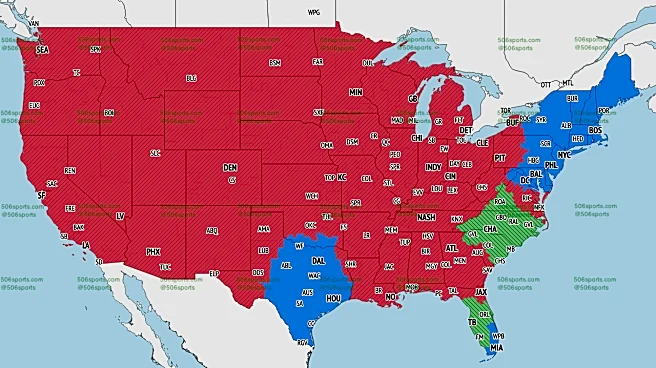


In the mid-1990s, Major League Baseball embarked on a unique and ultimately short-lived venture into sports broadcasting with The Baseball Network. This arrangement, which involved NBC and ABC, represented a significant departure from traditional broadcasting models, aiming to produce and market games in-house. It emerged from a period of financial turmoil for MLB, particularly after CBS's costly contract from 1990 to 1993, which resulted in substantial
losses for the network. The Baseball Network was designed to create a loss-free environment for its network partners and to boost ratings, especially among younger viewers, by offering a new approach to game coverage.
The Baseball Network's structure was distinct. Instead of a national "game of the week," it featured multiple weekly regional telecasts on specific nights. This allowed for exclusive coverage windows, meaning no other broadcaster could televise MLB games during the times The Baseball Network was on air. The package included prime-time coverage of regular season games under the branding "Baseball Night in America," along with postseason and World Series coverage. This innovative model was intended to provide games of regional interest to appropriate markets and to highlight important divisional races, especially with the recent expansion of the league and the introduction of wild card spots for the playoffs.
The Genesis of a New Model
The decision to create The Baseball Network was heavily influenced by the financial fallout from CBS's previous contract with Major League Baseball. CBS's four-year, $1.8 billion deal from 1990 to 1993 ultimately cost the network approximately $500 million. In 1991, CBS reported a loss of around $169 million in the third quarter due to declining advertiser interest in baseball telecasts, while still being contractually obligated to pay MLB around $260 million annually through 1993. This financial strain led Major League Baseball to take a different approach, deciding to produce the telecasts themselves and market them directly to advertisers.
Prior to this, in 1988, then-commissioner Peter Ueberroth had considered creating an all-baseball basic cable channel that would show up to four games each night. Ueberroth's vision was to establish a national cable package for one or two nights a week without undermining the value of local television deals for individual teams. While this specific idea didn't materialize at the time, it foreshadowed the league's later move towards greater control over its broadcast content. The Baseball Network, approved by MLB owners on May 28, 1993, without CBS's involvement, aimed to secure 85% of the first $140 million in advertising revenue, or 87.5% of advertising and corporate sponsorship from games until sales reached a specified level, along with 50% of the next $30 million and 80% of any additional money.
Broadcasting Strategy and Network Involvement
NBC and ABC, who had previously aired MLB games, returned to the fold under The Baseball Network's revenue-sharing venture. Each network contributed $10 million in start-up funds. This deal was structured more like a time-buy than a traditional rights fee, which reduced the financial risk for the networks compared to outright purchasing broadcast rights. A key motivation for NBC and ABC was to keep the emerging Fox network at bay, as Fox had recently made a significant $1.58 billion bid for the television rights to National Football Conference games, establishing itself as a major player in sports broadcasting. The shift of some CBS affiliates to Fox further highlighted the competitive landscape.
The Baseball Network kicked off its coverage on July 12, 1994, with the All-Star Game on NBC, marking NBC's first MLB telecast since Game 5 of the 1989 National League Championship Series. The broadcast featured Bob Costas on play-by-play, with Joe Morgan and Bob Uecker as analysts. Greg Gumbel hosted the pre-game show, with Hannah Storm and Johnny Bench providing interviews. The 1994 All-Star Game was a financial success, reportedly selling out all its advertising slots, with one 30-second spot costing $300,000. ABC's primary broadcast team included Al Michaels, Tim McCarver, and Jim Palmer, with Michaels returning to baseball broadcasting for the first time since the 1989 World Series, which was interrupted by the Loma Prieta earthquake.
Downfall and Legacy
Despite its innovative approach and initial successes, The Baseball Network did not last long. The arrangement was disbanded after the 1995 season, largely due to the lingering effects of a players' strike on the remainder of the 1994 season and poor reception from fans and critics regarding how the coverage was implemented. While NBC retained rights to certain games, the growing Fox network became the league's new national broadcast partner starting in 1996. The Baseball Network's attempt to produce and market games in-house, while ambitious, ultimately proved unsustainable in its original form.
It wasn't until January 1, 2009, nearly 14 years after The Baseball Network's cancellation, that an all-baseball cable channel, MLB Network, created and backed by MLB itself, finally came to fruition. This later endeavor proved to be much more successful, realizing a vision similar to what Peter Ueberroth had contemplated decades earlier. The Baseball Network, though a failure in its immediate execution, represented a significant chapter in MLB's broadcasting history, highlighting the league's continuous efforts to adapt to changing media landscapes and maximize its reach and revenue.