






The 1968 Summer Olympic Games in Mexico City hosted a variety of swimming events, among which the women's 100 meter freestyle held a prominent place. This particular competition unfolded over two days, from October 18 to October 19, at the state-of-the-art Alberca Olímpica Francisco Márquez. It drew a significant international contingent, with 57 competitors representing 27 different nations, all eager to demonstrate their speed and skill in one of swimming's
most fundamental races. The event highlighted both individual athletic achievement and the competitive spirit of the Olympic movement.
Event Structure and Rules
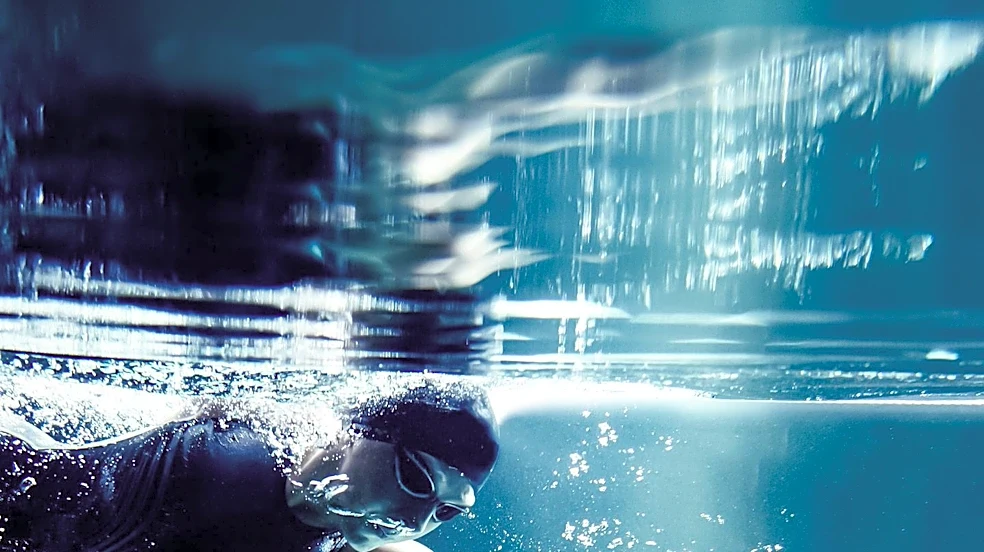
The women's 100 meter freestyle is a sprint event that requires swimmers to complete two lengths of an Olympic-size swimming pool, which measures 50 meters in length. The term "freestyle" in swimming competitions signifies that the method of stroke is not regulated, allowing swimmers to employ any technique they believe will propel them fastest through the water. In practice, this almost universally means that competitors utilize the front crawl, or a variation of it, due to its superior efficiency and speed compared to other strokes. This freedom of stroke contrasts sharply with events like backstroke, breaststroke, and butterfly, which have strict technical requirements.
The competition was structured to identify the fastest swimmers through a series of elimination rounds. It began with heats and semifinals on October 18, designed to narrow down the field of 57 athletes. The top performers from these preliminary rounds then advanced to the final race, which took place on October 19. This multi-stage format ensures that only the most consistent and fastest swimmers have the opportunity to compete for medals, adding an element of endurance and strategic pacing to the overall event.
The Finalists and Their Performances
The final race of the women's 100 meter freestyle featured eight top athletes who had successfully navigated the earlier rounds. While the United States ultimately swept the podium, the final was a closely contested event with strong performances from swimmers representing various countries. Jan Henne of the United States secured the gold medal with a winning time of 1:00.0. Her teammates, Susan Pedersen and Linda Gustavson, both finished with a time of 1:00.3, earning them the silver and bronze medals, respectively.
Beyond the medalists, the competition remained tight. Marion Lay from Canada finished in fourth place, just narrowly missing the podium with a time of 1:00.5. Martina Grunert, representing East Germany, and Alexandra Jackson from Great Britain, both recorded a time of 1:01.0, tying for fifth place. Mirjana Šegrt of Yugoslavia finished seventh with 1:01.5, and Judit Turóczy of Hungary completed the final field in eighth place with a time of 1:01.6. These results underscore the high level of international competition and the minimal time differences that often separate top Olympic swimmers.
The Venue and Historical Context
The Alberca Olímpica Francisco Márquez, the venue for the swimming events, was a state-of-the-art facility built for the 1968 Mexico City Games. Hosting such a significant international event requires precise timing, efficient organization, and facilities that meet Olympic standards. The 1968 Olympics were notable for being the first to be held in Latin America and at a high altitude, which presented unique challenges and conditions for athletes, though the impact on swimming events might differ from endurance land-based sports. The women's 100 meter freestyle event, as a part of these historic games, contributed to the overall narrative of athletic achievement and international camaraderie that defines the Olympic movement.