





The FIA World Endurance Championship (WEC) stands as a premier international series in automobile endurance racing, bringing together top-tier teams and drivers from around the globe. Organized by the Automobile Club de l'Ouest (ACO) and sanctioned by the Fédération Internationale de l'Automobile (FIA), the WEC represents a modern revival of the historic World Sportscar Championship, which concluded in 1992. This championship is renowned for its highly
competitive and closely contested on-track racing, with contemporary drivers often noting the sustained overtaking and aggressive racing that characterizes events throughout their duration. It serves as a crucial platform for testing both cutting-edge automotive technology and the unwavering endurance of its participants.
From Intercontinental Cup to World Championship
The WEC was first established in 2012, succeeding the ACO's Intercontinental Le Mans Cup, which had run in 2010 and 2011. The new championship largely adopted the format of its predecessor, featuring a series of endurance races held across the world. A cornerstone event of the WEC calendar is the iconic 24 Hours of Le Mans, a race that embodies the spirit of endurance motorsport. In addition to Le Mans, other races in the series are typically six hours long and take place in diverse international locations such as Bahrain, Brazil, Japan, and the United States. The name "World Endurance Championship" itself has historical roots, having been previously used by the FIA from 1981 to 1985, underscoring the championship's legacy in global motorsport.
Initially, the WEC featured four main categories: LMP1 and LMP2 for prototypes, and GTE grand tourers, which were further divided into GTE Pro for professional driver lineups and GTE Am for teams combining professional and amateur drivers. This structure allowed for a broad spectrum of competition, catering to both factory-backed efforts and privateer teams.
Evolving Car Categories and Future Directions
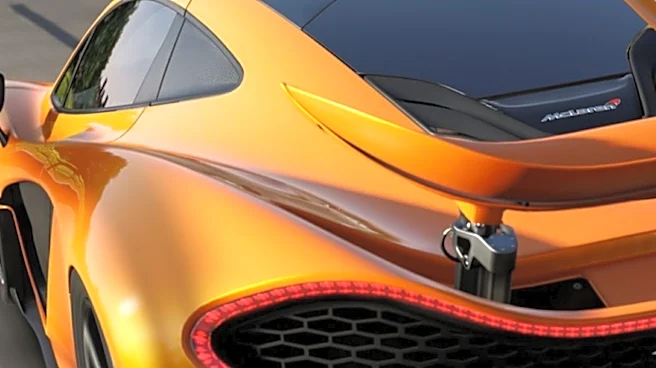
Over the years, the WEC has adapted its car categories to maintain manufacturer interest and promote innovation. Faced with declining manufacturer involvement in the LMP1 class after the 2017 season, the FIA initiated a study to redefine the championship's top category. This led to the introduction of the Le Mans Hypercar (LMH) proposal, which aimed to move away from traditional Le Mans Prototype entries and reduce reliance on complex hybrid technologies. The goal was to make the championship more attractive to car manufacturers by allowing for cars that more closely resembled flagship production models, with examples like the Aston Martin Vulcan and McLaren Senna GTR cited as inspirations. The Hypercar class debuted in the 2021 season with LMH entries from Alpine, Glickenhaus, and Toyota, and from 2023, LMDh entries also became eligible to compete full-time alongside LMH cars.
Further changes were announced for the LMGTE categories. In 2021, the ACO revealed plans to transition away from its two LMGTE classes due to a rapid decline in manufacturer interest. The 2022 season marked the final year for the LMGTE Pro class, and by 2024, LMGTE Am is set to be replaced by a GT3-based category, described as a "GT3 Premium." This new category will feature a cost-capped body kit conversion from standard GT3 machinery, with the FIA aiming for a customer-focused class where manufacturers cannot officially enter. Additionally, the LMP2 class, a long-standing feature, will not be part of the full-season grid from 2024, due to increased demand for Hypercar and the incoming LMGT3 class, though it will retain a minimum of 15 slots at the 24 Hours of Le Mans.