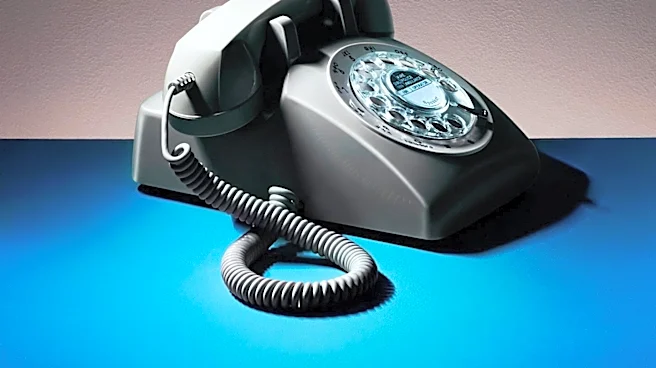





The Moscow-Washington hotline, formally known in the United States as the Washington-Moscow Direct Communications Link, is a system designed to allow direct communication between the leaders of the United States and the Russian Federation, formerly the Soviet Union. Established in 1963, this vital link connects the Pentagon with the Kremlin, or historically, with Soviet Communist Party leadership. Despite its popular image as a "red telephone," the hotline was
never actually a telephone line, nor were red phones ever used. Its creation was a direct response to the urgent need for faster and more reliable communication during a period of intense global tension, particularly highlighted by the Cuban Missile Crisis.
The Genesis of an Idea
The concept of a direct communication link between the superpowers was not a sudden inspiration but rather the culmination of ideas from several individuals. Harvard professor Thomas Schelling, who had previously worked on nuclear war policy for the Defense Department, was one such proponent. Schelling notably credited the pop fiction novel *Red Alert* (which later became the basis for the film *Dr. Strangelove*) with raising government awareness about the benefits of direct communication between the U.S. and the Soviet Union. This fictional work underscored the potential for catastrophic misunderstandings in a nuclear age.
Another key figure was Jess Gorkin, editor of *Parade* magazine. Gorkin actively campaigned for the idea, personally engaging with 1960 presidential candidates John F. Kennedy and Richard Nixon, and even buttonholing Soviet Premier Nikita Khrushchev during a U.S. visit to advocate for the adoption of such a system. During this same period, Gerard C. Smith, then head of the State Department Policy Planning Staff, also proposed direct communication links. However, initial objections from various entities, including others within the State Department, the U.S. military, and the Kremlin, caused delays in its implementation.
The Cuban Missile Crisis: A Catalyst for Change
The critical turning point that transformed the hotline from an idea into a priority was the 1962 Cuban Missile Crisis. This intense standoff brought the world to the brink of nuclear war and starkly exposed the dangerous inadequacies of existing diplomatic communication channels. During the crisis, official diplomatic messages often took as long as six hours to be delivered, a dangerously slow pace given the rapidly escalating situation. The urgency was so great that unofficial channels, such as messages conveyed through television network correspondents, had to be utilized because they were quicker.
One particularly alarming incident during the crisis involved the United States taking nearly twelve hours to receive and decode Nikita Khrushchev's initial 3,000-word settlement message. This delay was perilously long. By the time Washington had managed to draft a reply, a tougher message had arrived from Moscow, demanding the removal of U.S. missiles from Turkey. White House advisers, reflecting on this harrowing experience, concluded that faster communications could have potentially averted the crisis or, at the very least, allowed for its quicker resolution. The profound lessons learned from the Cuban Missile Crisis convinced both sides of the absolute necessity for improved communication, leading directly to the signing of the Hot Line Agreement on June 20, 1963. This agreement marked the first time the two nuclear powers formally acted to reduce the risk of an unintentional nuclear war.
Evolution and First Use
The Moscow-Washington hotline was officially installed on August 30, 1963. Its initial implementation relied on Teletype equipment, a system that allowed for the transmission of typed messages. This technology was a significant improvement over previous methods, providing a written record and reducing the potential for misinterpretation inherent in spoken communication. The system underwent several technological upgrades over the years to keep pace with advancements in communication technology and to enhance its security and reliability.
In 1986, the Teletype system was replaced by fax machines, offering a faster and more versatile method for exchanging documents and messages. Further modernization occurred in 2008, when the hotline transitioned to a secure computer link, facilitating the exchange of messages via a secure form of email. This continuous evolution underscores the enduring importance placed on this direct communication channel. The hotline was first used in 1967 by President Lyndon B. Johnson during the Six-Day War, demonstrating its immediate utility in de-escalating international conflicts beyond its initial Cold War context.