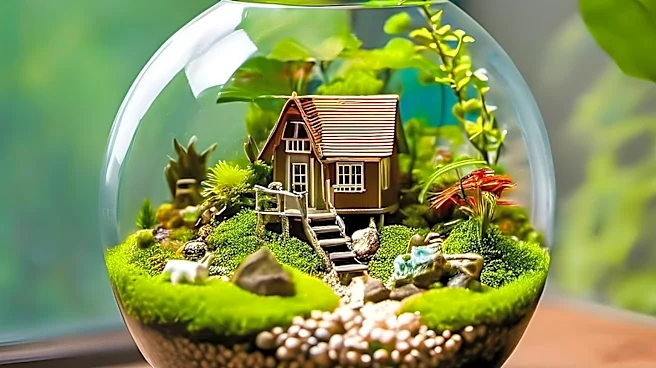




A terrarium is an enclosed environment, typically a glass container, designed to house plants, animals, or a combination of both, creating a miniature ecosystem. These artificial habitats are distinct from simple potted plants or animal cages because they are enclosed to a degree that allows for the maintenance of temperature and humidity levels different from the surrounding environment. Terrariums serve various purposes, from providing a suitable
living space for captive animals to acting as decorative items that bring a touch of nature indoors. They can range in size from small desk-top enclosures to large structures, and their design is always tailored to meet the specific needs of the species they contain.
Defining the Terrarium and its Variations
The term "terrarium" generally refers to an enclosure for a land habitat. It is essentially an aquarium without a water section, focusing instead on a land-based environment. These enclosures are used for keeping and raising animals or plants for observation or research. A key characteristic is the ability to control environmental conditions such as temperature, humidity, and light, simulating a portion of a particular species' natural ecosystem on a smaller scale. Terrariums are often subcategorized by the biome they represent, such as tropical, temperate desert, rainforest, or grassland.Terrariums can be broadly classified into two main types: closed and open. Closed terrariums are sealed with a lid, door, or cork, creating a self-sufficient environment where moisture is recycled within the vessel. This design raises humidity levels, making them ideal for tropical or moisture-loving plants like moss, orchids, and ferns. The transparent walls allow heat and light to enter, fostering plant growth through photosynthesis and a small water cycle where evaporating moisture condenses and falls back onto the plants and soil. Open terrariums, on the other hand, are not sealed and have access to fresh air, typically by leaving the container open or through a drilled hole. These are better suited for plants that prefer less humidity and soil moisture, such as succulents and cacti, or temperate plants.
Environmental Control and Specialized Designs
Maintaining the right environmental conditions is crucial for the success of a terrarium. For closed terrariums, occasional opening, perhaps once a week, can help evaporate excess moisture and prevent mold or algae growth. The soil mix is also important, with sterile mixtures like peat-lite (peat moss, vermiculite, and perlite) often used to minimize harmful microbes. Open terrariums, while requiring more frequent watering than their closed counterparts, benefit from a reduced risk of disease due to lower humidity. However, neither type of terrarium should be placed in direct sunlight, as the transparent walls can magnify the sun's rays, causing foliage to burn.Beyond the basic open and closed types, there are specialized terrarium designs. A "sandwich-style terrarium," for instance, encloses soil or other firm substrate between two sheets of glass or nested jars, allowing for the observation of fossorial or wood-boring animals like earthworms or ants. The historical "Wardian case," a 19th-century sealed terrarium, was specifically used for transporting or displaying delicate plants or small animals like moths in conditions where ambient environments were too harsh. Another specialized form is the "bottle garden," a small sealed glazed terrarium where all necessary water and nutrients are sealed in at planting, requiring only light and temperature management for future growth. These diverse forms underscore the adaptability and varied applications of the terrarium concept in creating controlled, observable habitats.