






The Great Library of Alexandria, a monumental institution of the ancient world, owes its existence and flourishing to the ambitious vision and unwavering patronage of the Ptolemaic dynasty. Founded in Alexandria, Egypt, in the third century BC, the Library was more than just a collection of scrolls; it was a deliberate project by the Ptolemies to establish their new capital as a leading center of culture, scholarship, and intellectual power. Their
commitment transformed Alexandria into a beacon of learning that attracted scholars and texts from across the known world.
Royal Initiative and Early Development
The initial conception and opening of the Library are attributed to either Ptolemy I Soter or his son, Ptolemy II. This royal initiative marked the beginning of a sustained effort to create an unparalleled intellectual hub. The earliest accounts suggest that Demetrius of Phaleron, a student of Aristotle, played a key role in organizing the Library under Ptolemy I Soter's reign. This early involvement of prominent intellectuals, supported by royal decree, set a high standard for the institution's scholarly pursuits.
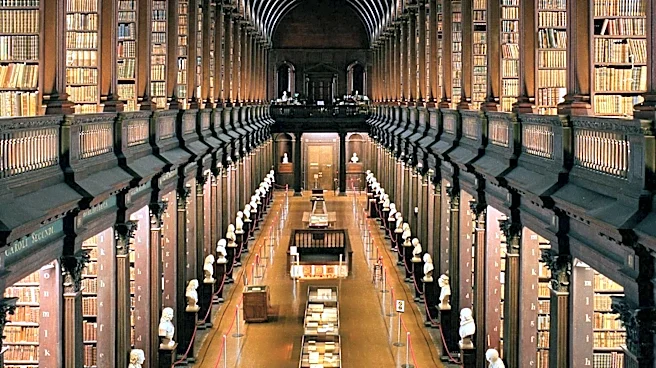
The Ptolemaic rulers understood that a great library required more than just books; it needed a conducive environment for study and research. The Library complex was designed to include various facilities such as a peripatos (walk), gardens, a shared dining room, a reading room, lecture halls, and meeting rooms. While the exact layout is not fully known, this comprehensive design reflects a deliberate effort to foster a vibrant academic community, a model whose influence can still be seen in modern university campuses.
Aggressive Acquisition and Imperial Ambition
The Ptolemaic dynasty's ambition for the Library was nothing short of collecting all the world's knowledge. This goal was pursued through an aggressive and well-funded royal mandate. The rulers sponsored trips to major book fairs in cities like Rhodes and Athens, ensuring that new and important works were acquired for the Alexandrian collection. A particularly innovative and assertive policy involved inspecting every ship that docked in Alexandria's port. Any books found on these vessels were taken, copied, and then the copies were returned to the owners, with the original texts being retained for the Library.
This systematic acquisition strategy, backed by the immense wealth and authority of the Ptolemies, allowed the Library's collection to grow at an astonishing rate. King Ptolemy II Philadelphus, for instance, is said to have set an objective of 500,000 scrolls for the Library. The strategic location of Alexandria, with its man-made bidirectional port, further facilitated this growth by making it an international hub for trade and, consequently, for the exchange of written materials. The Ptolemies' investment in papyrus production also ensured a steady supply of writing material, solidifying Alexandria's role as a center for book creation and dissemination.
Patronage of Scholars and Preservation of Texts
The Ptolemaic patronage extended beyond mere acquisition; it fostered a thriving environment for international scholars. The Library became home to these intellectuals, who contributed to its vast collection with new works in mathematics, astronomy, physics, and natural history. The dynasty's support enabled serious textual criticism, particularly on Homeric texts, where editors at the Library worked to standardize and preserve ancient literature. The most famous editors often held the title of head librarian, a testament to the high esteem in which scholarship was held by the ruling family.
A striking example of Ptolemaic dedication to textual preservation is recounted by Galen. Ptolemy III requested to borrow the original scripts of Aeschylus, Sophocles, and Euripides from the Athenians. Despite the Athenians demanding an enormous guarantee of fifteen talents, Ptolemy happily paid the fee but kept the original scripts for the Library. This act, while perhaps controversial, underscores the Ptolemaic dynasty's profound commitment to amassing and safeguarding the most authoritative versions of ancient knowledge, cementing their legacy as the architects of one of history's greatest intellectual institutions.