



In the dynamic practice of yoga, where physical postures often demand strength and flexibility, there exists a pose dedicated entirely to stillness and profound relaxation: Shavasana, or Corpse Pose. This seemingly simple posture is, in fact, a cornerstone of yoga, designed to integrate the physical and mental benefits of the practice. Its name, derived from the Sanskrit words "shava" meaning "corpse" and "asana" meaning "posture" or "seat," reflects
its intention: to lie supine, completely still, and release all tension. The earliest mention of Shavasana dates back to the 15th-century Hatha Yoga Pradipika, which highlights its ability to eliminate tiredness and promote calmness of the mind.
The Practice and Purpose of Shavasana
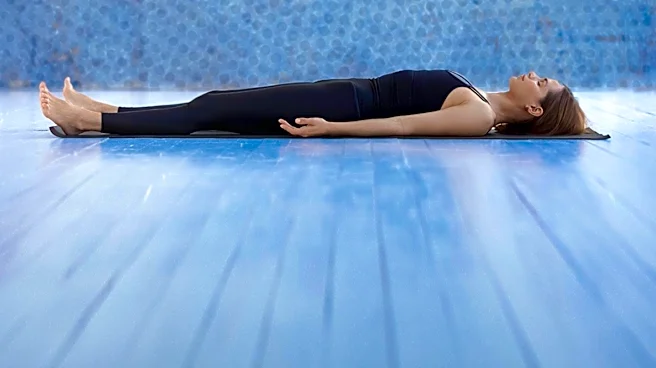
Shavasana is typically performed at the conclusion of an asana practice, serving as a vital period for final relaxation. The pose involves lying on the back with the legs spread as wide as the yoga mat and the arms relaxed to both sides of the body, palms facing up. The eyes are closed, and the entire body is consciously relaxed onto the floor. A key aspect of the practice is maintaining an awareness of the chest and abdomen gently rising and falling with each breath. During Shavasana, practitioners are encouraged to systematically scan their bodies for any muscular tension. As tension is identified, it is consciously released, promoting a deeper state of relaxation. All control over the breath, mind, and body is then surrendered for the duration of the asana.
While commonly practiced for 5–10 minutes at the end of a session, Shavasana can be extended for 20–30 minutes for deeper benefits. In Sivananda yoga, its importance is so great that it is practiced not only for "Final Relaxation" but also before the session begins and between individual asanas. To emerge from Shavasana, one slowly deepens the breath, flexes the fingers and toes, stretches the arms overhead, and exhales while bringing the knees to the chest. Rolling over to a fetal position on one side, with the head resting in the right arm, allows for a gentle transition before pushing up into a seated position. Maintaining a neutral body position is crucial during Shavasana, and if drowsiness or restlessness occurs, increasing the rate and depth of breathing can help counteract it.
Therapeutic Variations of Shavasana
Shavasana is adaptable, offering variations to accommodate different physical needs and enhance comfort. For individuals experiencing low back pain, the pose can be modified by bending the knees and keeping the feet hip-width apart, which allows for a more comfortable recline. This variation is also beneficial for those who find it challenging to relax when lying completely flat. Another significant variation is Supta Padangusthasana, or "Reclining Hand to Big Toe pose." This pose is entered from Shavasana by raising one leg and, optionally, grasping the big toe with the hand on the same side. A variant of Supta Padangusthasana involves turning the raised leg outwards and allowing it to sink towards the ground, while ensuring the hip and trunk remain level. For those with very supple hamstrings, the raised leg can be brought forward over the face, with the head lifting to touch the leg, and the arm grasping the big toe stretching back and up over the shoulder. If the back is stiff or hamstrings are tight, a belt can be looped over the foot and held in both hands. Alternatively, a vertical leg can be supported by a column or door frame.
Another therapeutic variation is Pavanamuktasana, also known as Vatayanasana or "Wind-Relieving pose." In this pose, the hands are clasped around one shin, bringing the knee close to the chest. The head may be lifted, and the body can be gently rocked forwards and backwards, often with the other leg slightly lifted. This pose, like Supta Padangusthasana, is not found in medieval hatha yoga texts but emerged in the 20th century, appearing in sequences such as Bikram Yoga. Finally, Yashtikasana, or Stick pose, is similar to Shavasana but involves stretching the arms out on the ground above the head. These variations demonstrate how the core principles of relaxation and body awareness in Shavasana can be adapted to address specific physical conditions and enhance the overall yoga experience.