
The 1978 US Open was a landmark event in the history of tennis, characterized by several significant changes and notable career moments for both established stars and rising talents. This particular tournament marked a pivotal shift in the event's infrastructure and also saw the culmination of impressive streaks and the end of an era for some players. It was a year where records were set, new ground was broken, and the landscape of professional tennis continued
to evolve.
A New Era for the US Open: Hard Courts and Flushing Meadows
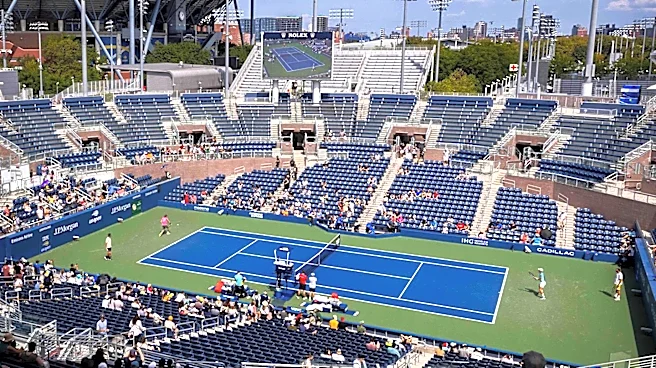
Perhaps the most significant change for the 1978 US Open was its relocation and surface transformation. This edition was the first to be played on hard courts, a departure from the previous grass and clay surfaces used in earlier years. This change in playing surface fundamentally altered the dynamics of the game, favoring players with different skill sets and strategies. Simultaneously, the tournament moved to its new permanent home at the National Tennis Center in Flushing Meadows, relocating from its long-standing site at Forest Hills. This move represented a modernization of the event, providing state-of-the-art facilities and a larger capacity for spectators.
The shift to hard courts and the new venue at Flushing Meadows ushered in a new era for the US Open, establishing many of the traditions and characteristics that define the tournament today. Players had to adapt quickly to these new conditions, making the 1978 event a true test of versatility and resilience. The success of champions in this inaugural year on hard courts at Flushing Meadows set a precedent for future tournaments.
Chris Evert's Unprecedented Dominance
Amidst these changes, Chris Evert continued her remarkable reign in women's singles. As the three-time defending champion, Evert secured her fourth consecutive US Open title in 1978, an Open Era record that remains unbroken. Her victory over Pam Shriver in the final, with a score of 7–5, 6–4, was a testament to her consistent excellence. What made her performance even more extraordinary was that, for the third consecutive year, Evert did not lose a single set throughout the entire tournament. This level of dominance, especially during a period of significant transition for the event, highlights her exceptional talent and mental toughness.
The Rise of a Young Star and a Veteran's Farewell
The 1978 US Open also introduced a new face to the major final stage: Pam Shriver. At just 16 years and two months of age, Shriver became the youngest major finalist in the Open Era and the youngest finalist at the US Open, records that still stand. Her impressive run to the final, where she faced the formidable Chris Evert, signaled the arrival of a promising new talent in women's tennis. Her youth and unexpected success captivated audiences and demonstrated the potential for new stars to emerge.
Conversely, the tournament marked the final major appearance for two-time major champion and former singles world No. 2 Nancy Richey. Richey, a respected veteran of the sport, lost in the first round to Lesley Hunt, bringing an end to a distinguished career on the major stage. The 1978 US Open, therefore, served as a crossroads, witnessing both the dawn of a new talent's major career and the conclusion of another's.