






The story of ice cream in the Philippines is a fascinating journey that began with imported luxury and evolved into a distinctive local delicacy known as sorbetes. This traditional Filipino ice cream, characterized by its unique ingredients and street-side vendors, has a history deeply intertwined with the country's colonial past and its culinary ingenuity. It stands apart from its Western counterparts, not just in flavor but also in its cultural
significance.
The Arrival of Ice and Early Ice Cream
Ice was first introduced to the Philippines as a luxury item in 1847. An American company, Russell & Sturgis, played a pivotal role by importing 250 tons of organic ice into the then-Spanish colony. This company secured tax-free rights to import ice into the Philippines through a Royal Order in 1848 and subsequently built the country's first ice plant in Calla Barraca, Binondo. Although Russell & Sturgis went bankrupt in 1881 and was acquired by businessman Julio Witte, the foundation for frozen treats had been laid.Ice cream was already familiar to Filipinos during the Spanish colonial period, signifying its status as a desirable dessert. A notable instance of its early presence was its serving at the banquet for Emilio Aguinaldo's inauguration in 1898. The American colonial period further solidified the presence of ice in the Philippines with the construction of the Insular Ice Plant in 1902. This plant was not only one of the first permanent structures built by the U.S. government in the islands but also the first ice manufacturing plant in Southeast Asia, marking a significant step towards wider availability of ice and, consequently, ice cream.
The Birth of Sorbetes and the Sorbetero
The first sorbetes emerged during this period, utilizing a device called a garapiñera. This apparatus involved a metal cylinder containing the ice cream ingredients, encased within a wooden bucket filled with ice. A cranking mechanism was used to churn the contents until they achieved the characteristic texture and consistency of sorbetes. This labor-intensive process often took hours, with salt added to the ingredients to accelerate freezing.These early sorbetes were sold by peddlers known as sorbeteros. Initially, these vendors traveled on foot, carrying their wares with a pole, much like taho vendors. Over time, sorbeteros adopted distinctive, brightly colored wooden pushcarts, often decorated in a style similar to jeepneys. They also carried a unique bell, which they rang intermittently to attract customers. Each cart typically offered three flavors, often dyed in vibrant colors. The playful moniker "dirty ice cream" arose as a joke, simply because the ice cream was sold on the streets, contrasting with commercially branded ice creams.
Adapting Ingredients and Evolving Flavors
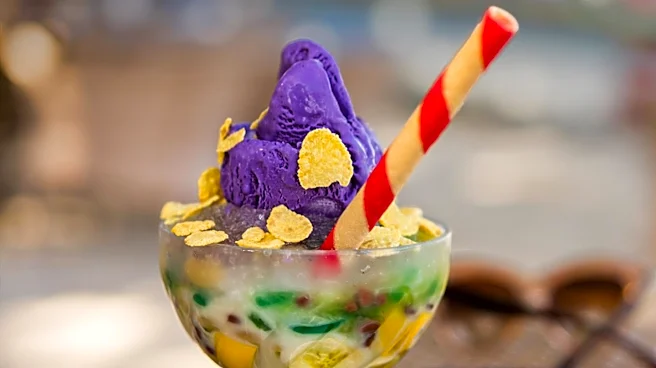
Originally, sorbetes was made with cow's milk, mirroring American ice cream. However, manufacturers soon transitioned to more accessible and economical alternatives: coconut milk, carabao milk, and even cassava flour. These ingredient changes imparted a distinct flavor and consistency to sorbetes, differentiating it significantly from Western ice creams. Early Filipino flavors included mantecado (butter), ube (purple yam), queso helado (iced cheese), pinipig (toasted pounded rice), melon, mango, jackfruit, avocado, and buko (young coconut).As tastes evolved, so did the range of sorbetes flavors. Today, a wide variety of artisanal native flavors are available, including unusual ones like champorado, green mango with shrimp paste (bagoong), and bibingka. This continuous innovation reflects the dynamic culinary landscape of the Philippines, where tradition meets creativity to produce unique and beloved treats.