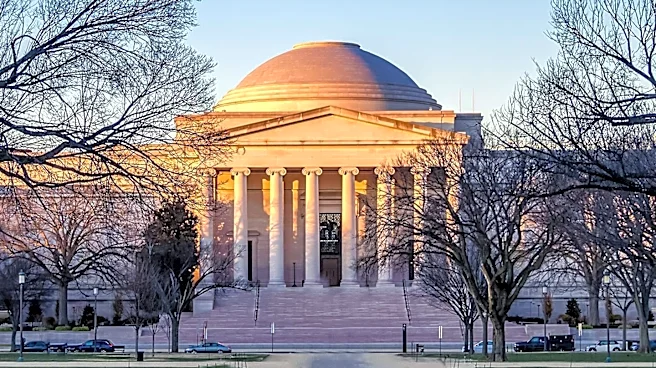








The Library of Congress, a research library located in Washington, D.C., is not just a repository of knowledge but also a collection of architecturally significant buildings. These structures, situated on Capitol Hill, are interconnected by an underground tunnel system, forming a cohesive campus. The distinct architectural styles of its three main buildings—the Thomas Jefferson Building, the John Adams Building, and the James Madison Memorial Building—reflect
different eras of design and expansion, each contributing to the library's monumental presence and functional capacity. The Thomas Jefferson Building, in particular, received the status of a National Historic Landmark on December 21, 1961, underscoring its historical and architectural importance.
The Thomas Jefferson Building: A Renaissance Masterpiece
The construction of a new library building, now known as the Thomas Jefferson Building, was a significant undertaking between 1890 and 1897. Inaugurated in 1897, this building served as the library's main edifice for an extended period. Its design is characterized by an Italian Renaissance style, exuding a sense of classical grandeur and intricate detailing. The magnificent entrance hall, crafted from marble, immediately impresses visitors with its opulent materials and craftsmanship. This building houses the main reading room, notable for its imposing dome, along with various specialized reading rooms and even a concert hall, indicating its role beyond mere book storage to include cultural and public engagement.The Jefferson Building's elaborate architecture was a direct response to the library's growing collections and the increasing importance of legislative research, especially after the American Civil War. The need for a grand, dedicated space to house the vast number of copyrightable works received since 1870, alongside acquisitions and donations, necessitated a structure that could both accommodate and celebrate the nation's intellectual heritage. Its design reflects a period of national confidence and a desire to create public buildings that were both functional and aesthetically inspiring.
The John Adams and James Madison Memorial Buildings: Modern Additions
Following the Thomas Jefferson Building, two additional structures were added to the Library of Congress complex to address continued growth and evolving needs. The John Adams Building, occupied in 1938, presents a different architectural aesthetic, incorporating Art Deco elements into its design. This building primarily houses book stacks and a second large reading room, providing essential storage and research facilities. Its more streamlined and functional design contrasts with the ornate style of the Jefferson Building, reflecting the architectural trends of the mid-20th century.The most recent addition to the complex is the James Madison Memorial Building, which was inaugurated in 1980. This six-story structure is characterized by a more sober and modernist architectural style. It accommodates the periodicals department, administrative offices, the computer department, and various specialized departments. The Madison Building's design prioritizes efficiency and modern functionality, catering to the administrative and technological demands of a contemporary national library. Together, these three buildings, with their distinct architectural identities, form a comprehensive and interconnected system that supports the Library of Congress's extensive operations and its mission as a research library and the de facto national library of the United States.